
Last updated November 15, 2026
 Wrought iron
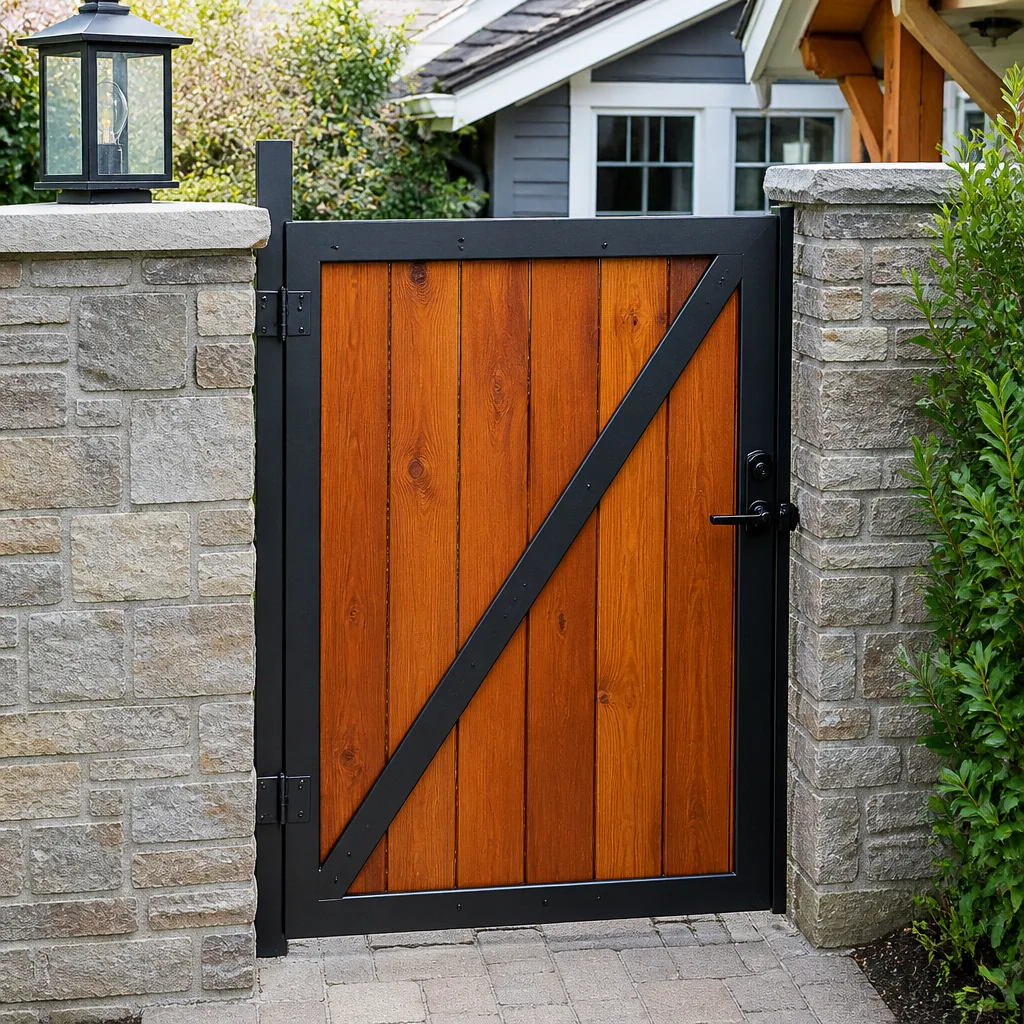 Wood & steel frame
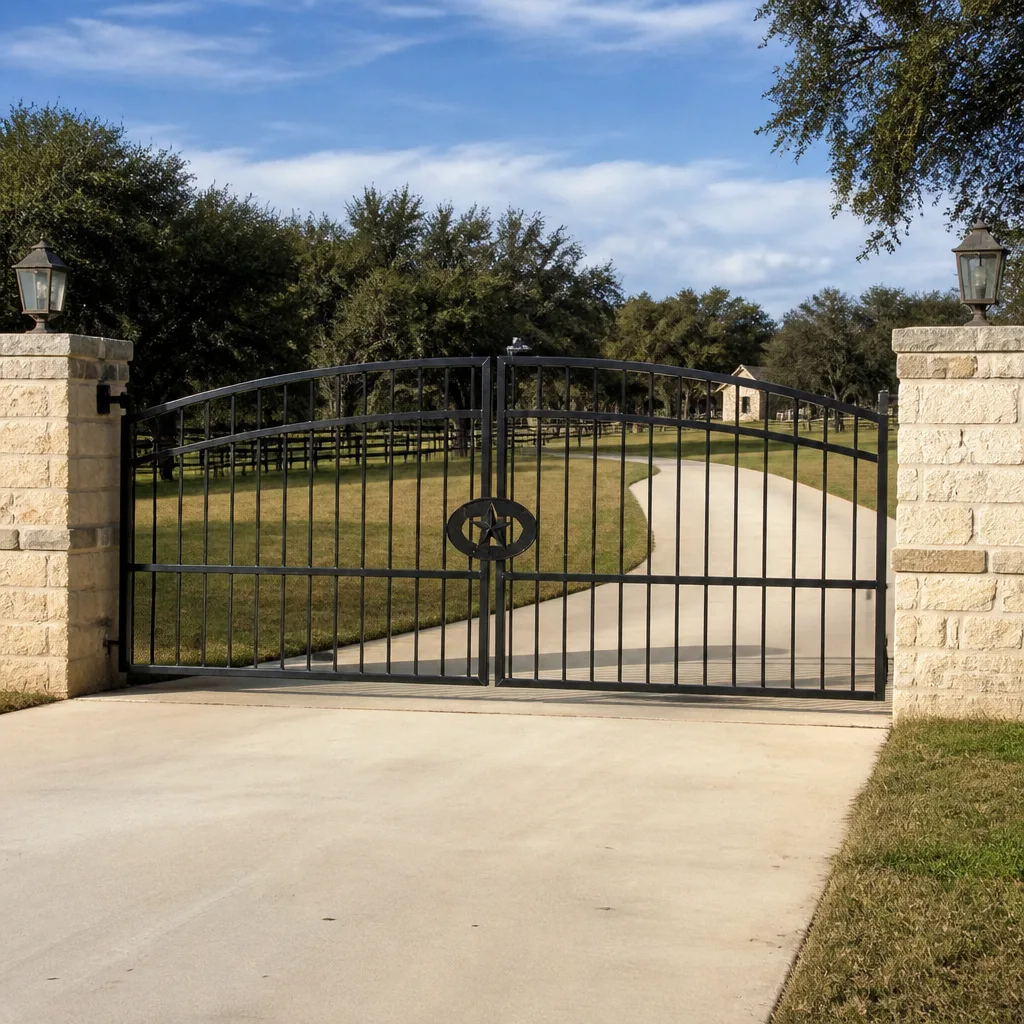 Farm & ranch
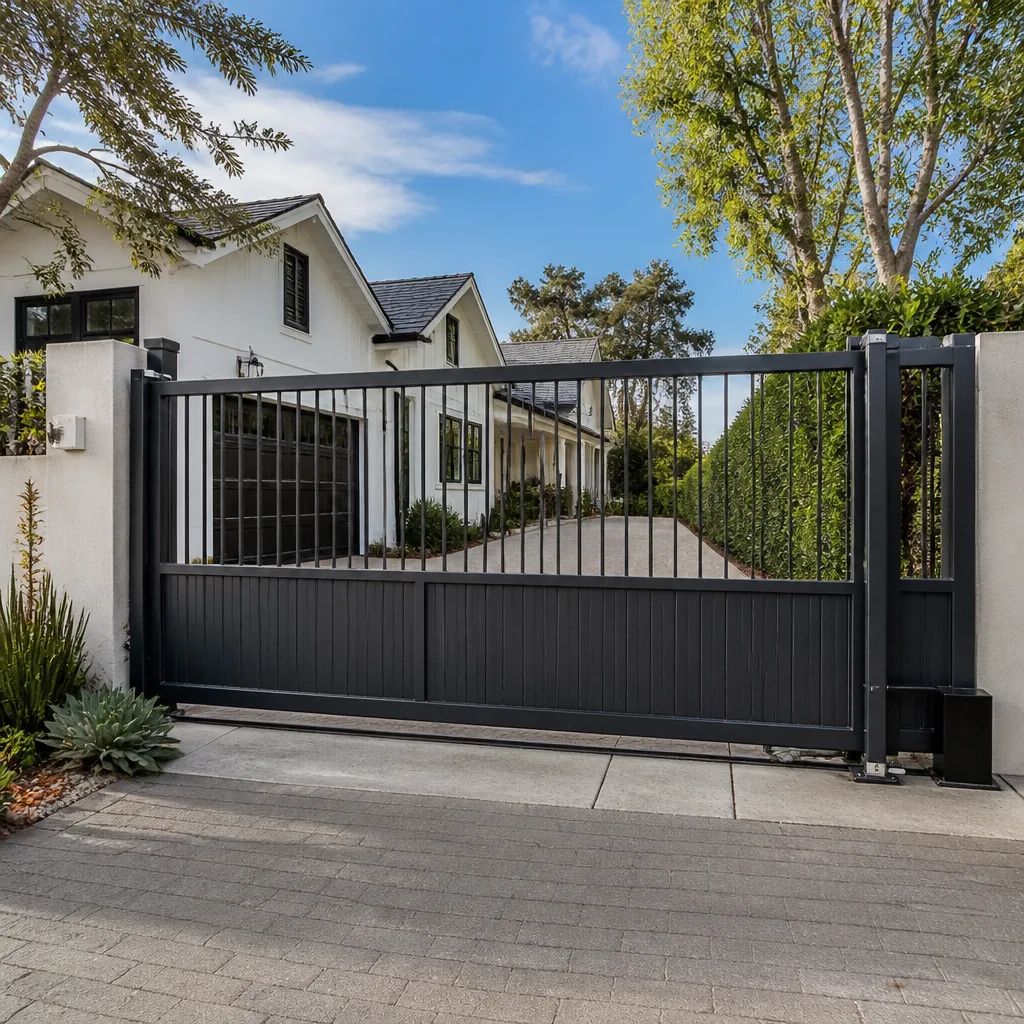 Sliding driveway gates
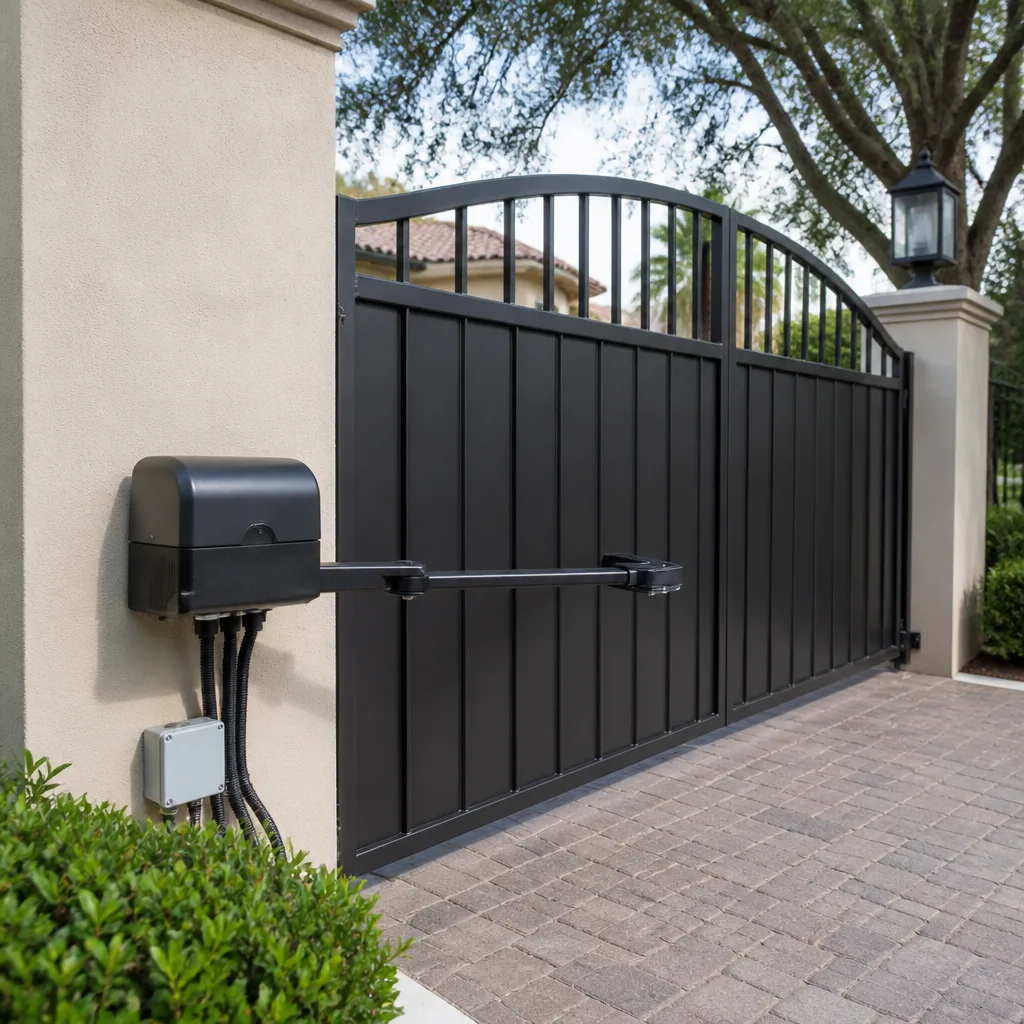 LiftMaster operators
Free on-site gate assessment - hinges, posts, and your LiftMaster or Nice gate operator checked before anything is quoted
The assessment is free and the quote is the invoice.
Get your free estimateThe Complete Guide to Gate Repair in Newport News
Most people assume a gate that won’t open is a motor problem. That assumption is wrong often enough to matter. In Newport News’s humid summers, a grinding swing gate is more often a corroded hinge, a leaf that’s dropped out of plumb, or a foundation that has shifted an inch under the gate’s weight. Treat the operator first and you’ll pay $200-$400 more than the actual fix required. This guide maps every common gate symptom to its real root cause, so you can stop paying for the wrong repair. We’ll cover swing, slide, and barrier-arm gates, the five categories every failure falls into, and how to spot a band-aid fix before it costs you twice.
Quick Answer
Gate repair in Newport News typically means one of five things: a hardware failure (hinges, rollers, latches), an electrical issue (power, wiring, control boards), a structural shift (sagging leaf, misaligned post, cracked footing), an operator failure (motor, limit switches, logic board), or an access-control failure (keypads, intercoms, loop detectors, photocells). Identifying the correct category before touching the gate is what separates a lasting fix from a repeat call. A swing arm, slide gate, or barrier arm all present symptoms that overlap, which is exactly why a technician who diagnoses before they replace matters.
We repair gates across Newport News every week. Call (866) 620-2654 for a free estimate. We answer 24/7. Fast dispatch, 7am-7pm.
Styles & brands we work with
- Wrought iron
- Wood & steel frame
- Farm & ranch
- Sliding driveway gates
- LiftMaster operators
Table of Contents
- The Five Failure Categories Behind Every Gate Problem
- The Symptom-to-Cause Diagnostic Map
- How Newport News Humidity Reshapes Gate Hardware
- Operator Failure vs. Accessory Failure: Why They Look Identical
- Repair or Replace? When a Fix Becomes a Band-Aid
- What a Specialist’s First-Visit Inspection Should Cover
- Manual and Electric Gate Repair Under One Roof
- Brand Coverage: Why It Cuts Your Downtime
The Five Failure Categories Behind Every Gate Problem
Every gate failure we diagnose lands in one of five buckets. Naming the bucket first is the single most useful thing a gate owner can learn, because it tells you who to call and what to expect from the visit.
- Hardware failure. Hinges, rollers, wheels, latches, tracks, and the mount plates that hold the operator to the gate. These wear out from movement and moisture, and a rusty hinge drags on the operator until the operator trips its own overload protection.
- Electrical failure. The low-voltage circuit that runs the operator: the power supply, the transformer, the wiring between the control box and the arm, and the control board itself. Electrical problems tend to appear as “intermittent” – works in the morning, dead in the afternoon.
- Structural failure. The gate post, footing, and frame. A post that has settled or rotated throws the entire leaf out of alignment, and no amount of motor adjustment will cure it.
- Operator failure. The motor, gear train, limit switches, and logic board of the unit itself. This is what most people assume is wrong before anything else has been checked.
- Access-control failure. Keypads, card readers, intercoms, remote receivers, loop detectors, and photocells. These are the components that tell the operator when to move and when to stop. When they fail, the gate usually stays shut or refuses to cycle.
Here’s the counterintuitive part: the symptoms of categories 1, 3, 4, and 5 are frequently identical. A gate that “runs for two seconds and reverses” could be a binding hinge, a misaligned post, a bad limit switch, or a blocked safety edge. Removing and replacing the operator – the most expensive option – fixes one of those four causes. That’s why specialist diagnosis comes first.
The Symptom-to-Cause Diagnostic Map
Use this map to narrow the likely cause before you call. It won’t replace an on-site inspection, but it tells you what to expect from the visit and which questions to ask. We’ve organized it by gate type, because a swing arm and a slide gate fail in different ways.
Swing Gate Symptoms
- Grinding or squealing while opening: Usually a corroded hinge, worn pivot bearing, or a leaf that has dropped. Check the hinge line before looking at the operator.
- Gate opens halfway and stops: A limit switch that has drifted, a binding hinge, or a low battery in a solar-charged operator.
- Gate reverses immediately after starting: Almost always a safety device – photocell, safety edge, or loop detector – telling the operator something is in the path.
- Sags at the latch end: A structural problem with the post or footing, not a hardware one. Repairing the latch alone won’t hold.
Slide Gate Symptoms
- Gate drags or jumps along the track: A worn wheel, debris in the track, or a track that has shifted out of level. Check the track line before the operator.
- Gate stops halfway and reverses: A worn wheel, a warped track section, or a safety edge that has been nudged out of position.
- Operator runs but gate doesn’t move: A slipping clutch, a broken drive chain, or a stripped gear. This is normally an operator component failure.
- Gate comes off the track: A structural problem – a bent track, a failed roller carrier, or a footing that has moved. Do not run the operator until it’s corrected.
Barrier-Arm Symptoms
- Arm won’t raise: A limit switch, a worn arm counterbalance, or a logic board issue. The arm weight itself can bind the mechanism.
- Arm raises slowly or strains: A tired motor, low voltage, or a binding pivot point. Slowing down is often the first warning sign.
- Arm cycles endlessly: A loop detector that isn’t reading the vehicle, so the controller keeps sending the raise command.
Notice how many of these overlap. “Gate stops halfway and reverses” appears in all three gate types, and in every case the fix is diagnostic, not simply “replace the operator.” When we diagnose at a Newport News property, the first question is always which gate type presents the symptom, then which component is responsible.
How Newport News Humidity Reshapes Gate Hardware
Newport News sits on the tidal James River system and gets classic mid-Atlantic humidity – damp springs, muggy summers, and rapid temperature swings between morning and afternoon. That’s not trivia; it’s the single biggest driver of gate hardware failure in the area, and it explains why the same gate that lasts a decade in a dry climate needs hinge service after a few short years here.
The specific mechanism is galvanic corrosion. When two different metals touch – a steel hinge pin in an aluminum bracket, a galvanized bolt through a stainless plate – moisture between them creates a small electrical current that eats the softer metal. The hinge tightens, then seizes. The gate starts grinding, the operator struggles, and eventually the overload protection trips. If a technician replaces the operator without replacing the seized hardware, the new motor inherits the same drag from day one.
Three practical consequences follow:
- Hinge and roller inspection matters more here than most places. A regular look at the pivot points and a light application of the right lubricant prevents a surprising share of “dead operator” calls.
- Footings shift more than they used to. Wet-dry cycles across the seasons move soil around gate posts, and a post that settles a quarter-inch over a summer is enough to misalign a swing leaf by an inch at the latch end.
- Wood and steel gates swell and contract seasonally. A gate that catches on its post in July may swing freely in January. Never adjust the operator to compensate for a seasonal binding issue; fix the gate and the operator stays calibrated.
When we look at an electric gate in Newport News, the first pass is always the mechanical line – hinges, rollers, mount plates – before we open the control box. That order prevents the most expensive mistake on the list.
Operator Failure vs. Accessory Failure: Why They Look Identical
An electric gate is a small system, not a single unit. It has an operator (the motor and control gear) and a set of accessories that tell the operator what to do: the keypad, the loop detector embedded in the driveway, the photocell at the gate line, the intercom, the remote receiver. When any one of those accessories fails, the symptom looks exactly like an operator failure from the outside. The gate doesn’t move. Nothing clicks. You assume the motor is dead.
In our experience, a large share of “dead operator” calls turn out to be an accessory or a wiring fault. Here’s the diagnostic split:
- Does the operator respond to a manual command? Most operators have a manual release lever that disengages the gate from the drive. If the gate moves freely by hand once disengaged, the mechanical line is fine and the issue is electrical or control.
- Does the operator click or hum when you press the remote? A click but no movement usually points to a control board or a safety-device lockout. Silence points to a power supply or wiring problem.
- Does the keypad respond but the gate won’t cycle? The keypad is talking to the controller but the controller is refusing to move – a safety edge, a loop detector, or a photocell is telling it to stay put.
- Does the gate cycle correctly on a manual in-box command but not on the remote? The remote receiver, the remote battery, or the radio interference is the culprit. This is a cheap fix that’s often mistaken for a major one.
Brand matters here. A Viking and a Ghost Controls operator reveal their status differently, and an operator from Elite or DoorKing on a light-commercial system has its own diagnostics. Knowing the brand on the property cuts diagnostic time and prevents the “replace the motherboard and hope” approach that leads to repeat visits.
Repair or Replace? When a Fix Becomes a Band-Aid
Not every gate is worth repairing. The dividing line is whether the repair restores the gate to a safe, code-compliant condition – not whether it makes the gate move again today. A few scenarios tip toward replacement:
- The operator’s control board is obsolete and unavailable. If the manufacturer no longer makes the board and no compatible substitute exists, a motor with a dead brain is a paperweight. Replacing the operator is usually cheaper than retrofitting a different brand into an old mount.
- The post or footing has failed beyond repair. If the concrete has cracked through or the post has rotted internally, no amount of hardware adjustment will make the gate swing true. The footing needs to be rebuilt before a new operator is worth installing.
- The gate frame is structurally compromised. A bent frame, a cracked weld, or a leaf that’s been re-welded three times will keep dragging on every operator you fit to it.
- The safety devices can’t be brought up to date on the existing system. Modern electric gates rely on safety edges and photocells to stop when something is in the path. If the existing operator can’t accept those devices, the safer choice is a new operator that can.
We treat one repair or replace question with extra care: if a repair would leave the gate running without proper safety devices, we won’t make that repair as a permanent fix. We’ll describe what a compliant installation looks like and quote it. That’s not a sales line – it’s what a specialist does when the alternative is a gate that puts a person or a vehicle at risk. We install gates and we service them, so the recommended replacement is one we’ll be responsible for afterward.
What a Specialist’s First-Visit Inspection Should Cover
The first visit is where a gate repair either gets solved or gets deferred. A specialist’s inspection follows a fixed sequence; a generalist typically skips the first three steps and goes straight to the electronics. Here’s what a proper first visit covers, in order:
- Walk the gate by hand. With the operator disengaged, push the leaf through its full swing or slide. Any binding, grinding, or resistance points to hardware or structural issues that must be corrected before the operator is reengaged.
- Check the hinge line and pivot points. Look for corrosion, wear, and play. On a Newport News gate, this step alone catches a large share of the “won’t open” calls.
- Check post plumb and footing condition. A slight tilt or a crack in the footing explains alignment problems the operator can’t fix.
- Photograph and identify the operator. Brand, model, and vintage. This tells us whether parts are available and what diagnostic codes we’ll see.
- Test each safety accessory individually. Photocell, safety edge, loop detector, keypad, intercom, receiver. Each one gets a functional test, not a guess.
- Check the low-voltage wiring run. Look for chafed insulation, water intrusion in the junction boxes, and loose connections at the control board.
- Review the gate’s physical clearance. A gate that swings within an inch of a post or a vehicle lane will keep producing new failures until the geometry is corrected.
A generalist often stops at step 4. That’s why the second failure on a gate frequently comes within weeks of the first repair – the mechanical cause was never addressed. When a technician skips steps 1 through 3, the operator gets the blame for a hinge that’s been seizing for months.
Manual and Electric Gate Repair Under One Roof
We repair gate systems of both kinds: manual gates that have hung on a hinge for years and electric gates that have become part of a property’s daily routine. The work is more connected than people expect. A manual gate that starts binding will break its hinges faster than it would if it were properly aligned, and an electric gate that has dragged for months will fail at the operator even though the operator was never the original problem.
For manual gates, the typical service is hinge replacement, latch alignment, post re-anchoring, and frame welding. For electric gates, we cover the operator, the control board, the limit switches, the safety devices, and the low-voltage wiring. We don’t install a fence, and we don’t handle garage doors. The single-trade focus keeps the diagnosis honest: when the only thing we do is gates, a mechanical problem doesn’t get mistaken for an electrical one just because the technician is more comfortable in the control box.
If your electric gate has stopped, our electric gate repair team handles the operator and the control side. If a manual gate is dragging, our gate repair team handles the hardware and the frame. Either way, the price is quoted and agreed before any work starts.
Brand Coverage: Why It Cuts Your Downtime
Gate operators are not interchangeable. Each brand has its own control board layout, its own limit-switch style, and its own error codes. A homeowner whose gate runs on an older DoorKing system, or whose Ghost Controls operator was installed by a previous owner, has a specific problem: the only person who can fix it is someone who recognizes the brand. That’s usually why a gate sits dead for days while the owner calls around.
We’re trained and experienced on nine operator brands: LiftMaster, FAAC, BFT, Linear, Viking, Ghost Controls, DoorKing, Elite, and Mighty Mule. The list spans residential-grade operators like Mighty Mule and Ghost Controls through to the light-commercial DoorKing and Elite systems, which is the range most properties actually need. Two practical benefits come out of that coverage:
- No sourcing delay from a mystery brand. When the technician recognizes the operator, the parts order goes out on the first visit rather than after a second trip to identify the unit.
- No “we don’t service that make” refusals. Legacy systems and obscure operators don’t get turned away; they get diagnosed.
If you own a gate and aren’t sure which brand you have, look for the nameplate on the operator housing – usually on the side of the box or under the cover. If you can read the brand, we can tell you what to expect from the visit. If you can’t, we’ll identify it on-site.
Common Mistakes to Avoid
- Replacing the operator first. A grinding gate that also has a seized hinge will eat the new motor’s gear train within months. Diagnose the mechanical line before the electronics.
- Ignoring a slow swing. A gate that hesitates is warning you. Waiting until it stops completely usually means a more expensive repair than the one the hesitation was pointing to.
- Adjusting the operator to compensate for a seasonal binding. Newport News gates swell and contract with the humidity. A gate that’s binding in July needs the hinge fixed, not the operator recalibrated; the recalibration will be wrong in January.
- Letting a post settle and hoping it self-corrects. A footing that has shifted a quarter-inch will keep shifting. The longer it waits, the more of the gate frame it distorts.
- Using a generalist for an electric gate. A fence contractor or garage-door technician may replace a hinge correctly but misread a DoorKing or FAAC control board. The gate types and brands matter to the diagnosis.
- Disabling a safety device to “get it working.” A bypassed photocell or safety edge is a liability, not a fix. If the safety device is faulty, replace it before running the gate.
- Treating a track failure as an operator failure. A slide gate that has come off the track will not be fixed by any operator adjustment. Running it further will bend the track and crack the roller carriers.
See the difference
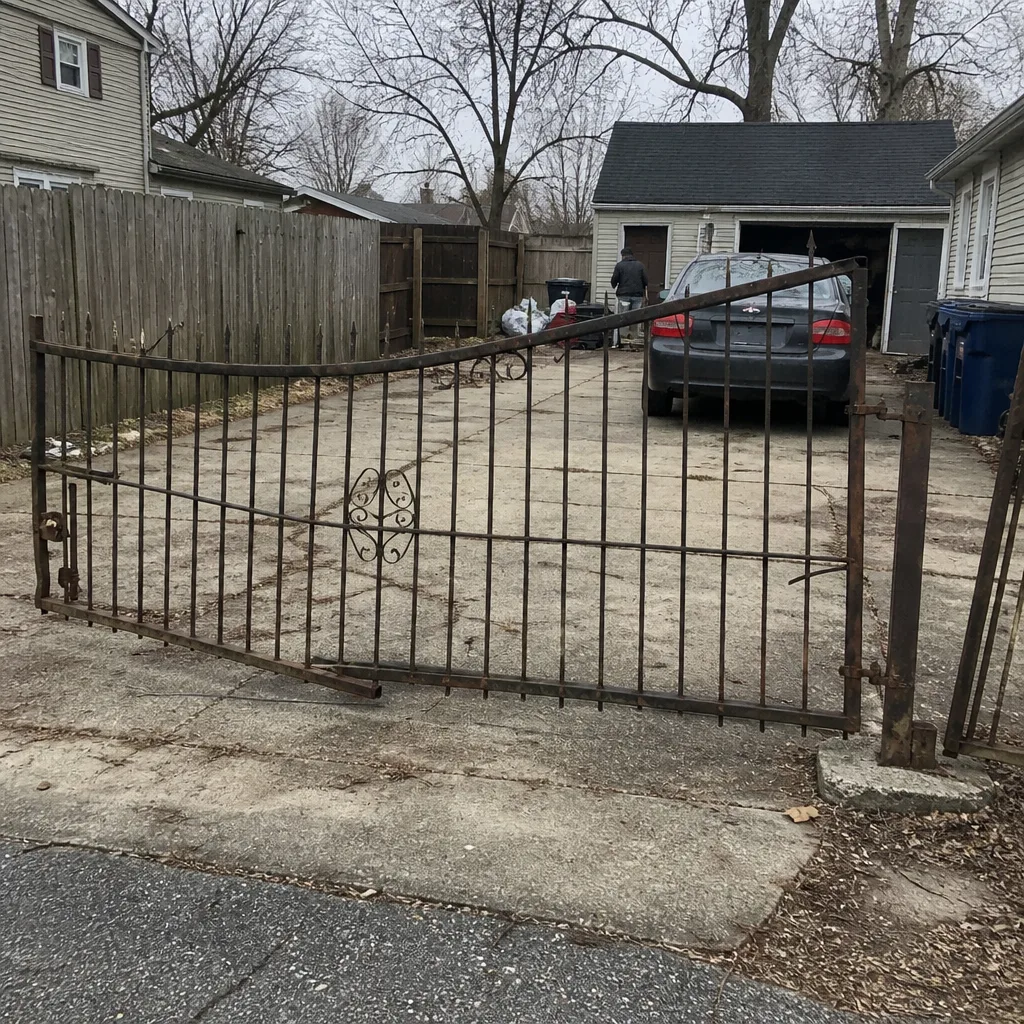 Before
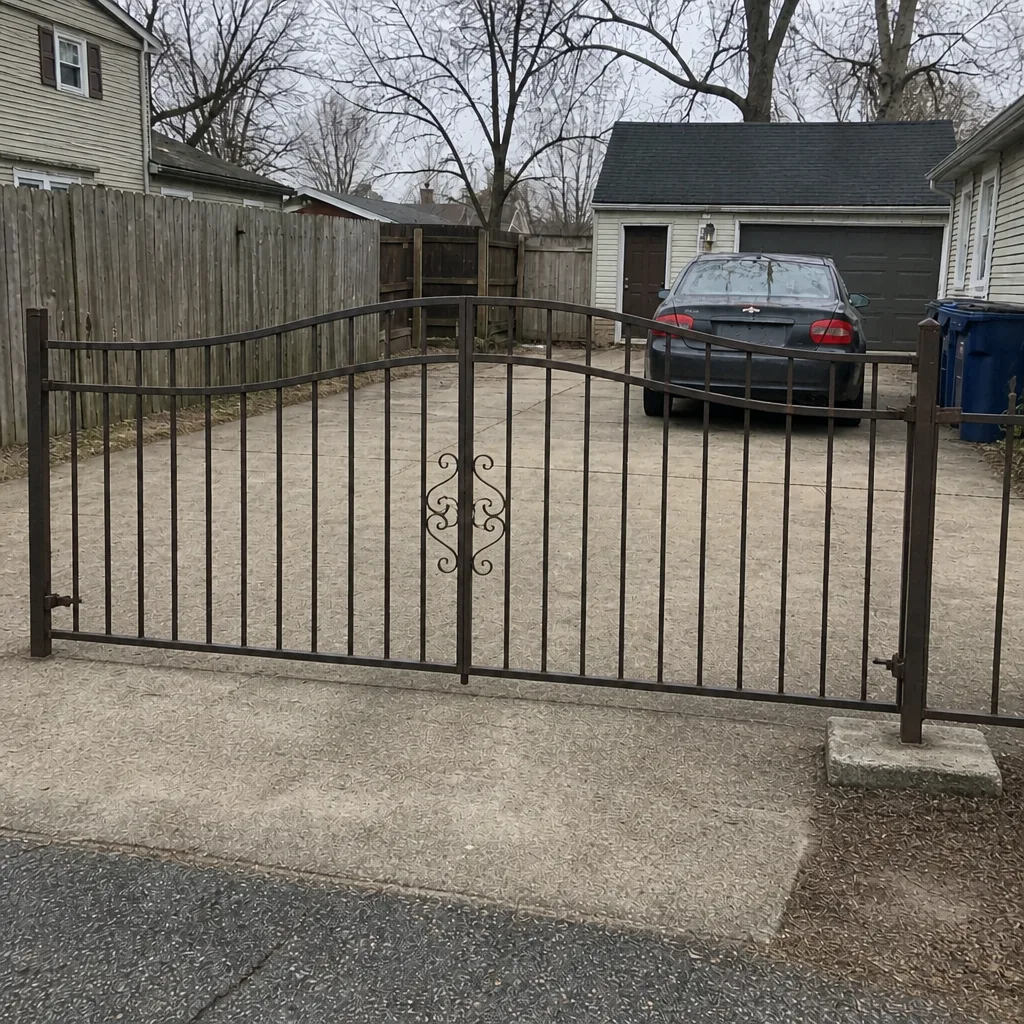 After
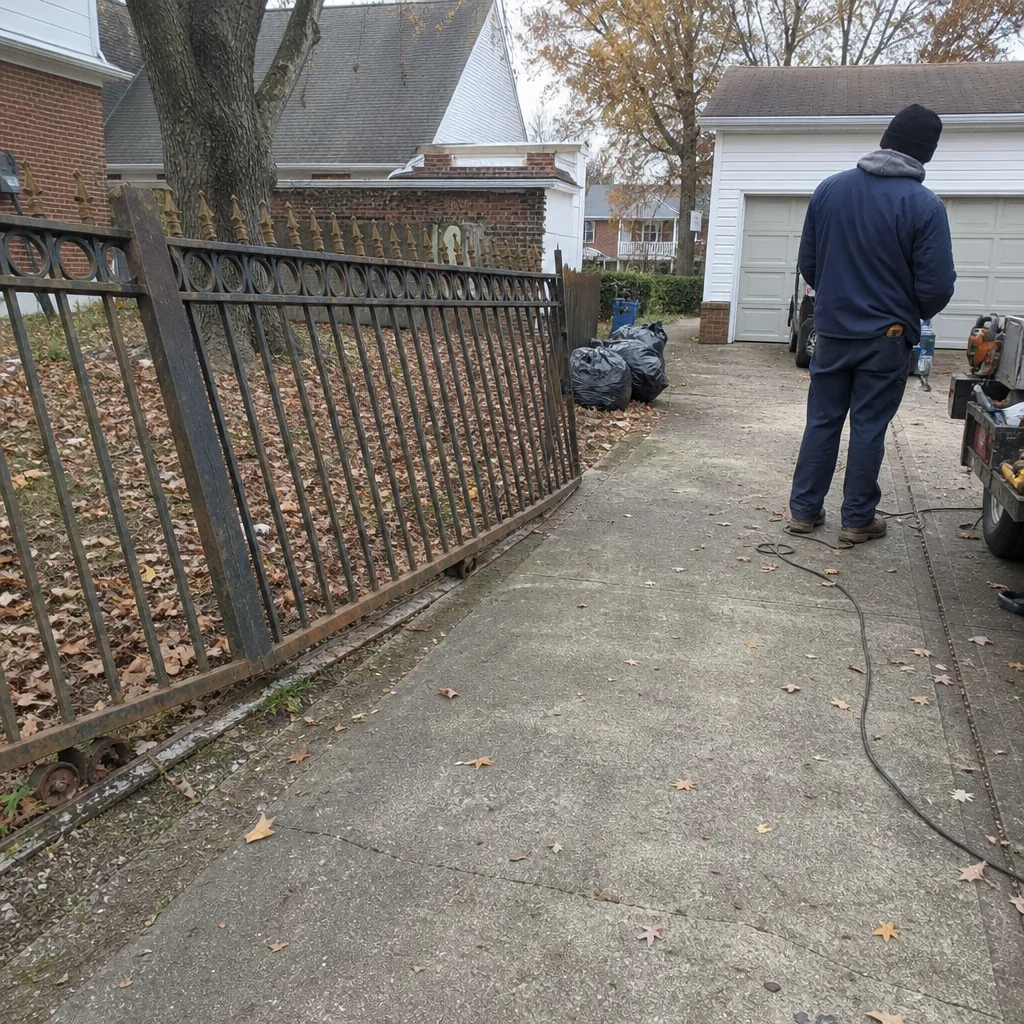 Before
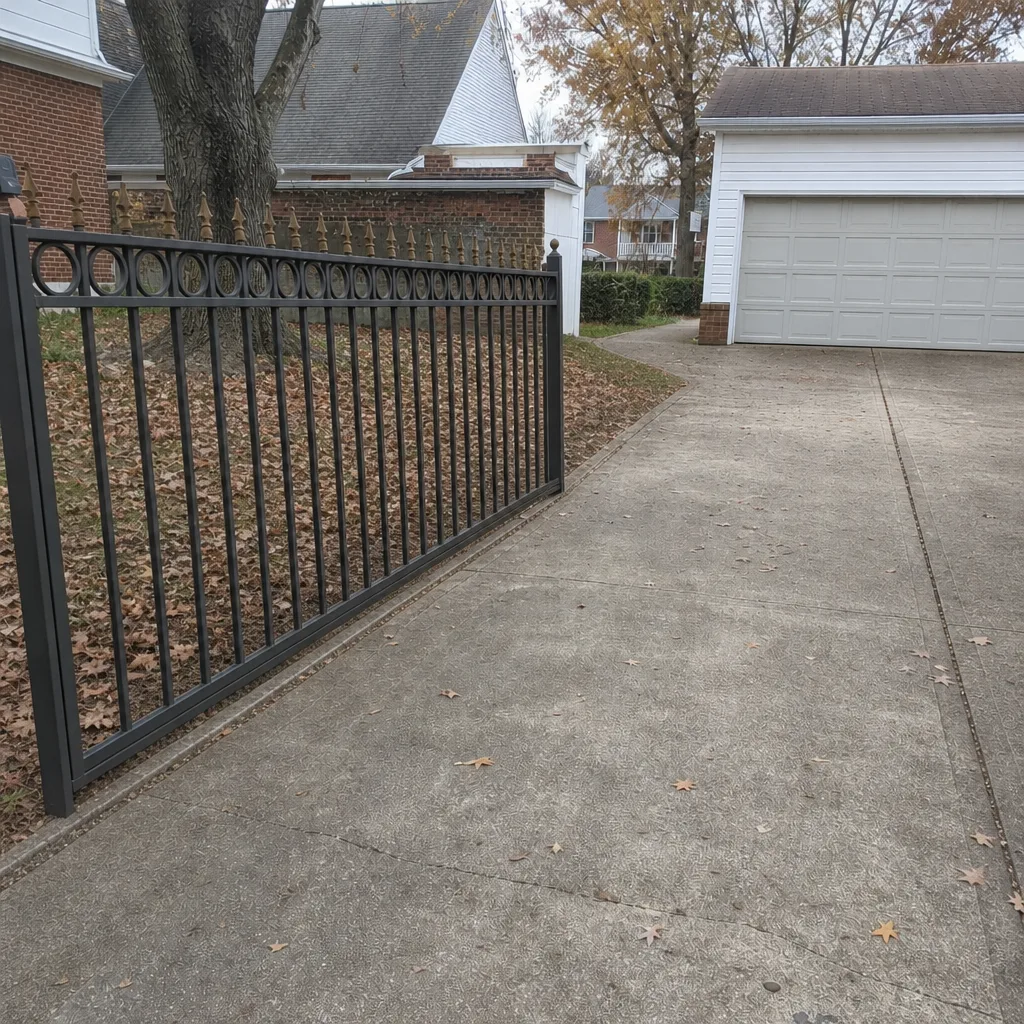 After
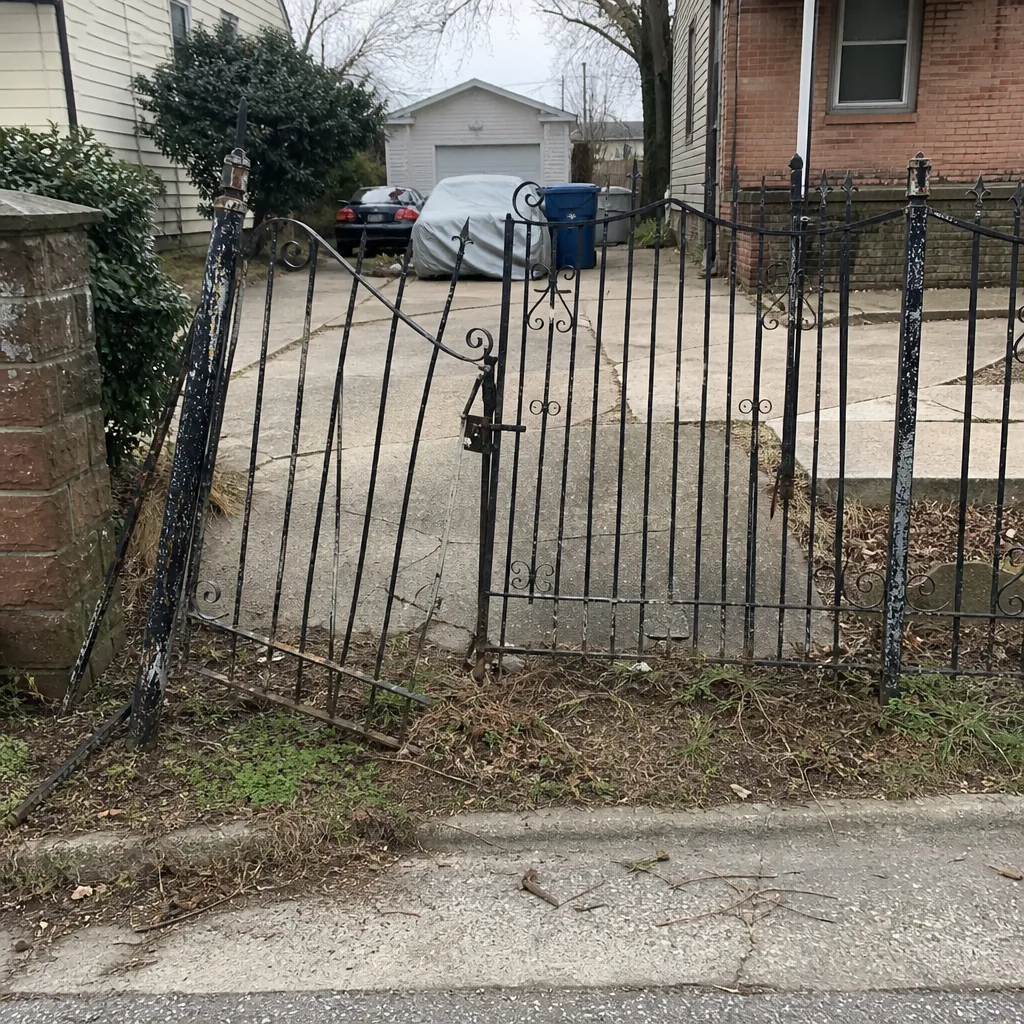 Before
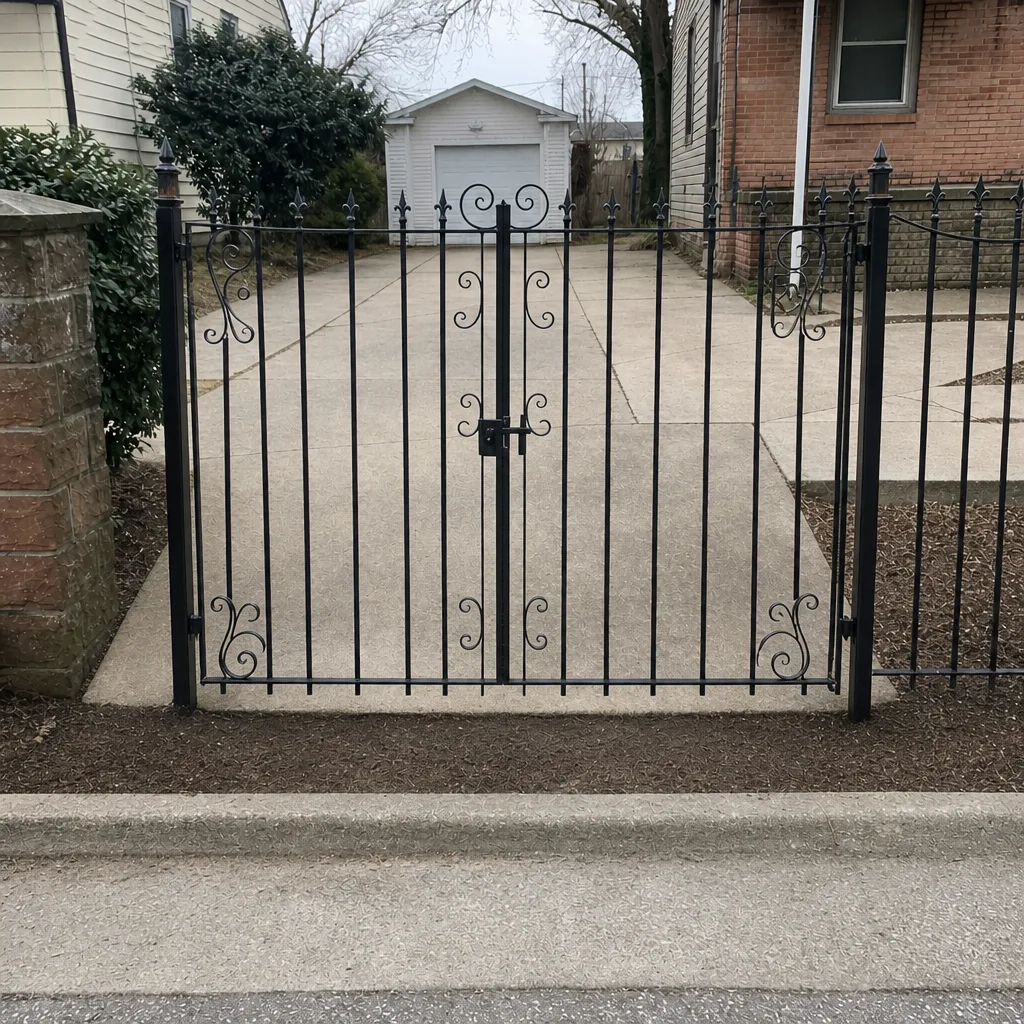 After
When to Call a Professional
Some gate issues are worth a look before you call. Most aren’t. Call us when the gate stops mid-cycle, reverses for no visible reason, grinds or squeals, or when the remote and keypad both fail to trigger a response. Call if the gate has come off a slide track, if the leaf has sagged or is dragging on the ground, or if you can see a crack in the concrete footing. Call if the operator’s control box shows an error code you can’t identify, or if the safety edge or photocell has been damaged. And call if the gate is running with any safety device bypassed – that’s a situation that shouldn’t wait.
Gate Repair Newport News offers free estimates in Newport News – call (866) 620-2654. We answer 24/7. Fast dispatch, 7am-7pm.
Frequently Asked Questions
Gate repair in Newport News typically runs from around $150 for a hardware fix like a hinge replacement to $600 or more for an operator or control-board repair, with most visits falling in the $250-$450 range. The written estimate sets the final price before any work starts, so you know the cost up front. Call (866) 620-2654 for an exact quote – estimates are free.
Yes, most gate repairs in Newport News are completed the same day, provided the parts are on hand or commonly available. Operator and control-board jobs on common brands like LiftMaster or Linear are usually same-day; an uncommon operator may need a part ordered, and we’ll tell you at the estimate. Call (866) 620-2654 to schedule.
A gate that stops and reverses is almost always being told to by a safety device – the photocell, safety edge, or loop detector. The operator itself is rarely the cause, which is why the fix is usually much cheaper than replacing the motor. An on-site inspection identifies which device is faulting. Call (866) 620-2654 for a free estimate.
Both. We repair manual swing and slide gates as well as electric and automatic gate systems, including operator repair, control board work, limit switch replacement, and safety device service. The technician diagnoses the same way on either type: mechanical line first, then electronics. Call (866) 620-2654 for a free estimate.
In many cases, yes. We’re trained and experienced on LiftMaster, FAAC, BFT, Linear, Viking, Ghost Controls, DoorKing, Elite, and Mighty Mule, which covers the brand range most Newport News gates run on. If you have an older or less common operator, call (866) 620-2654 and describe the nameplate – we’ll tell you whether we can service it before you commit to a visit.
A gate that breaks repeatedly usually has a root cause in a different category than the last repair – a structural issue that keeps loading the operator, or a hardware problem that keeps dragging on the motor. A proper diagnostic inspection identifies that root cause before more money goes into symptom repairs. If the footing, frame, or operator is beyond a compliant repair, we’ll quote a replacement. Call (866) 620-2654 for a free estimate.
The Bottom Line
Gate repair in Newport News comes down to one discipline: identify which of five categories – hardware, electrical, structural, operator, or access control – is actually causing the symptom before you replace anything. The grinding gate is usually a hinge, the reversing gate is usually a safety device, and the sagging gate is usually a footing. Newport News humidity makes galvanic corrosion and seasonal post shifting more aggressive than in drier climates, which is why the mechanical inspection comes before the control box every time. A specialist who knows your operator brand and follows the diagnostic sequence will solve the gate on the first visit instead of the third. Call (866) 620-2654. We answer 24/7. Fast dispatch from 7am to 7pm, Sunday through Friday.
Written by the team at Gate Repair Newport News.