
Last updated November 15, 2026
 Wrought iron
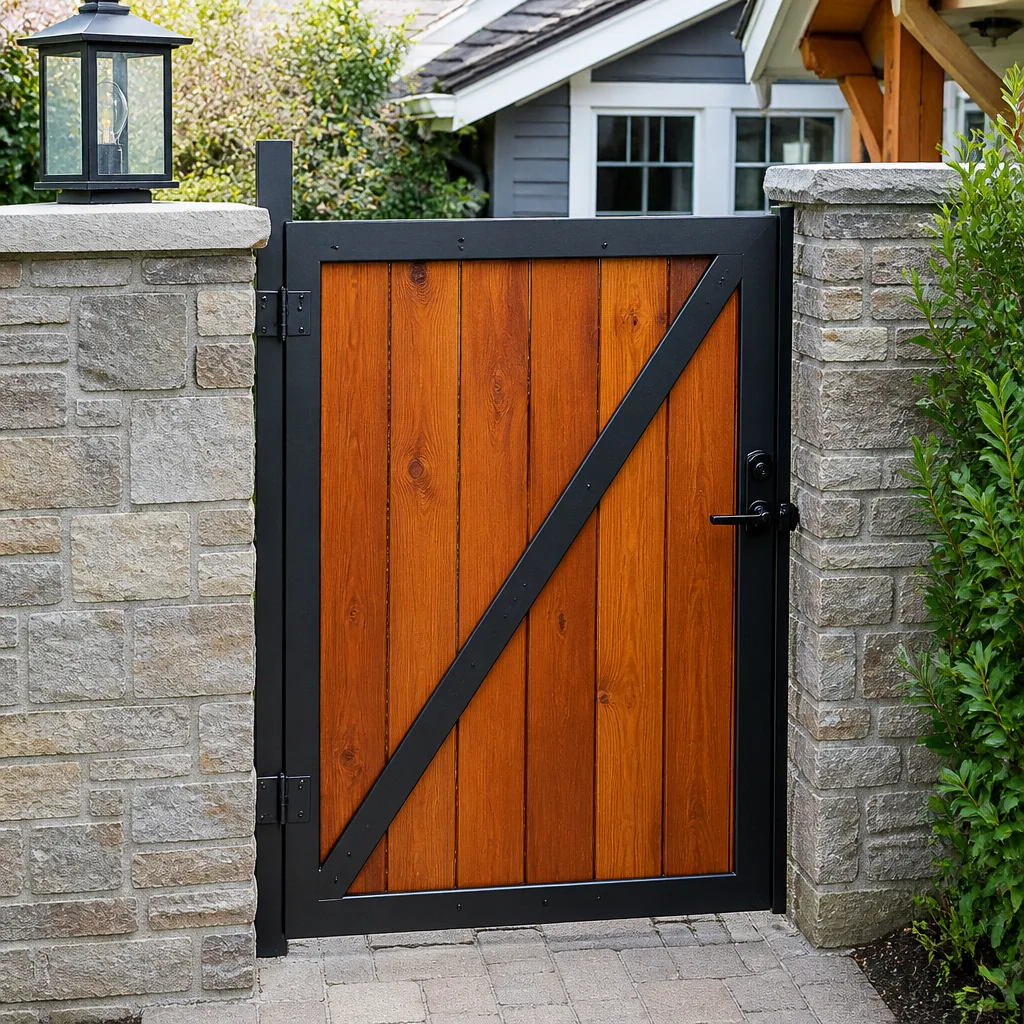 Wood & steel frame
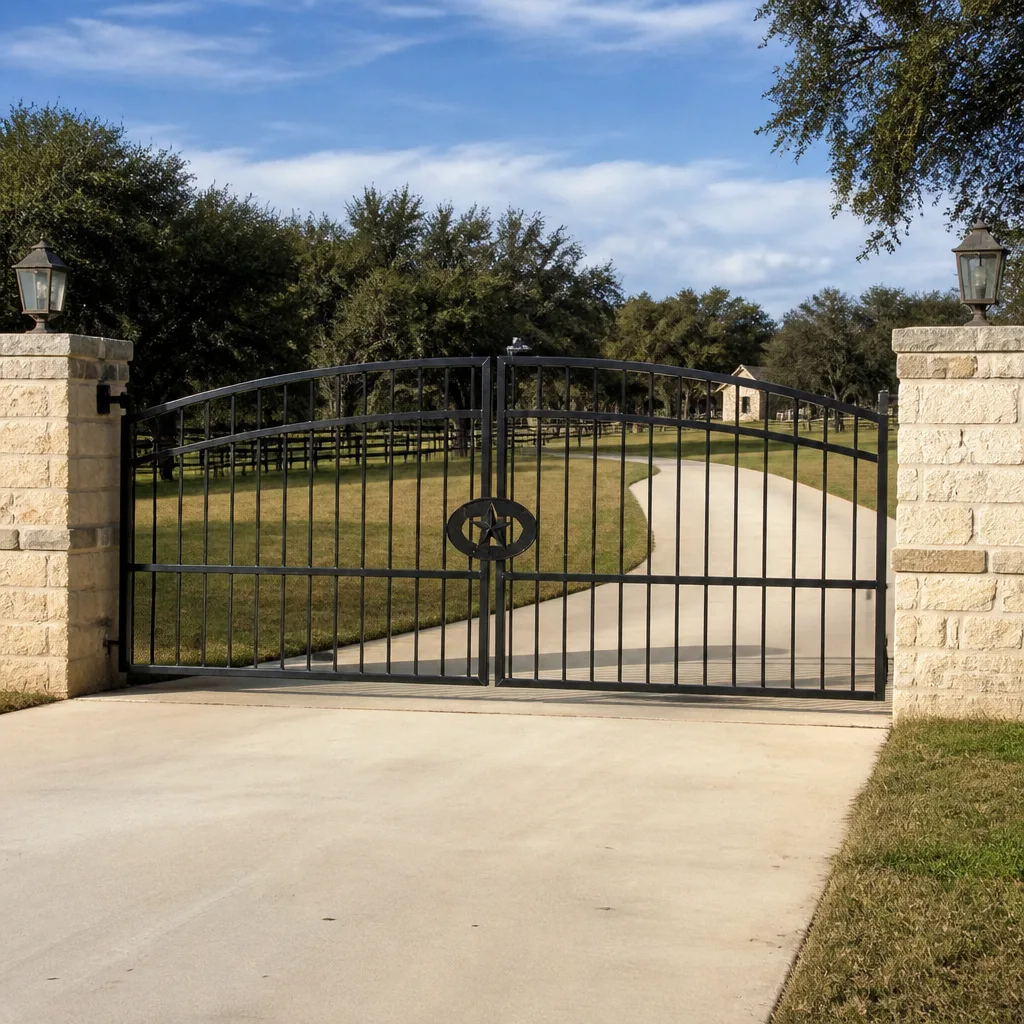 Farm & ranch
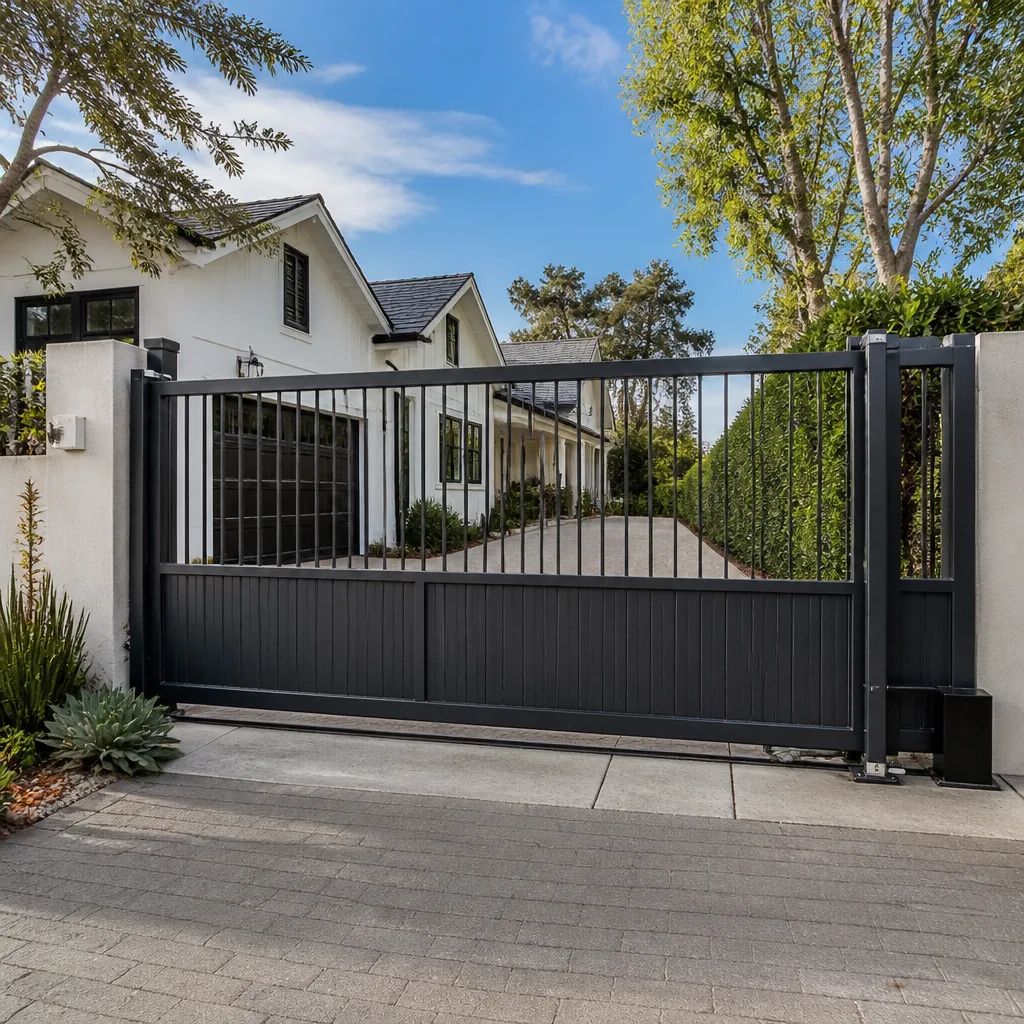 Sliding driveway gates
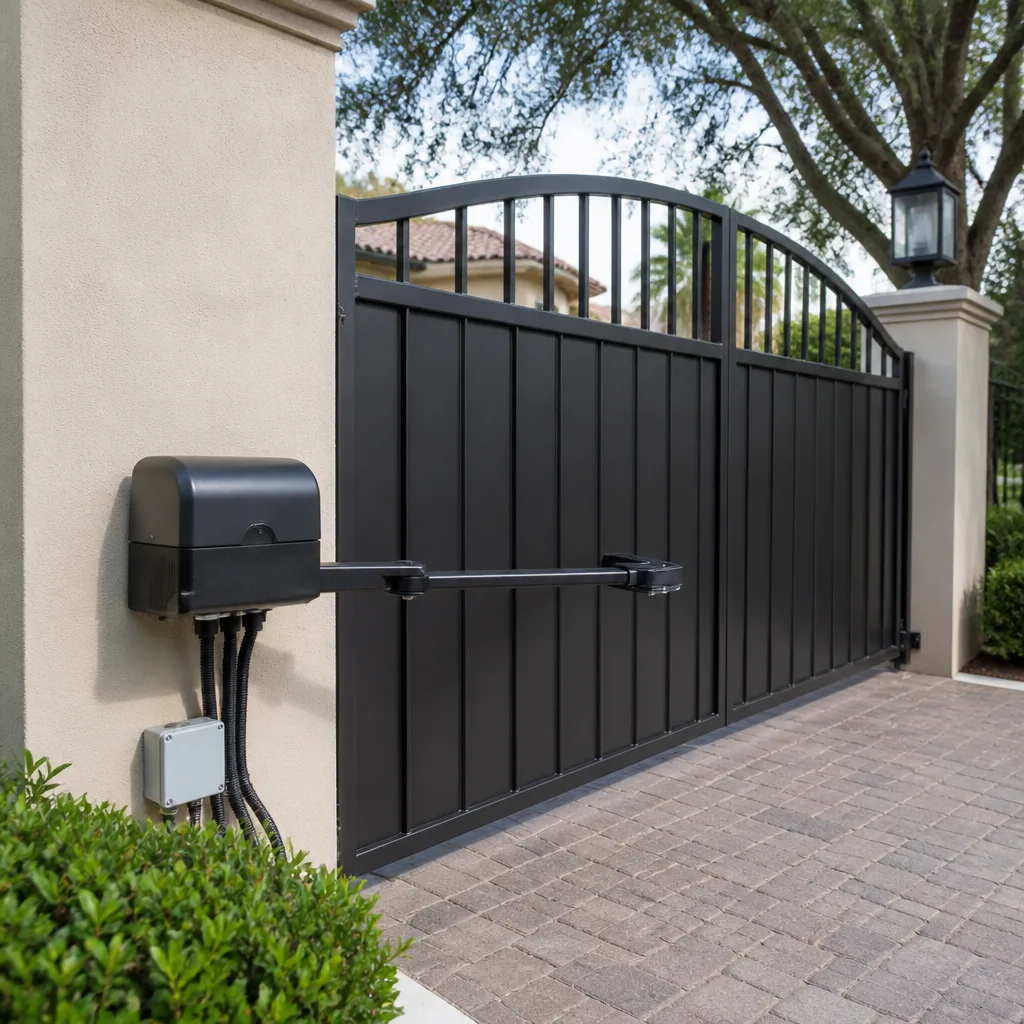 LiftMaster operators
Free on-site gate assessment - hinges, posts, and your LiftMaster or Nice gate operator checked before anything is quoted
The assessment is free and the quote is the invoice.
Get your free estimateDIY vs Professional Gate Repair: The Newport News Homeowner’s Decision Guide
Most gate repair advice draws the DIY line at “how hard does it look?” That’s the wrong test. The right test is which component you’re touching and what that component is legally and physically responsible for. Cleaning a photocell lens and adjusting a force setting look equally simple on video. One is a five-minute task with no downside. The other changes whether your gate meets UL 325 entrapment protection, and no tutorial will tell you that. This guide separates gate tasks by component, not by difficulty, so Newport News homeowners can make the call with clear eyes.
Quick Answer
Some gate repair tasks are genuinely homeowner-appropriate: cleaning photocell lenses, clearing debris from a slide track, lubricating hinges and rollers, and replacing a remote battery. Anything involving operator wiring, control boards, force or reversing sensitivity settings, limit switch adjustment on commercial-grade operators, or structural welding on hinges and posts belongs with a trained professional. The dividing line isn’t complexity. It’s whether the task touches entrapment protection, line voltage, or the structural integrity holding a heavy gate panel in the air. If it does, the liability and injury exposure shift to you the moment you pick up the tool.
Styles & brands we work with
- Wrought iron
- Wood & steel frame
- Farm & ranch
- Sliding driveway gates
- LiftMaster operators
Table of Contents
- Why the DIY Line Sits at the Component, Not the Skill Level
- UL 325, Force Settings, and the Step DIY Tutorials Skip
- Task-by-Task Verdict: 15 Common Gate Repairs
- The Tools That Decide the Question for You
- Virginia Liability and Your Homeowner’s Insurance
- Cost-Benefit Math on the Five Most Tempting DIY Repairs
- Why “Adjust the Limit Switches” Means Different Things by Brand
- When to Call a Professional
Why the DIY Line Sits at the Component, Not the Skill Level
Homeowners in Newport News ask us the same question in different words: “Is this something I can do myself?” The honest answer depends entirely on which part of the gate is broken. A swing gate and a slide gate share a frame and a panel, but behind that panel sit two very different systems with different risk profiles. The mechanical side (hinges, rollers, tracks, latches) tolerates careful homeowner work up to a point. The electrical and control side does not, and that’s where the real money and the real danger live.
Here’s the mental model that works. Think of a gate as four layers stacked on top of each other:
- Layer 1: The panel and frame. Physical structure. Heavy, and capable of crushing if it falls or swings unexpectedly. Homeowner work is limited to cleaning, minor fastener tightening, and cosmetic touch-ups.
- Layer 2: The mechanical hardware. Hinges, rollers, guide wheels, latches, and stops. Some of this is homeowner-serviceable with the right tools and the gate properly secured. Structural welding is not.
- Layer 3: The operator and control electronics. Motors, control boards, wiring, limit switches, loop detectors. This is professional territory, full stop. Line voltage, entrapment protection, and UL 325 compliance all sit here.
- Layer 4: The safety devices. Photocells, safety edges, loop detectors, and the force and reversing settings that tie them together. Some of this is homeowner-accessible (cleaning a lens), and some of it is not (recalibrating force settings).
When a Newport News homeowner tells us a gate “just needs adjusting,” the honest follow-up is which layer they’re talking about. That single question moves the conversation from guesswork to a real answer. And it’s the frame we use throughout this guide.
UL 325, Force Settings, and the Step DIY Tutorials Skip
UL 325 is the safety standard that governs automatic gate operators in the US. Among other things, it requires that the operator’s entrapment protection (the force limits and reversing sensitivity) be verified with a calibrated force gauge after any adjustment. Read that again. After any adjustment. Not “install and hope.” Not “it moved when I pushed on it.” Verified, with a tool that measures how much force the gate actually applies before it reverses.
Here’s what most DIY tutorials leave out. They show a homeowner how to open the operator housing and turn a potentiometer to make the gate close “more firmly” or “less fussy.” What they never show is the next step: measuring the actual closing force against the standard, and confirming it falls within UL 325 limits. Without that step, the gate is set to no measurable safety standard. If a child, a pet, or a visitor is injured, the homeowner owns the outcome. There’s no “I followed a video” defense. There’s no manufacturer coverage. There’s just a gate that was set by feel and a lawyer who will ask whether it was verified.
Some operator brands make this easier to check than others. A Linear or Viking residential slide operator has relatively accessible force and reversing adjustments, but they still need verification. A commercial-grade DoorKing operator has more granular entrapment settings and far more ways to get it wrong. The point isn’t that any one brand is unsafe. The point is that force and reversing settings are a measured property, and measurement requires a tool most homeowners don’t own and never will.
The practical takeaway: adjusting limits, force, and reversing sensitivity is not a DIY task for any electric gate in Newport News. If the gates in your neighborhood are set by feel rather than by gauge, they’re not set to code. We’ve seen this pattern repeat across the Peninsula, and we treat every force adjustment as something that ends with a gauge reading, not a gut check.
Task-by-Task Verdict: 15 Common Gate Repairs
This is the table most homeowners actually need. It classifies 15 common gate tasks as homeowner-appropriate, borderline (do it with care or call), or professional-only, with the reasoning that drives each call. It’s not a ranking of difficulty. It’s a ranking of risk.
Homeowner-Appropriate Tasks
- 1. Clean photocell lenses. Dust, pollen, and spider webs are the most common cause of a gate that “randomly stops.” A microfiber cloth and a few minutes usually solve it. Homeowner-appropriate.
- 2. Clear debris from a slide track. Leaves, gravel, and dirt block a slide gate’s travel. Sweep the track and the guide channel. Homeowner-appropriate.
- 3. Lubricate hinges and rollers. A proper gate-specific lubricant on the hinge pins and roller bearings extends hardware life. Homeowner-appropriate, but use the right product and don’t over-apply.
- 4. Replace a remote battery. The CR2032 or A23 battery in most remotes is a five-minute swap. Homeowner-appropriate.
- 5. Reset a tripped breaker to the operator circuit. If the gate is completely dead and the breaker labeled for the gate is tripped, resetting it once is reasonable. If it trips again, stop and call. Borderline but homeowner-safe for a single reset.
- 6. Re-align a safety edge that has been knocked loose. If the rubber edge is intact and only the mounting clip is loose, re-seating it is fine. If the edge is cut, crushed, or won’t beep-test, call. Borderline.
Borderline Tasks
- 7. Tighten a loose hinge bolt. If the hinge plate is solidly attached and only the bolt is loose, tightening is fine. If the plate itself is pulling out of the post, stop. Borderline.
- 8. Replace a gate stopper or bumper. A worn stopper is a simple swap on most manual gates. On an electric gate, make sure the operator is fully disengaged before you touch it. Borderline.
- 9. Adjust manual gate latch alignment. On a purely manual gate with no operator, adjusting a latch or striker plate is a reasonable homeowner task. Borderline.
- 10. Re-pair a remote to the receiver. Some homeowners can do this with the manual. On commercial-grade receivers (DoorKing and similar), programming is often more involved. Borderline.
Professional-Only Tasks
- 11. Replace a control board. Professional-only. Line voltage, brand-specific wiring, and UL 325 re-verification all apply.
- 12. Replace a motor or operator unit. Professional-only. This is heavy, involves line voltage, and requires re-verification of force and reversing settings.
- 13. Adjust force settings and reversing sensitivity. Professional-only. This is the UL 325 verification step from the previous section.
- 14. Diagnose and replace a loop detector. Professional-only. Loop detectors require specific test equipment and careful wiring to the operator.
- 15. Weld a structural hinge, post, or frame element. Professional-only. Structural welding on a gate that swings or slides over a driveway or walkway is load-bearing work with real consequences if it fails.
That’s the line. Six homeowner-safe, four borderline, five professional-only. When in doubt, treat it as professional-only. The cost of a service call is far cheaper than the cost of a gate that fails when it shouldn’t.
The Tools That Decide the Question for You
Here’s a question that ends most DIY debates faster than any argument: do you own the tools? Professional gate work requires three that almost no homeowner owns, and each one exists for a specific reason.
- Calibrated force gauge. Measures the actual closing force of the gate against UL 325 limits. Without one, you cannot verify that a force or reversing adjustment is safe. This is the single most important tool in the trade, and it’s the one most DIY tutorials ignore.
- Clamp meter. Reads current draw on the operator’s motor circuit without breaking the connection. Used to diagnose motor strain, control board faults, and wiring problems that show up as symptoms rather than clear failures.
- Loop detector tester. Verifies vehicle detection on loop-driven operators. On a DoorKing or LiftMaster commercial-grade system, a faulty loop detector looks identical to a faulty control board until you test, and a tester tells them apart without guesswork.
Those three tools alone run into hundreds of dollars, and they’re only useful if you also know how to read them. Add a proper meter, a torque wrench, welding equipment for structural hinges, and brand-specific programming tools for operators like FAAC, BFT, Linear, Viking, Ghost Controls, DoorKing, Elite, and Mighty Mule, and the argument ends. The toolset that professional gate work requires tells you as much about the answer as any skill assessment.
We keep the full set in every technician’s kit, because gate repair in Newport News spans everything from a residential Mighty Mule swing gate to a commercial-grade DoorKing slide gate. The tools don’t change; the application does.
Virginia Liability and Your Homeowner’s Insurance
This is the section most homeowners never think about until it’s too late, and it’s the reason we wrote this guide. If you self-perform electrical gate work in Virginia without a permit, your homeowner’s insurance claim can be denied when a problem arises from the work. The insurance policy you’re paying for each month kicks in for covered causes of loss. It generally doesn’t cover damage or injury caused by work you performed without a permit, and gate operator electrical work typically requires a permit in most Virginia localities. The exact permit requirements vary, so the honest move is to call the City of Newport News building department and ask.
Here’s how the exposure stacks up for a Newport News homeowner who adjusts an operator’s force setting and later has an injury on the property:
- The homeowner’s insurance carrier can point to the unpermitted self-performed work as a reason to deny or reduce coverage.
- The homeowner carries personal liability directly for the injury, because no licensed contractor’s insurance is in the chain.
- Any manufacturer coverage on the operator is void for work performed by a non-credentialed party.
- The gate’s entrapment protection is unverified, so there is no defensible claim that it was set to UL 325 standard.
None of this is theoretical for us. We work with Newport News homeowners who’ve done parts of a repair themselves and later needed professional help to make the gate safe, and we treat the insurance question as part of the job. Electrical work and safety-device settings belong with someone whose credentials and coverage sit behind the job. When you hire a licensed professional, that person’s insurance and license are what the claim ever has to reach for.
If you need help with any of the professional-only tasks above, electric gate repair is the service to book. We can work with your insurer on the scope, and we can tell you exactly what a given repair involves before anything starts.
Cost-Benefit Math on the Five Most Tempting DIY Repairs
The five repairs below are the ones Newport News homeowners most often attempt themselves. The math isn’t about how much a professional charges. It’s about what the failure scenario costs if the DIY repair goes wrong. We can’t quote you a number for the failure, because the cost depends on the specific gate and the specific outcome, but we can walk you through the shape of it.
1. Adjusting force or reversing settings
What homeowners try: turn a potentiometer to stop the gate from reversing on the wind or “closing too softly.” What goes wrong: the gate can no longer reliably reverse on contact, so an injury is possible. The entrapment protection is unverified against UL 325, which collapses the liability and insurance position covered above. Professional-only, and the failure cost isn’t measured in dollars.
2. Replacing a control board
What homeowners try: order a board online, swap it, and hope. What goes wrong: brand-specific wiring and configuration differ between operators, and a mismatched board either doesn’t work or works in an unsafe state. It also voids any manufacturer coverage on the original board. A LiftMaster control board and a FAAC control board are not interchangeable in any practical sense, even if they look similar in a photo. Professional-only, and the failure cost is a second board plus the diagnosis of the corrected sitituation.
3. Replacing a loop detector
What homeowners try: swap the detector and splice the wires back. What goes wrong: loop detector wiring is sensitive to induction and impedance, and a casual splice causes phantom openings or a gate that won’t close. On a DoorKing or LiftMaster system, a faulty detector is also often misdiagnosed as a faulty control board, so the DIY swap can cost two parts instead of one. Professional-only, and the failure cost is the parts plus the diagnostic that would have caught it initially.
4. Welding a structural hinge
What homeowners try: re-tack a loose hinge with a home welder. What goes wrong: a structural weld on a gate panel is load-bearing. If it fails under load, the gate drops or swings unexpectedly. The failure scenario is a safety incident, not an inconvenience, and it can involve a vehicle or a person. Professional-only.
5. Replacing a motor or operator
What homeowners try: buy a new operator online and install it. What goes wrong: line voltage, force verification, reversing sensitivity calibration, and safety-device integration all sit on the other side of the install. An operator installed without re-verification is legally in the same position as an operator whose force settings were adjusted by feel: no measurable entrapment protection, no valid insurance position, no manufacturer coverage. Professional-only.
The pattern across all five is the same. The DIY savings on the part never survive the failure scenario. The five tasks where the math breaks down are exactly the five classified professional-only in the task table above. That alignment is not a coincidence. It’s the design of the safety standard.
Why “Adjust the Limit Switches” Means Different Things by Brand
“Adjust the limit switches” sounds like one task. In practice, the same phrase covers wildly different work depending on which operator sits at the gate. The limit switches tell the operator where the gate is fully open and where it’s fully closed, and how they’re set varies by brand and by operator type.
A LiftMaster CSW200 is a commercial-grade swing operator. Its limit switches are set through a specific adjustment procedure on the operator chassis. Getting it wrong leaves the gate stopping short, overrunning its open or close stop, or reversing incorrectly. The procedure is documented in the manual, but it assumes a technician who has been through it before and who can re-verify force and reversing settings with a gauge when the adjustment is finished.
A FAAC 400 is a residential-grade hydraulic swing operator. It reaches its open and close positions through a different mechanism, and the adjustment procedure is specific to the hydraulic architecture. A homeowner who learned “limit switches” on a LiftMaster will not recognize the FAAC procedure, and vice versa.
Now add a Linear slide operator, a Viking slide operator, a Ghost Controls swing operator, and a DoorKing slide operator to the picture, and the number of distinct procedures climbs fast. Each one has its own approach to stopping the gate at the right position, and each one has its own re-verification step afterwards. We cover nine operator brands for this reason: the description of the task doesn’t tell you which procedure you need. The brand on the operator does.
This is where the DIY question usually resolves itself for a Newport News homeowner. Even if they’re comfortable with tools, the specific brand procedure is unlikely to be in their head, and the re-verification step that UL 325 requires is unlikely to be in their kit. The right call is to let a technician who has done the procedure on that brand handle it. If your gate stops in the wrong place, that’s a signal to book gate repair rather than to guess at the limit.
Common Mistakes to Avoid
The mistakes below show up repeatedly in our work around Newport News, and each one has a specific fix.
- Skipping the force gauge check after any adjustment. Force and reversing settings aren’t a “set and forget” task. UL 325 requires verification with a calibrated gauge after any adjustment, and skipping that step leaves the gate with no measurable entrapment protection. If no gauge is involved, the settings aren’t set.
- Assume the breaker is the problem when the gate is dead. A tripped breaker is worth a single reset. If it trips again, the cause is upstream: a short in the operator wiring, a failing control board, or a motor drawing too much current. Repeated breaker resets hide the real fault and stress the circuit.
- Spraying lubricant on photocells. Lubricant and glass don’t mix. Photocell lenses need cleaning with a dry microfiber cloth and nothing else. Oil and grease on the lens attract dust, fog the beam, and cause the gate to behave erratically.
- Buying a control board before confirming the brand and model. A LiftMaster board is not a plug-in replacement for a FAAC board, and a Linear board isn’t a swap for a Viking board. Match the brand and model exactly, or let a technician confirm the part before you order.
- Treating a slow slide gate as a motor problem. A drag or stall on a slide gate is more often a debris build-up on the track, a worn guide wheel, or a roller bearing that needs attention. Check the track before you call it a motor issue.
- Ignoring a safety edge that has stopped beeping when pressed. The beep is the test. If pressing the rubber edge doesn’t beep, the safety edge has failed and the gate should not be run until it’s restored.
- Welding a structural hinge without a plan for insurance and permits. A structural weld is load-bearing work that most homeowner’s insurance policies treat as a coverage question, not a routine repair. If the hinge or post is pulling away, that’s a professional call, not a tack weld.
When to Call a Professional
Call a professional when any of these is true: the gate is electric and the problem involves the operator, the control board, the wiring, the limit switches, the loop detectors, the safety edges, or the force and reversing settings. Call when the gate is manual and the problem involves a structural hinge, a post, a weld, or a track section that has bent. Call when the safety edge has stopped beeping, when the gate reverses unpredictably, when the breaker trips more than once, or when the operator brand is one you don’t recognize from the manual.
Gate Repair Newport News offers free estimates in Newport News. Call (866) 620-2654. We answer 24/7. Fast dispatch from 7am to 7pm, Sunday through Friday. Every price is quoted and agreed before any work starts, and the written estimate is what the final invoice holds to.
See the difference
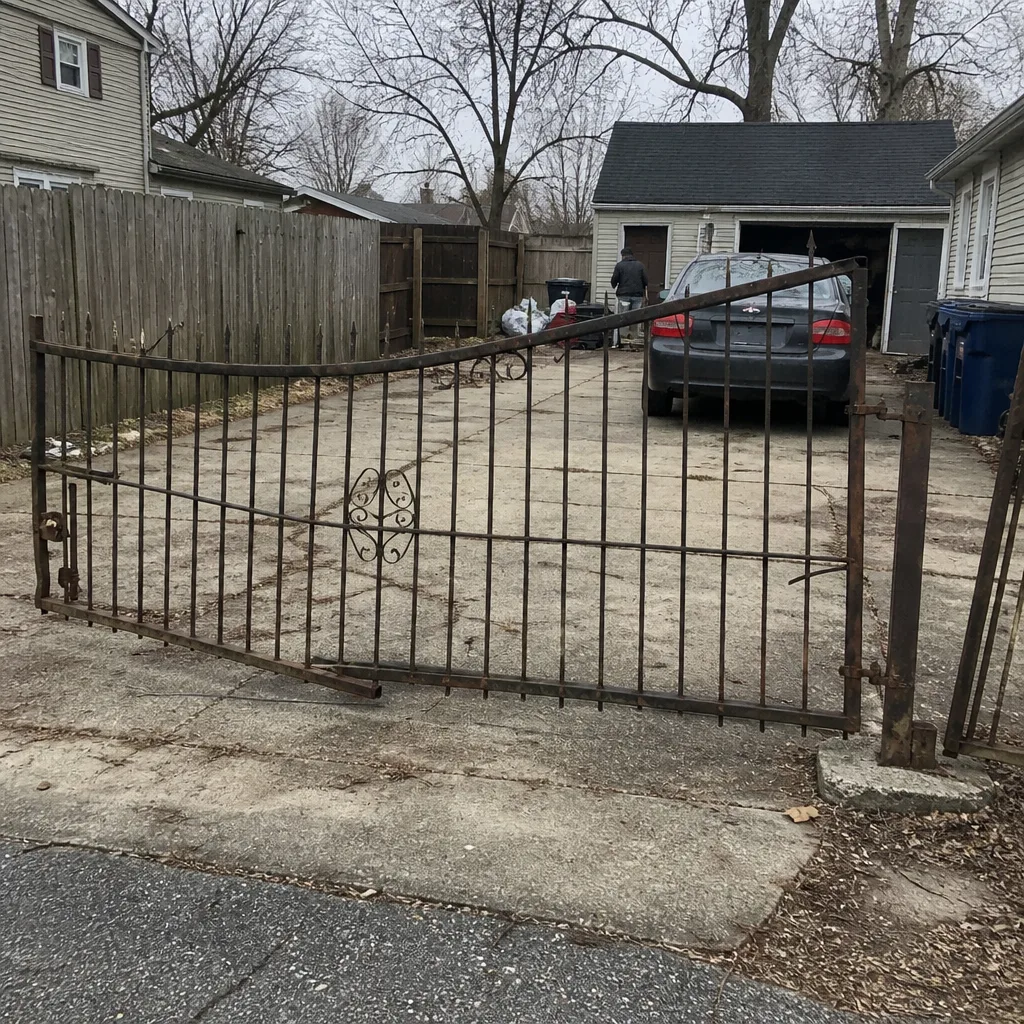 Before
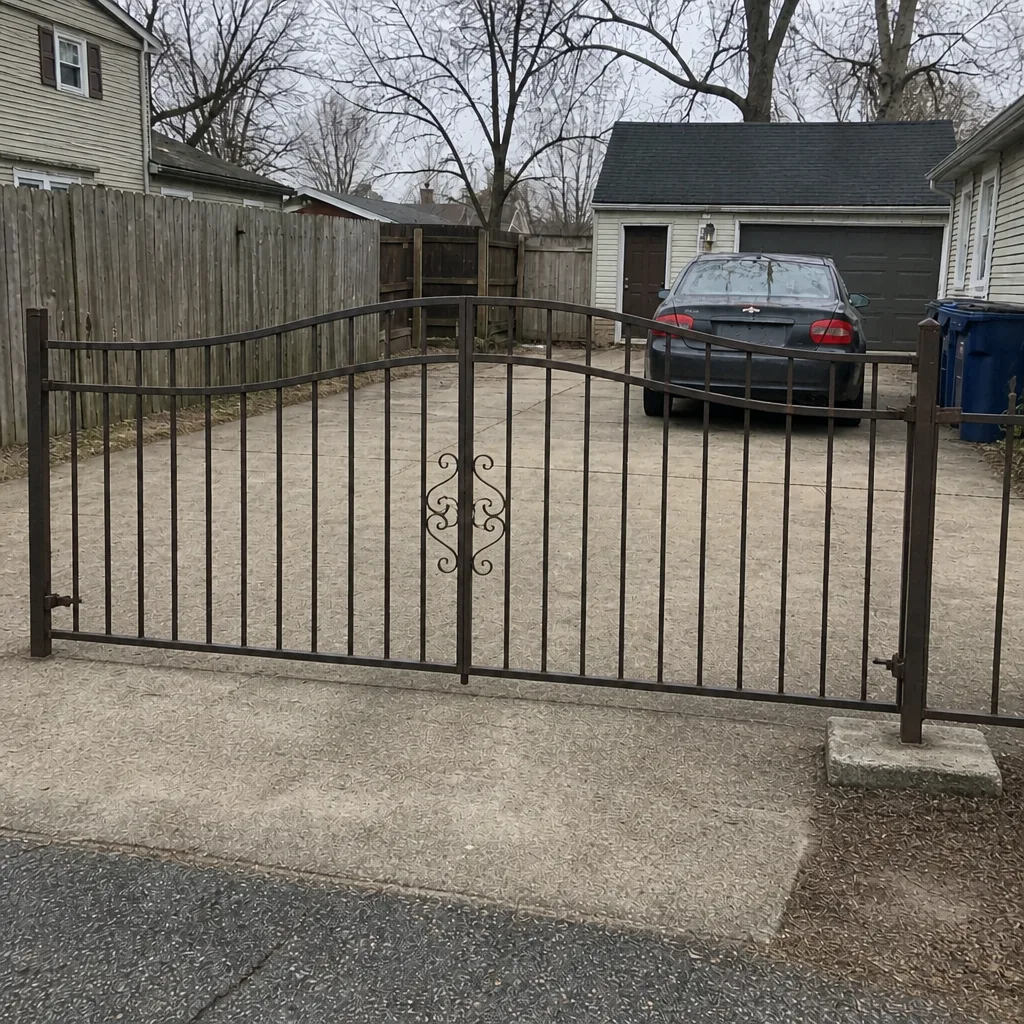 After
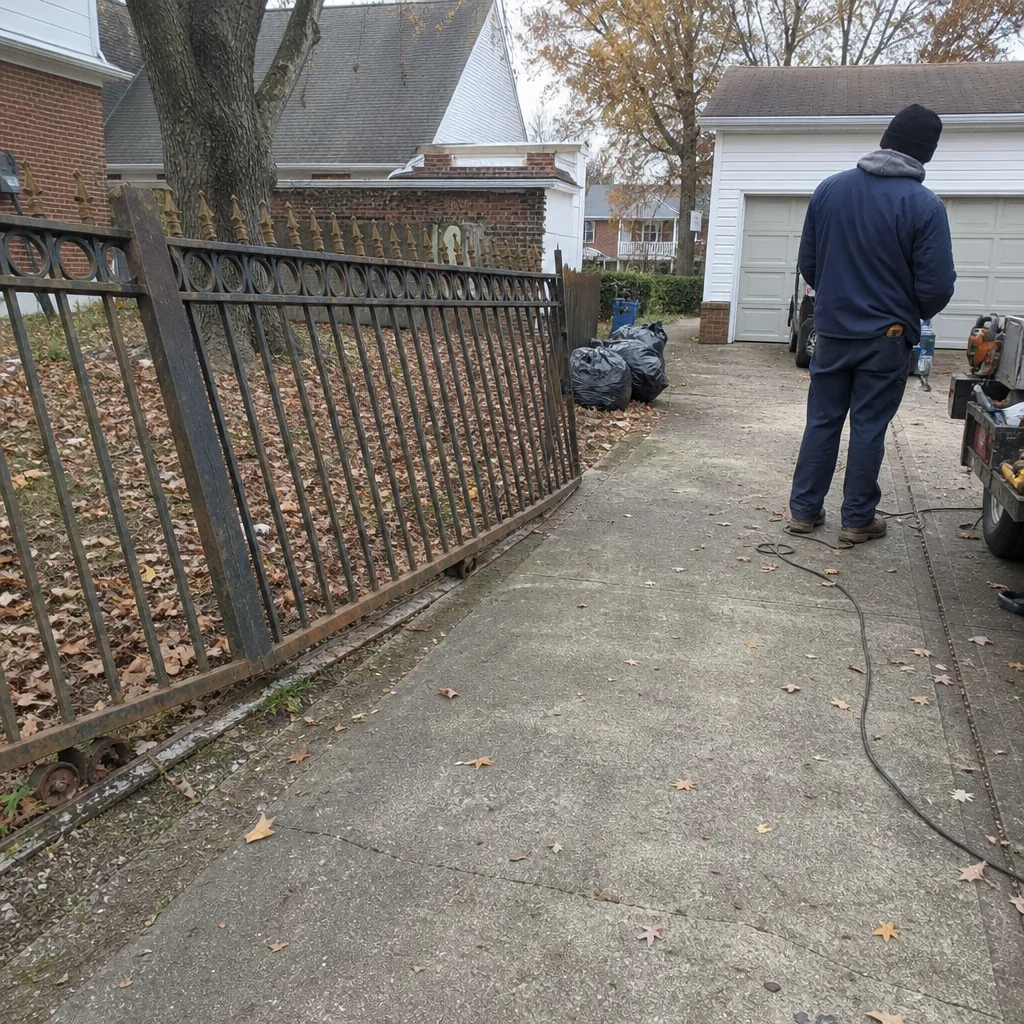 Before
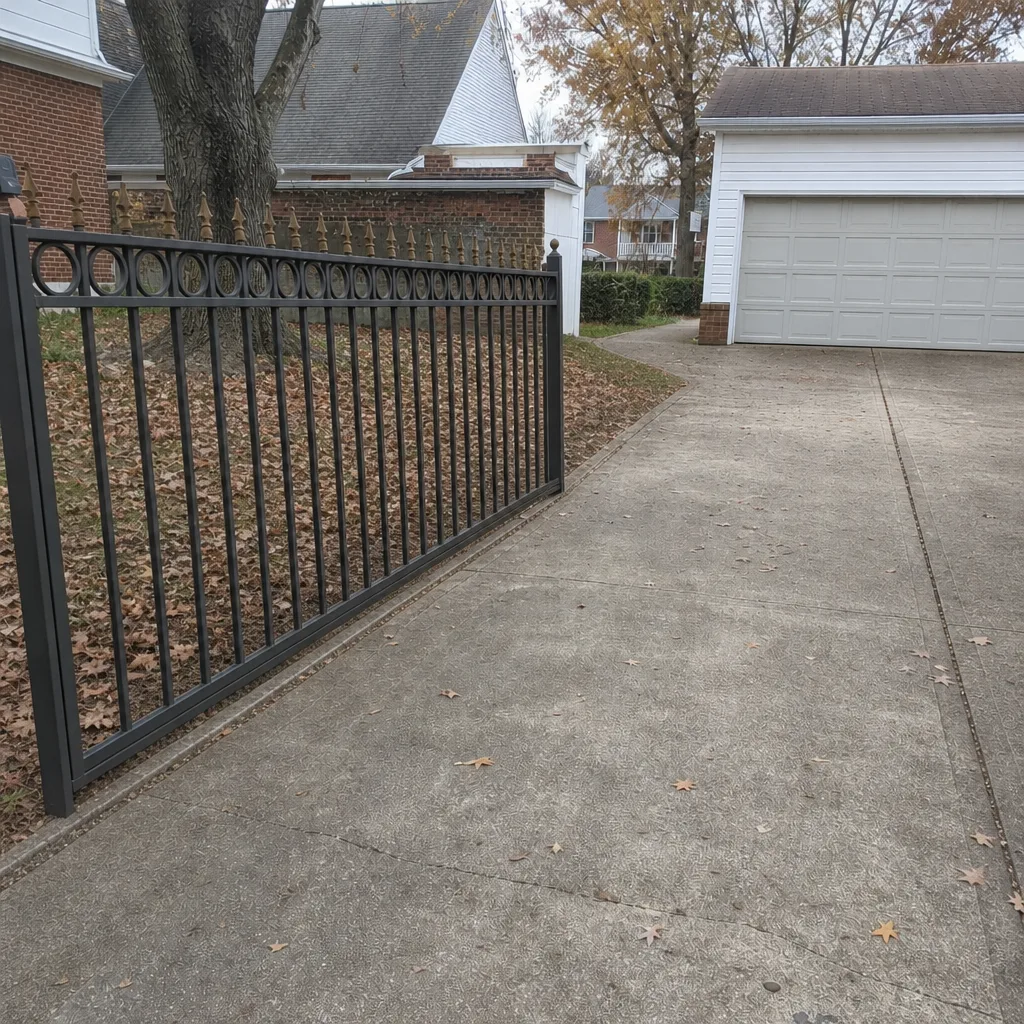 After
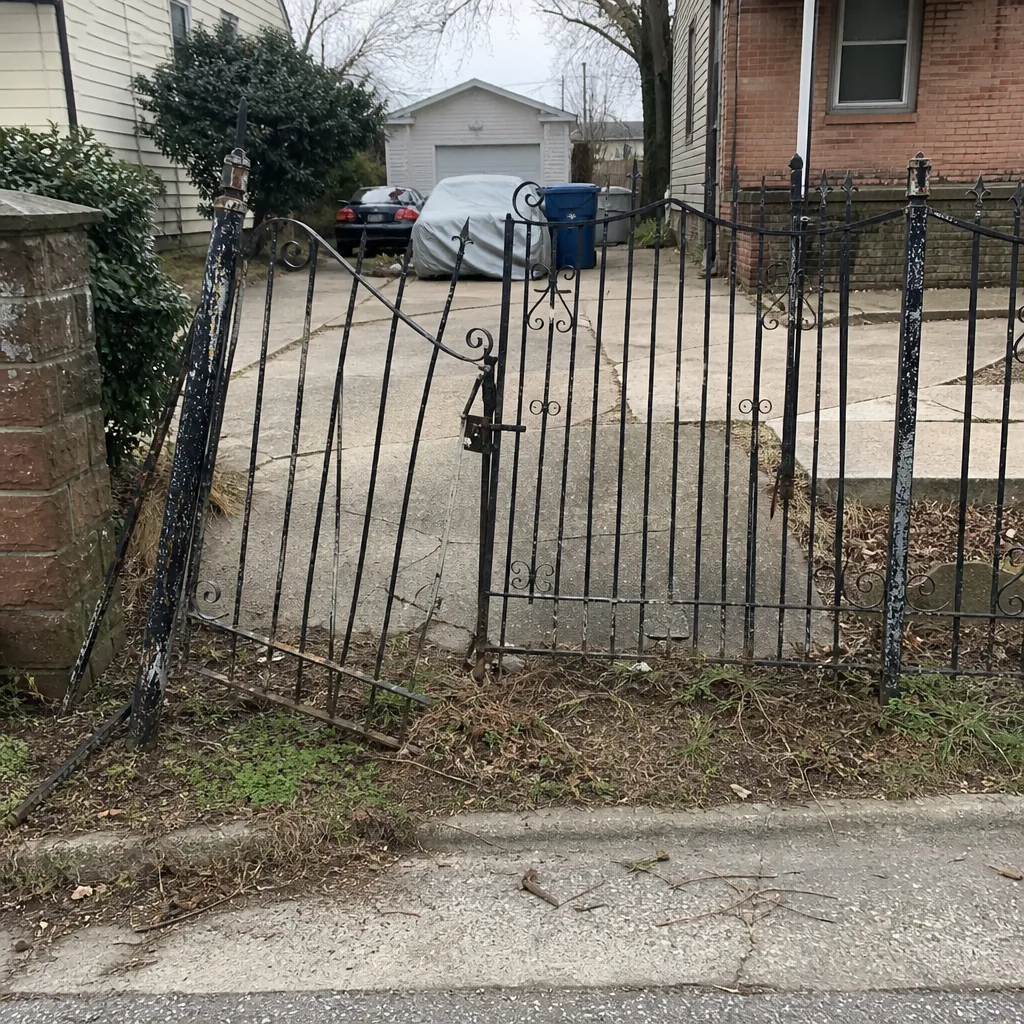 Before
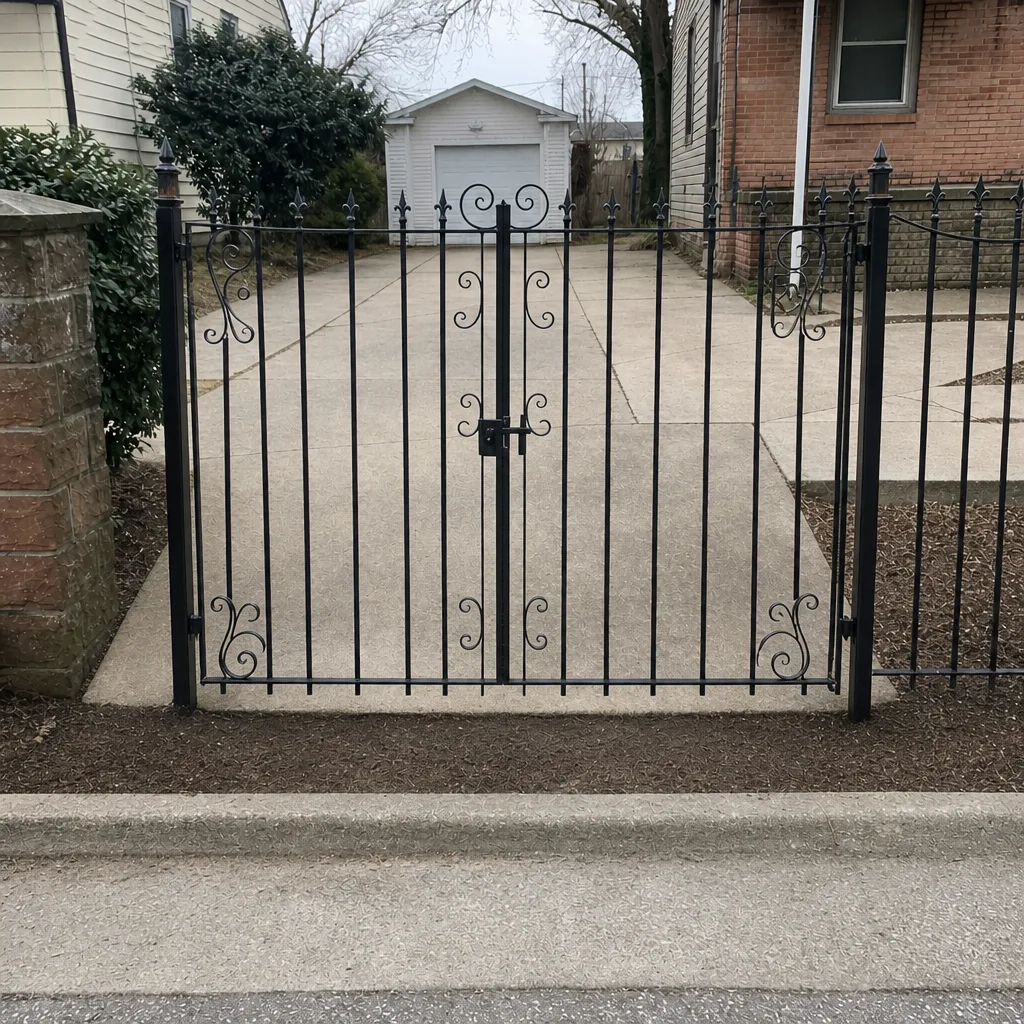 After
Frequently Asked Questions
Yes, for a specific set of tasks. Cleaning photocell lenses, clearing debris from a slide track, lubricating hinges and rollers, replacing a remote battery, and re-seating a loose safety edge clip are all homeowner-appropriate. Anything involving operator wiring, control boards, force or reversing settings, limit switches on commercial-grade operators, or structural welding is not. The line is the component, not the difficulty. Call (866) 620-2654 if you’re unsure which side of the line your repair sits on; estimates are free.
Most Virginia localities require a permit for electrical gate operator work, and the City of Newport News building department has the final word on your specific situation. Call them before any electrical work starts. The insurance question follows the permit: an unpermitted self-performed repair can be grounds for a denied homeowner’s insurance claim, and that’s a coverage decision the homeowner carries. For permitted electrical gate work, call (866) 620-2654; we can walk you through the scope and set up a free estimate.
They’re different procedures on different architectures. The CSW200 is a commercial-grade swing operator with a chassis-based limit adjustment, and the FAAC 400 is a residential hydraulic swing operator with an adjustment procedure specific to the hydraulic drive. The task name is the same; the steps and the re-verification afterward are not. Every operator brand has its own version, which is why we cover nine of them. For a limit adjustment on any of the brands you own, call (866) 620-2654; the estimate is free.
Probably not. A gate that reverses unpredictably almost always has a safety-device or force-setting problem: a photocell that’s dirty or misaligned, a safety edge that has failed, a loop detector that’s miswired, or a force setting that was set by feel instead of by gauge. Cleaning a photocell lens is homeowner-appropriate and worth a try. Anything else should be handled by a technician with a force gauge and a loop detector tester. Call (866) 620-2654 for an exact quote; estimates are free.
It can affect a claim, especially when the work is electrical and unpermitted. A carrier can point to unpermitted self-performed electrical work as a reason to deny or reduce coverage on a claim. The homeowner also carries personal liability directly for any injury caused by the unverified work. That’s not a reason to panic; it’s a reason to call the City of Newport News building department before starting electrical work and to use a licensed professional for anything that touches entrapment protection. For a free estimate on any gate repair in Newport News, call (866) 620-2654.
Yes, for nine operator brands: LiftMaster, FAAC, BFT, Linear, Viking, Ghost Controls, DoorKing, Elite, and Mighty Mule. We cover both manual and electric gate systems, from swing gates and slide gates to barrier arm operators, and we provide repair and new installation as one service. That range matters for a Newport News homeowner with an older or less common operator, because the brand on the gate decides the procedure. Call (866) 620-2654 for a free estimate or to check that the brand on your property is one we service.
The Bottom Line
The DIY-vs-professional decision for gate repair isn’t about whether you’re handy. It’s about which layer of the gate you’re touching. Cleaning, lubricating, and clearing debris belong with you. Operator wiring, control boards, limit switches, loop detectors, force and reversing settings, and structural welding belong with a trained technician who can verify UL 325 compliance with a gauge and whose license and insurance sit behind the work. The five tasks that are professional-only are also the five where the DIY math breaks down. If you’re not sure which side of the line your repair is on, that’s the answer: call.
Gate Repair Newport News handles gate repair, electric gate repair, and gate installation across Newport News and the surrounding Peninsula. Our technicians have up to 14 years of experience and work on LiftMaster, FAAC, BFT, Linear, Viking, Ghost Controls, DoorKing, Elite, and Mighty Mule systems. Whether you’re in Hilton Village, Port Warwick, Denbigh, or anywhere else in Newport News, call (866) 620-2654 for a free estimate. We answer 24/7, with fast dispatch from 7am to 7pm, Sunday through Friday. Every price is quoted and agreed before any work starts, and if you’re starting fresh with a Newport News gate project, we handle the install as well as the repair. Learn more about our full range of service at Gate Repair Newport News.
Written by the team at Gate Repair Newport News.