
Last updated November 15, 2026
 Wrought iron
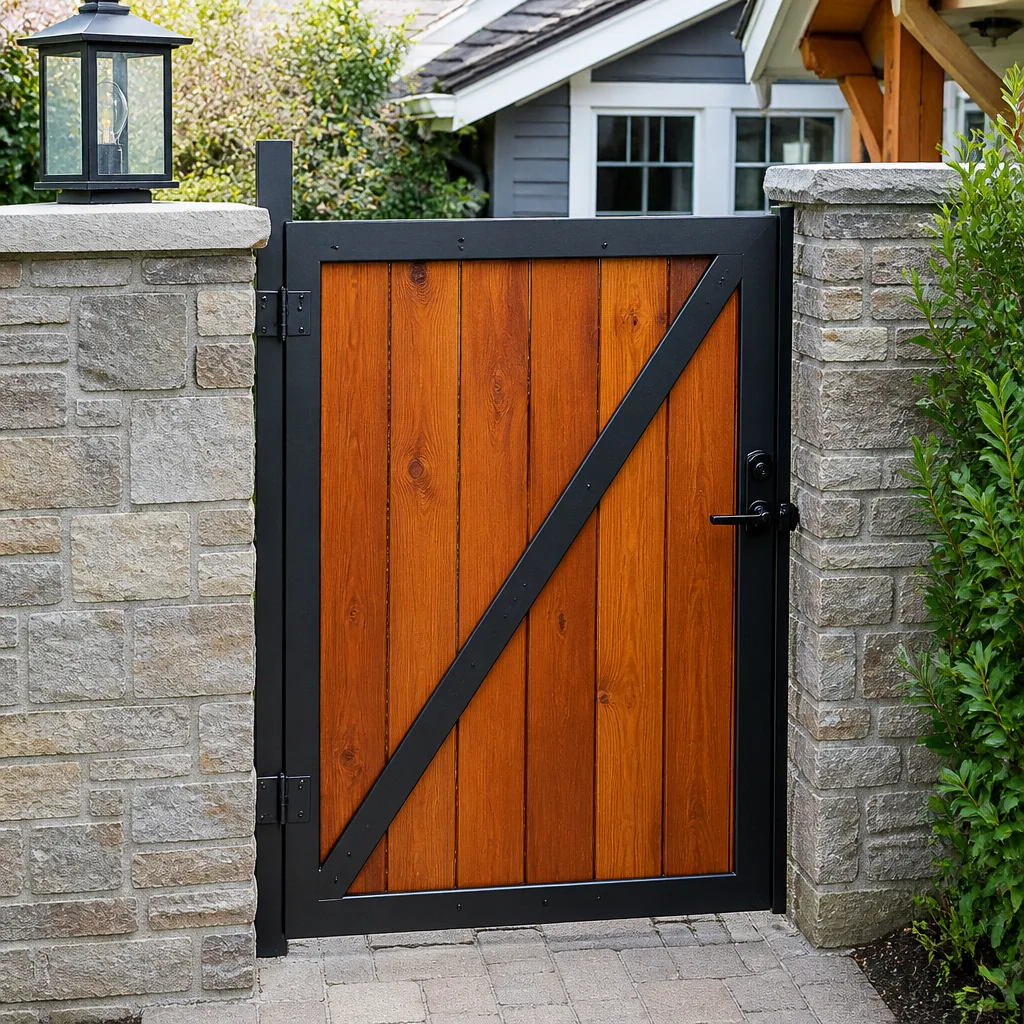 Wood & steel frame
 Farm & ranch
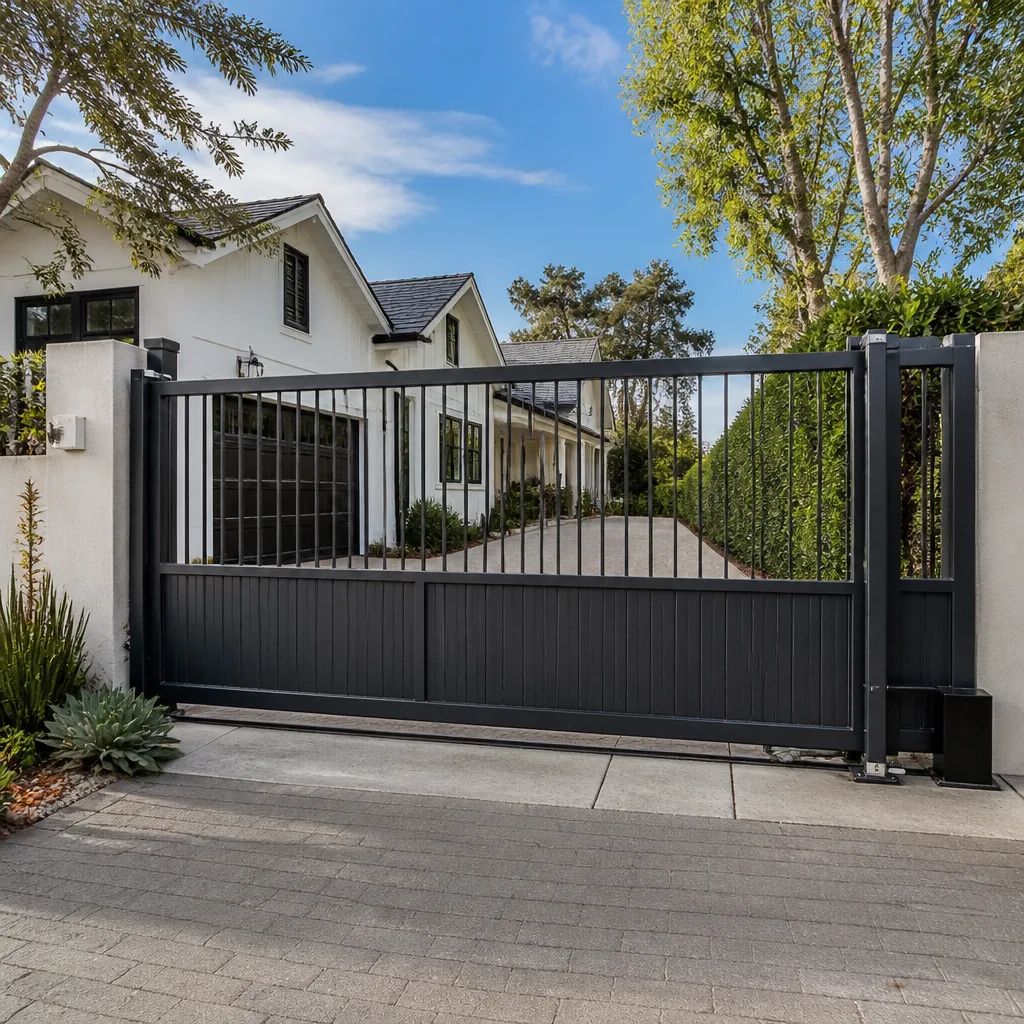 Sliding driveway gates
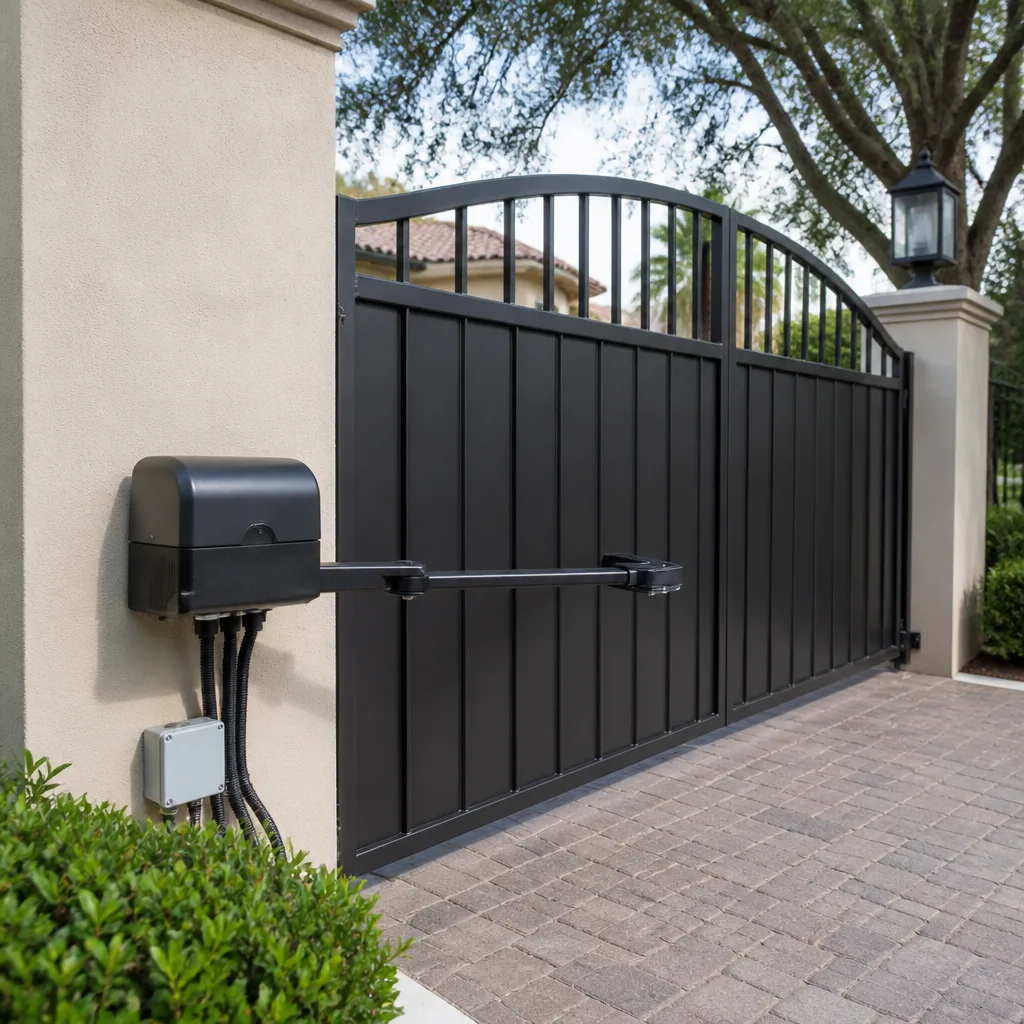 LiftMaster operators
Free on-site gate assessment - hinges, posts, and your LiftMaster or Nice gate operator checked before anything is quoted
The assessment is free and the quote is the invoice.
Get your free estimateGate Repair Maintenance Checklist for Newport News Homeowners
Most printable gate checklists floating around the internet were written for dry, inland cities. They tell you to grease the hinges and call it a day. But a gate standing in the humidity of southeastern Virginia lives a different life, and the hardware knows it. Steel fasteners threaded into steel frames, constant ground moisture, clay soil that swells and shrinks through the seasons, and the push of storm-season wind loads all work on a gate in ways a Phoenix checklist never accounts for. As a gate specialist working Newport News properties, we’ve learned which tasks actually matter here. This guide gives you a real, season-tested maintenance checklist for the Virginia Peninsula, tied to specific components and real service intervals.
Quick Answer
A proper gate maintenance checklist for Newport News covers four things: monthly lubrication and hardware inspection, quarterly testing of controls and safety devices, semi-annual battery and pier checks before storm season, and an annual professional service visit for the operator and the gate structure. Done on that schedule, a well-built gate system routinely lasts three to five years longer than one that only gets attention when something breaks. The short version: keep the moving parts lubricated, keep the power and safety systems tested, keep an eye on the concrete piers, and know when to call in a specialist.
Styles & brands we work with
- Wrought iron
- Wood & steel frame
- Farm & ranch
- Sliding driveway gates
- LiftMaster operators
Table of Contents
- Monthly Tasks: Lubrication and Visual Inspection
- Quarterly Tasks: Testing Controls and Safety Devices
- Annual Tasks: The Full Component Service
- Salt-Air and Humidity Corrosion Checkpoints
- Concrete Pier Integrity: The Most Skipped Item
- Battery Backup Testing Before Hurricane Season
- Clay Soil, Settling, and Storm-Season Load
- Common Mistakes to Avoid
Monthly Tasks: Lubrication and Visual Inspection
Monthly maintenance is about catching small problems before they turn into a repair bill. It should take you about fifteen minutes per gate. What you’re watching for is wear, looseness, and any sign that metal is starting to change. Specific products matter here: a generic household lubricant won’t do the job in this climate.
Here is a workable monthly routine:
- Lubricate the chain. Use a proper chain lubricant like Tri-Flow. Apply it to the rollers and pins, not just draped over the top of the chain. A dry chain under tension wears unevenly and starts to jump the sprocket.
- Check all visible fasteners. Bolt heads should sit tight. Any loosening on hinges, brackets, or operator mounts is an early warning sign.
- Look for corrosion on ferrous hardware. Rust streaks, powdery orange dust, or paint bubbling around welds all signal metal is breaking down. Fluid Film is a good choice for protecting ferrous hardware and slowing that process.
- Check for obstructions along the gate’s travel path. Debris, overgrown plants, or small stones under a slide gate cause the operator to strain.
- Open and close the gate manually (operator disengaged) and listen. Any grinding, scraping, or sudden laboring means something changed since last month.
In Newport News, the humidity stays high much of the year, so unprotected steel oxidizes faster than it does on a dry checklist. A monthly pass keeps you ahead of that. If you find something you can’t explain, that’s a natural point to schedule gate repair before it grows.
Quarterly Tasks: Testing Controls and Safety Devices
Quarterly checks move from the hardware to the electronics. On an electric gate, the operator, control board, and safety devices all need to be working together. A gate that opens and closes but ignores its safety sensors is a failed system waiting for an accident.
Work through these each quarter:
- Test the safety edges and photo-eye sensors. Walk into the gate’s path while it’s closing. A working system reverses or stops immediately. Do the same with anything reflective placed in front of the sensor.
- Test the loop detector if you have one. Drive a vehicle across the exit loop and confirm the gate triggers as expected.
- Check the manual release. With the operator powered down, you should be able to disengage and move the gate by hand. A release that’s seized is a problem you only discover during a power failure.
- Press every remote and keypad code you rely on. If one remote has stopped working while others still do, that tells you something about the receiver or the remote itself.
- Inspect the operator housing for moisture or insects. Control boards are sensitive to water intrusion and to nests built inside enclosures.
If you have a LiftMaster or FAAC operator, the owner’s manual has a specific procedure for testing the thrust or reverse force setting. Don’t change those factory settings casually. Making the gate more sensitive can cause nuisance reversing; making it less sensitive removes a safety layer.
Our technicians have up to 14 years of experience and know the control boards on the major residential and light-commercial operators, including LiftMaster, FAAC, and BFT. If testing turns up a control board or limit switch issue, that falls squarely under electric gate repair and should be handled by someone trained on that brand.
Annual Tasks: The Full Component Service
Once a year, the gate deserves more than a visual pass. The annual service looks at everything the monthly and quarterly checks can’t cover, plus the parts that wear slowly and fail without warning.
A thorough annual service should include:
- Operator motor inspection. Check motor mounts, belt or gear wear, and the condition of any drive components inside the housing.
- Full lubrication of hinges, pivot points, and rollers. Every moving joint gets attention, not just the chain.
- Control board review. Look for failing capacitors, water damage, loose terminal screws, and any signs of heat on the board.
- Limit switch adjustment. Confirm the open and close limits are set exactly where they should be, so the gate isn’t over-traveling or hitting against its stops.
- Pier and post inspection. See the dedicated section below; this is the most important structural piece of the checklist.
- Fastener torque check on all mounting brackets.
- Battery load test on any backup power system.
Annual service is also the point where a technician can spot developing problems that a homeowner wouldn’t know to look for. It’s worth scheduling it before storm season each year. Whether your gate is a swing arm, slide gate, or barrier arm, the same annual logic applies.
Salt-Air and Humidity Corrosion Checkpoints
Newport News sits close to the James River and the Chesapeake Bay, which means air with a real moisture load. That has practical consequences for gate hardware. Metals mix, and where they mix, they corrode. The classic case is a stainless-steel fastener threaded into a mild-steel frame. Where those two metals touch, they form a galvanic cell, and over time that interaction can eat away at the weld or thread around the fastener. It doesn’t show up in a single season, but it is one of the slow, quiet failure modes we see most often.
Here is what to check every time you do a corrosion pass:
- Weld points, especially near hinges and frame joints. Look for rust bloom, paint flaking, or pitting.
- Fasteners, especially where stainless meets ferrous metal. Check for discolored metal, tiny pits, or white or orange residue around the head.
- Slide gate tracks and guide rollers, which stay in constant contact with ground moisture.
- Bottom rails and bases, where splashing rain and wet soil are in constant touch with steel.
Where you find bare or thin galvanized metal, a protective film on ferrous hardware is a practical defense. Fluid Film is one clear option. Cleaning and repainting small rust spots early will cost considerably less than replacing a hinge or a section of frame later. For gate owners in neighborhoods like Hilton and Riverside, where the humidity holds through the warm months, that check should be part of the monthly routine.
Concrete Pier Integrity: The Most Skipped Item
If there is one checklist item nearly every homeowner skips, it’s the concrete piers. A swing gate is only as sound as the piers its hinges are anchored to. Over time, the soil around a pier shifts (specially in clay-heavy ground), the pier can crack, and the gate begins to sag. By the time the sag is obvious, the pier or the hinge has usually been under strain for months.
Here’s a basic visual pier inspection protocol:
- Look at the concrete above ground. Any crack that runs more than a hairline width, or any chunk that has broken away at the top, deserves attention.
- Check the hinge anchor bolts. They should not move when the gate swings. A hinge plate that rocks, even slightly, means the anchor is failing.
- Watch the hinge gap as the gate opens. If the gap grows or shrinks as the gate travels, the pier is likely out of position.
- Look for ground heave or washout around the pier base. Soil that has settled away from the pier leaves room for the pier to move.
- Test for the gate drifting downhill. A swing gate that swings open on its own or doesn’t hang level when it’s closed often has a pier or footing issue underneath.
You cannot fix a failing pier with a wrench. This is a job for a technician who can evaluate the footing and the hinge condition together. A gate sinking into the ground in Newport News is almost always a foundation matter before it’s an operator matter, and the fix is engineering first.
Battery Backup Testing Before Hurricane Season
Storm season on the Virginia Peninsula makes backup power a real question, not a nice-to-have. When power goes out, a gate with a working battery backup keeps doing its job, and a gate with a dead battery just sits there. An operator such as the Viking 3500 has a battery system that can be tested on the spot, and it should be. The month before storm season is the right time to test every gate operator’s backup.
Here’s how to think about the test:
- Disconnect the AC supply to the operator (following the manufacturer’s instructions for your unit) and open and close the gate using the remote. It should function.
- Listen for the motor laboring. A battery that has lost capacity will cause the gate to move slowly or not at all.
- Inspect the battery terminals for corrosion and check for any sign the battery is swollen or leaking.
- Note the age of the battery. Most operator batteries don’t last forever. If it’s old and the gate barely moves under battery power, replace it before storm season, not after.
- Keep contacts clean and recheck the test at the start of every hurricane season.
We answer 24/7, so if a gate fails in a storm the question is easily answered. Fast dispatch from 7am to 7pm gets a technician out to diagnose it. But a five-minute battery test in early summer prevents the problem altogether.
Clay Soil, Settling, and Storm-Season Load
Newport News soils have a lot of clay in them. Clay swells when wet and contracts when dry. Through a Virginia year of wet springs and drier summers, a concrete pier set in clay gets pushed and pulled by the ground around it. That movement is subtle but real, and over a few seasons it shows up as a swing gate that sags or a slide gate that binds. Regular checks of the gate’s level and its hinge alignment catch this early.
Then there’s storm-season load. When a strong wind front moves through the Peninsula, a gate on a rusted hinge or a weakened pier takes more stress than at any other time of year. In our experience, a lot of gate failure happens just after a storm, on systems that were already compromised going into it. That’s why the pre-storm service matters: every extra bit of wear you find and correct before the wind arrives is one less thing that can give way during it.
Prepare your gate for storm season by checking, in this order:
- Pier and hinge integrity
- Gate level and swing alignment
- Battery backup and operator function
- All latches, stops, and safety devices
- Lock and release mechanisms in case you need to move the gate by hand
If you’re going to book one professional visit all year for a Newport News gate, plan it for late spring, before the weather turns. A pre-season service means the technician finds the slow problems while there is time to correct them, rather than after the first strong wind front has already done damage.
Common Mistakes to Avoid
These are the recurring mistakes we see on gate systems across the Peninsula. Most are avoidable, and all of them shorten the life of your equipment.
- Lubricating the chain with household oil or WD-40. These lubricants don’t hold up under the tension of a drive chain and can attract grit. Use a proper chain lubricant like Tri-Flow on rollers and pins only.
- Skipping the concrete piers entirely. If you’ve never looked at the concrete under your hinges, you’re not alone, but it’s the leading cause of a sagging swing gate and the cheapest thing to check.
- Adjusting thrust force or limits without knowing the procedure. Turning down sensitivity to stop nuisance reversing is tempting, but you’re removing a safety layer. If you don’t know the procedure for your operator, don’t turn the dial.
- Forgetting the battery until a storm. An untested backup battery is a gate that fails the first time you actually need it.
- Ignoring mixed-metal corrosion. Stainless fasteners on a mild-steel frame are a galvanic pair, and in this coastal-Virginia humidity they will eat away at the metal around the fastener if left unprotected.
- Greasing a gate that needs a structural fix. Lubricant cannot fix a sagging pier or a worn hinge. When a gate is moving wrong, look for the structural cause before adding more grease.
- Testing the gate with objects that reflect or block a sensor and then walking away. If the gate reverses when it shouldn’t, get it fixed. If it doesn’t reverse when a person steps into the path, stop using it until a technician has inspected the safety devices.
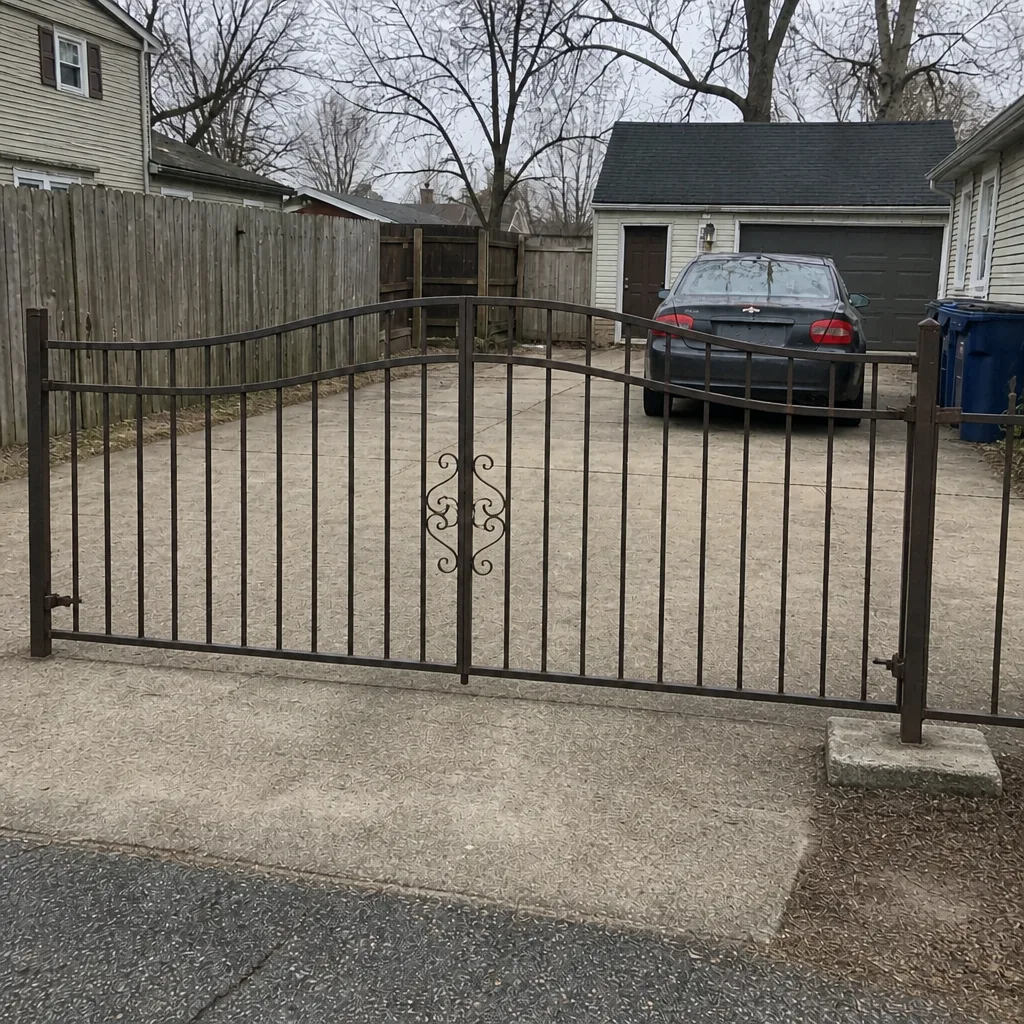
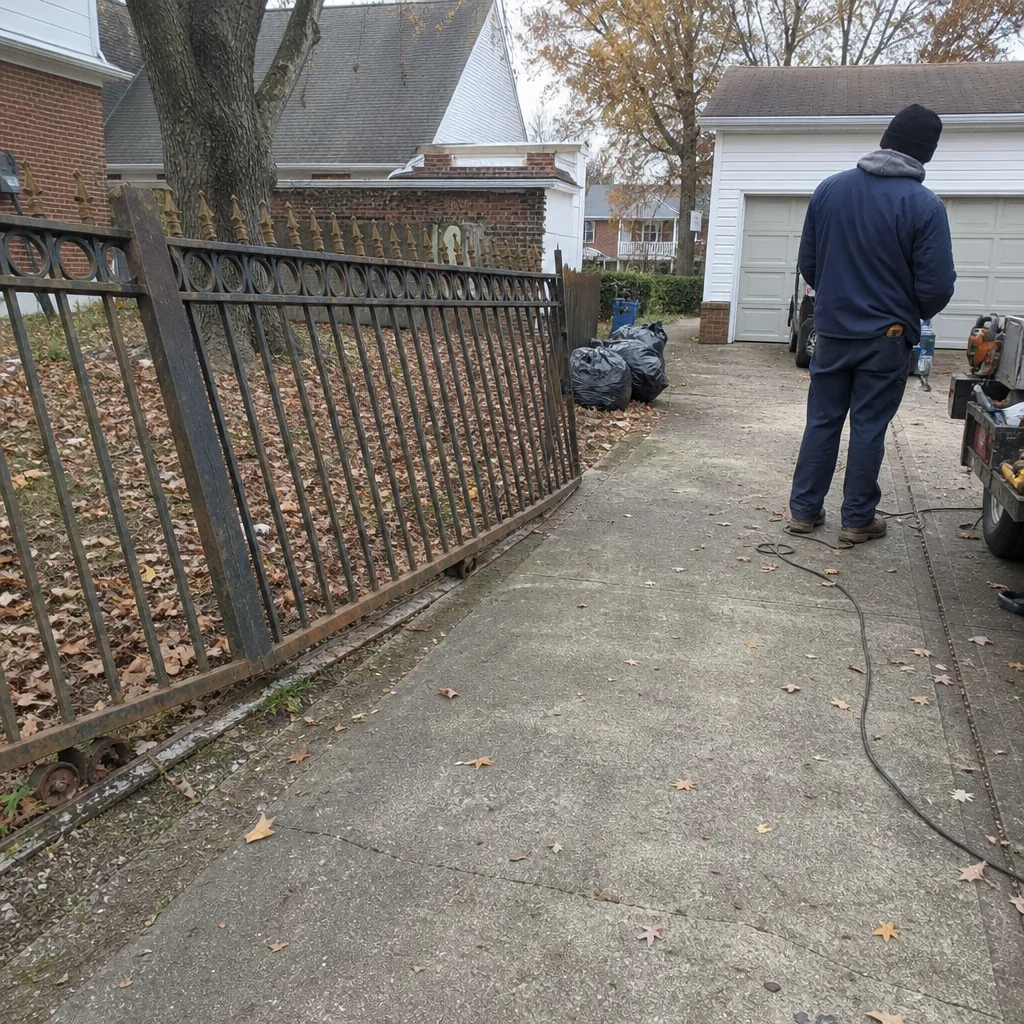
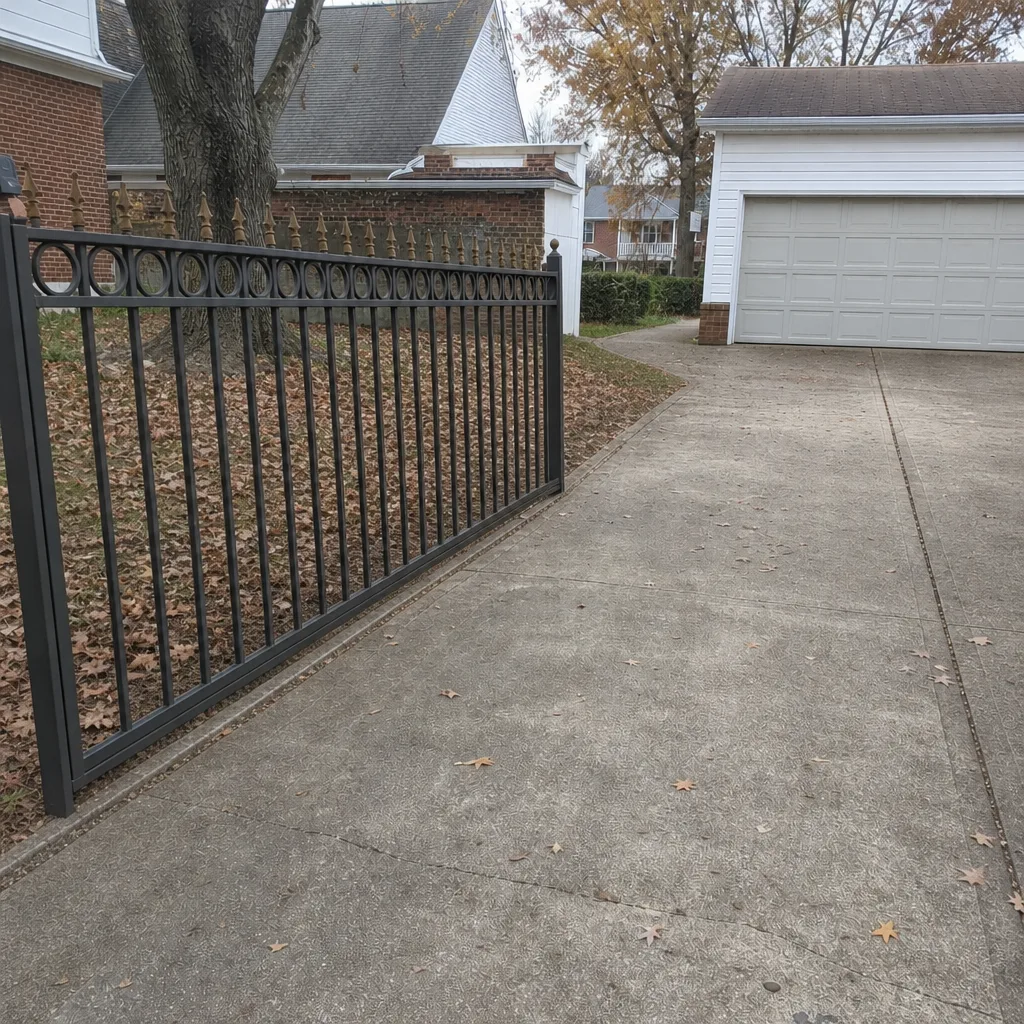
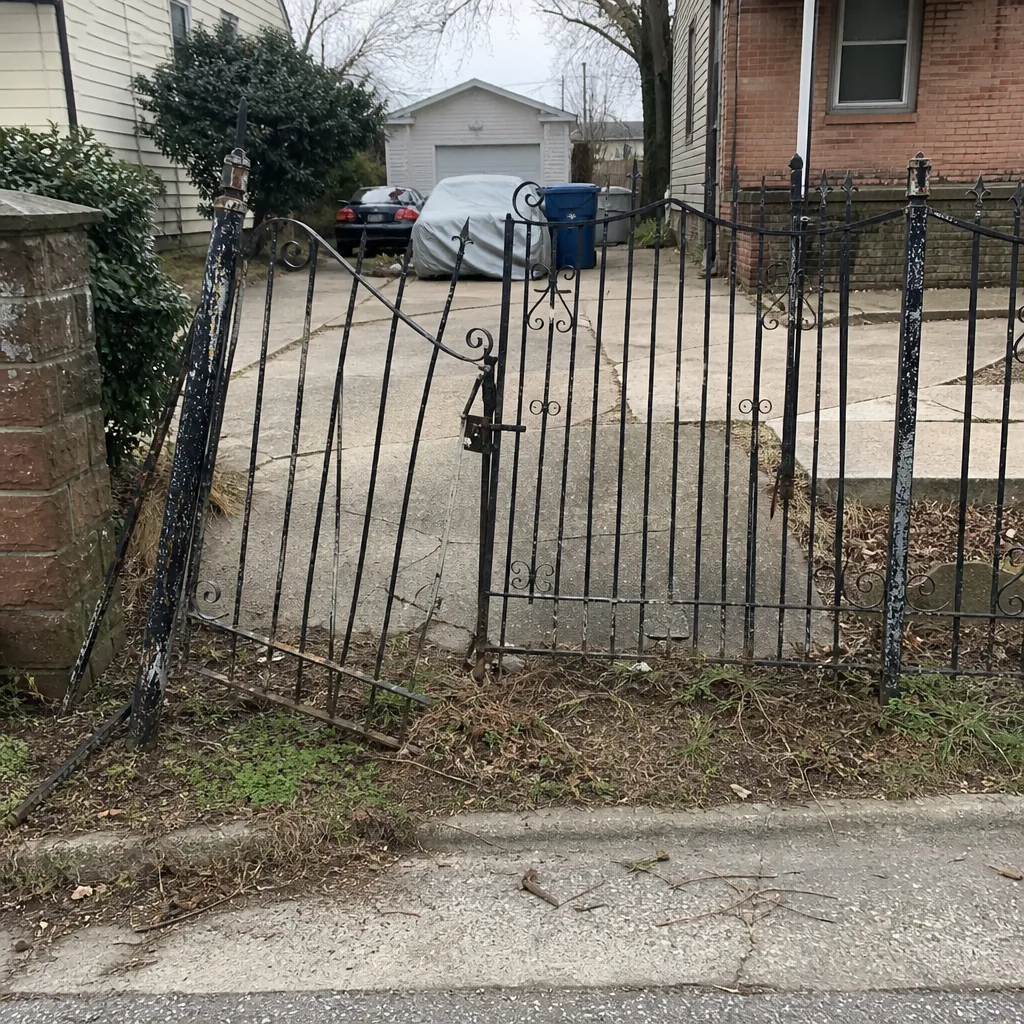
See the difference
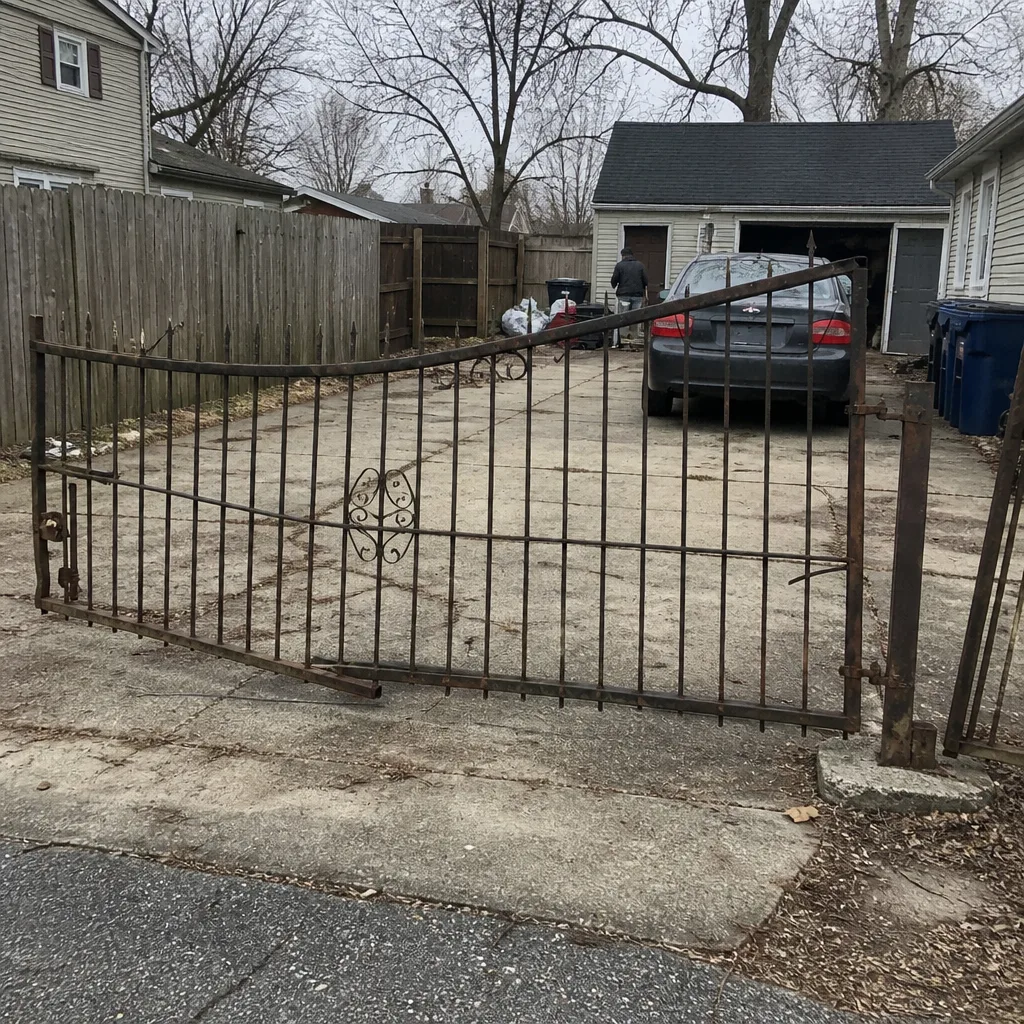 Before
 After
 Before
 After
 Before
 After
When to Call a Professional
Some checklist items you can handle yourself. Others involve the dangerous parts of a gate system: the operator wiring, heavy swing or slide panels that can crush an arm, and the structural piers that hold up the whole thing. Those aren’t tasks for a homeowner with a socket set. Call a professional when the gate reverses unexpectedly, when the pier or hinge is showing movement, when the operator or control board is behaving erratically, when the safety devices fail to test correctly, or when the gate has taken storm damage. A gate specialist with brand experience can look at your system and know exactly what it needs. Gate Repair Newport News offers free estimates in Newport News. Call (866) 620-2654. Our technicians have up to 14 years of experience, and we service the major residential and light-commercial operator brands.
Frequently Asked Questions
For a residential or light-commercial swing gate in the Newport News climate, we recommend a monthly lubrication and visual check, quarterly testing of the controls and safety devices, and one professional annual service. Before storm season, add a battery backup test and a pier inspection. On a busy property, an HOA main entrance or a small commercial driveway gate, that calendar becomes the minimum, not the maximum.
Yes, you can. A homeowner can safely lubricate the chain at the operator and at any exposed chain section using a proper chain lubricant. Apply it to the rollers and pins, not draped over the assembly. The tasks that require a specialist are the electrical ones: wiring, control boards, limit switches, and the operator itself.
A sagging swing gate usually has one of two causes: a failing hinge, or a concrete pier that has shifted in the ground. In Newport News’s clay soils, both are common. The pier moves with the ground through wet and dry cycles, and the hinge slowly wears under the extra load. A professional needs to inspect both together to fix the root cause rather than just the symptom.
Safety devices fail safe or fail unsafe. That is, a photo-eye that is dirty or misaligned will either trigger the gate to reverse the instant it closes, or it will stop working and let the gate push through. If your gate reverses without anything in the path, or if it closes onto a person or vehicle without reversing, the safety devices need immediate attention. Call (866) 620-2654 and get them checked. We answer 24/7, and fast dispatch gets a technician out from 7am to 7pm.
Often yes, and that’s an area where a dedicated gate specialist makes a real difference. We service nine major operator brands: LiftMaster, FAAC, BFT, Linear, Viking, Ghost Controls, DoorKing, Elite, and Mighty Mule. If your operator is a legacy brand or a less common unit, call and describe it. We work on both common residential openers and the harder-to-find commercial-grade systems.
Some gate work, particularly new installation or work that involves electrical connections, may require a permit or inspection from the city. Maintenance and repair on an existing system usually do not. If you’re planning an install or a major electric change, ask the city about permit requirements before work starts. A free estimate lets us talk through what your specific project involves.
The Bottom Line
A gate in Newport News needs more than a grease gun. Humidity, clay soils, mixed metals in the hardware, and storm-season wind all take their toll on the same hinges, piers, and operators. The maintenance cadence that actually works here is monthly lubrication and inspection, quarterly control and safety testing, and an annual service before the weather turns. Concrete pier checks are the most skipped and most important item on the list. Get it right and a well-maintained gate system lasts three to five years longer than one left alone. From motor to control board, from a swing arm to a slide gate, we can help keep your system working. Call (866) 620-2654. We answer 24/7. Fast dispatch from 7am to 7pm, Sunday through Friday. For more about our services, start with Gate Repair Newport News.
Written by the team at Gate Repair Newport News.