
Last updated November 15, 2026
 Wrought iron
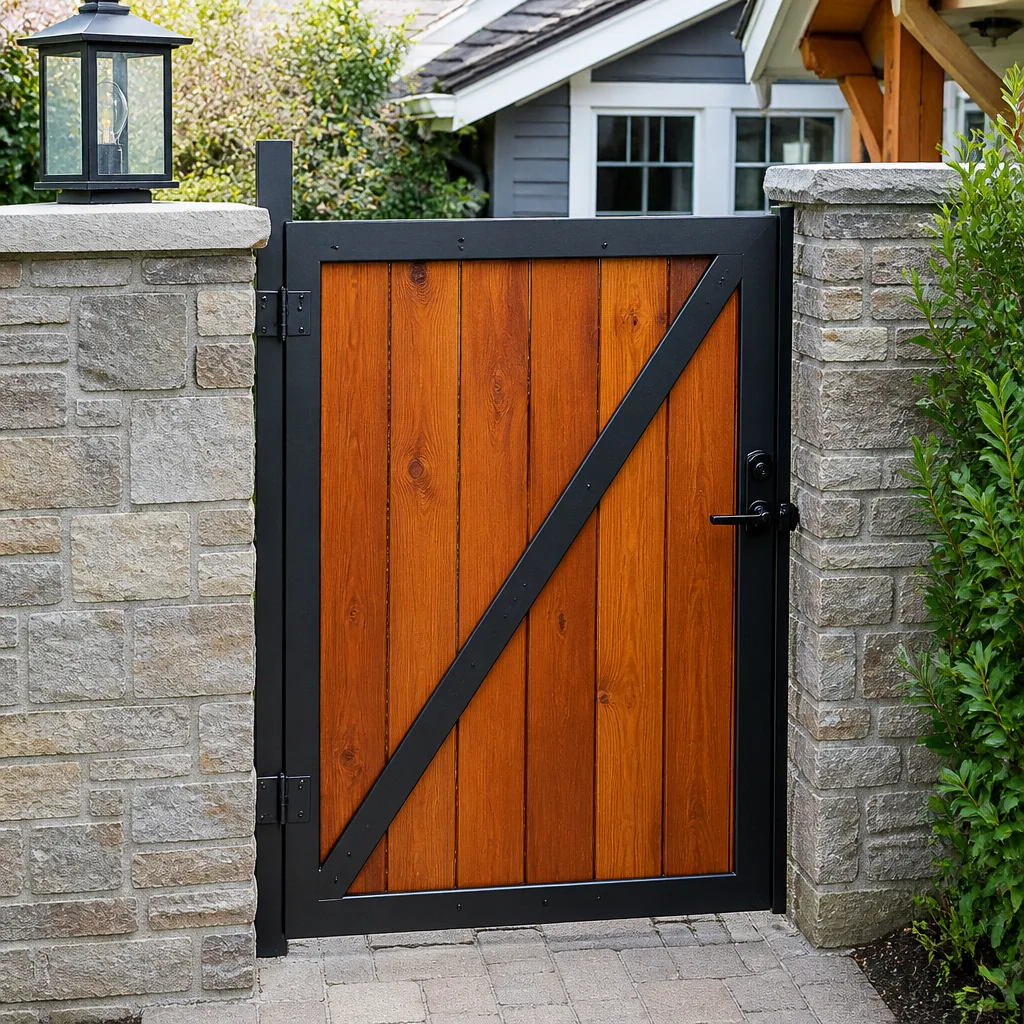 Wood & steel frame
 Farm & ranch
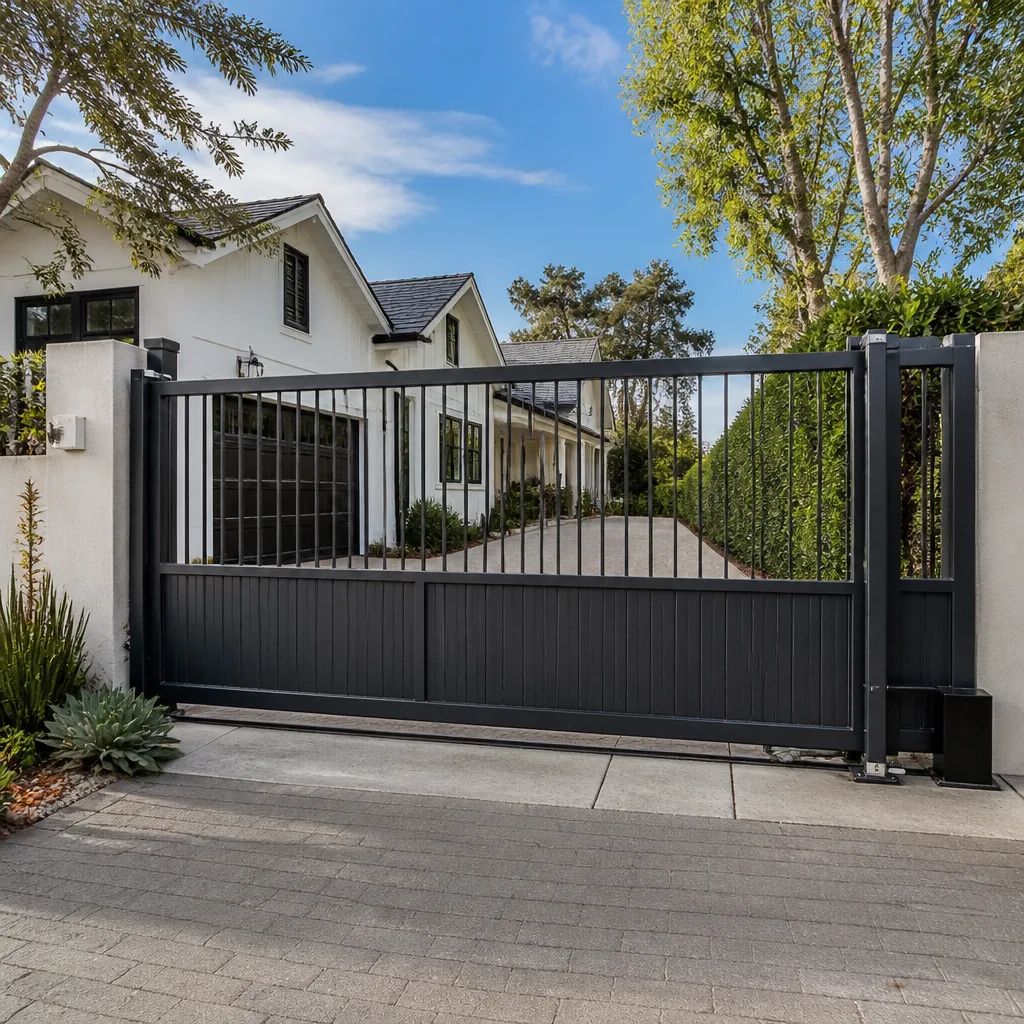 Sliding driveway gates
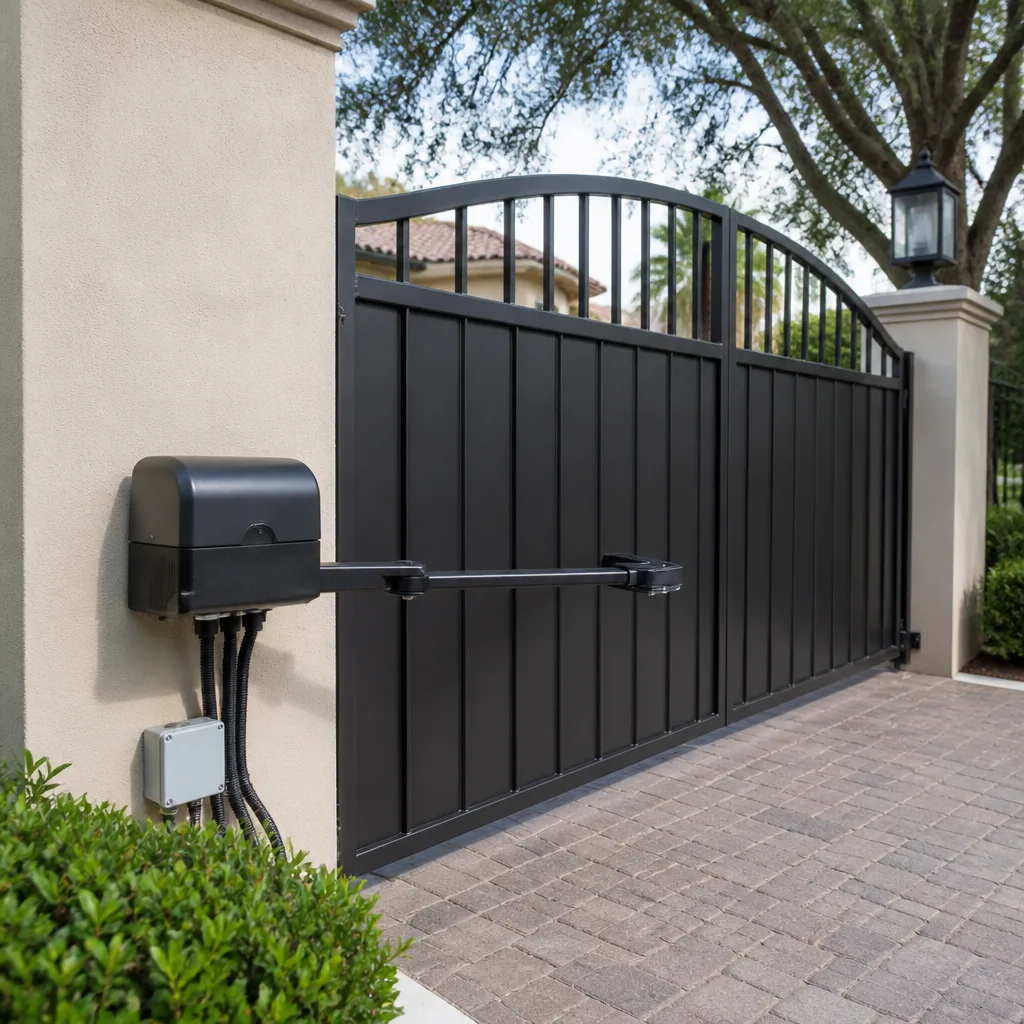 LiftMaster operators
Free on-site gate assessment - hinges, posts, and your LiftMaster or Nice gate operator checked before anything is quoted
The assessment is free and the quote is the invoice.
Get your free estimateGate Repair Troubleshooting in Newport News: Common Problems and How to Fix Them
A gate that stops mid-swing isn’t necessarily a motor problem. In our experience, nine times out of ten it’s a limit-switch drift or a logic-board fault that gets misdiagnosed as a failed actuator, and that misdiagnosis leads homeowners to replace a motor that was still fine. The expensive part of gate repair almost never comes from the part that broke; it comes from guessing wrong about which part broke. This guide maps the three failure chains that cause most gate problems by symptom, so when you call a technician in Newport News you can describe exactly what’s happening instead of saying “it just stopped working.”
Quick Answer
Most gate problems in Newport News trace back to one of three failure chains: a power or battery fault, a sensor and safety-device misalignment, or a mechanical bind in the hinges, tracks, or strike plate. Slow movement points to battery or capacitor; random reversals point to obstruction sensors or loop detectors; a gate that won’t latch is usually a hinge or strike-plate problem, not an operator failure. Reading the fault code on your operator before you call is the fastest way to get the right repair the first time.
Styles & brands we work with
- Wrought iron
- Wood & steel frame
- Farm & ranch
- Sliding driveway gates
- LiftMaster operators
Table of Contents
- The Three Failure Chains Behind Most Gate Problems
- Symptom-to-Component Map: What Your Gate Is Telling You
- How to Read Fault Codes on Common Operators
- What Hampton Roads Humidity Does to Gate Hardware
- Swing Gates vs. Slide Gates: Different Problems, Different Fixes
- When a DIY Reset Is Safe and When It Isn’t
- A Printable Diagnostic Checklist by Gate Type
- Why Brand Knowledge Shortens Your Repair Time
The Three Failure Chains Behind Most Gate Problems
Every gate system, whether it’s a residential swing gate on a LiftMaster operator or a slide gate on a commercial DoorKing unit, runs on the same basic loop: power in, logic decision, mechanical action. A fault in any one of those stages produces a symptom downstream, and the symptom almost always looks like the stage that comes after it. That’s why a control board fault reads as a dead motor, and why a worn hinge reads as an operator that “can’t push hard enough.”
Here are the three chains, in the order we check them:
- Power chain. Battery, capacitor, transformer, and the wiring between them. Symptoms: slow movement, weak push, gate stalling halfway, operator clicking without moving.
- Logic and safety chain. Control board, limit switches, obstruction sensors, loop detectors, keypads, and remote receivers. Symptoms: random reversals, gate opening then immediately closing, remote not working but wall button fine, error codes.
- Mechanical chain. Hinges, pivot pins, rollers, track, strike plate, and the gate leaf itself. Symptoms: sagging, dragging, grinding, gate not latching, gate moving freely by hand when it shouldn’t.
Separating these three chains is the single most useful thing you can do before a technician arrives. If your gate moves freely by hand but the motor won’t drive it, you’re in the power or logic chain. If the motor runs and strains but the gate barely moves, you’re in the mechanical chain. That one distinction cuts most of the diagnostic time out of a service call, and in Newport News, where gate hardware takes a beating from summer heat and winter moisture swings, it’s worth learning.
Symptom-to-Component Map: What Your Gate Is Telling You
Match your symptom to the most likely component below. This is a starting point, not a diagnosis, but it’s the same starting point a technician uses.
- Slow open or close: battery losing capacity or a failing capacitor on the operator. Battery first on solar and battery-backup systems; capacitor first on older AC operators.
- Random reversals or the gate reversing on nothing: obstruction sensor misalignment, dirty photo-eye lenses, or loop detector sensitivity set too high. Reversals are a safety behavior, so the system is doing its job; the sensor is the problem.
- Gate won’t latch or won’t stay closed: strike plate shift, hinge sag, or the gate leaf out of plumb. This is mechanical almost every time, not an operator failure.
- Remote works intermittently: receiver antenna position, a weak battery in the remote, or interference. Test with the wall-mounted control first to isolate the receiver.
- Operator runs, gate doesn’t move: broken arm connection, stripped gear, or a shear pin designed to fail. On swing operators, check the arm linkage before assuming the motor.
- Gate stops at the same spot every time: limit-switch drift. The operator thinks it has reached the end of travel. This is one of the most common false “motor failure” calls we see.
- Clicking but no movement: control board relay or a dead capacitor. Let the click pattern guide you; a single click then silence points to the board, a hum then click points to the capacitor.
Write down which of these matches your gate, plus the make and model of the operator if you can find the label. When you call for gate repair, that information turns a diagnostic visit into a repair visit.
How to Read Fault Codes on Common Operators
Modern operators store fault codes, and reading them before you call saves a step. The exact code list varies by model, so check the label inside the operator housing for the model number and look up that model’s code table. Here’s how the process works across the brands we service most.
LiftMaster LA400 and similar swing operators: fault codes usually flash on the control board LED in a pattern rather than displaying a number. Count the flashes between pauses, then compare to the chart printed inside the housing cover. A repeated short-flash pattern typically points to a limit or obstruction circuit rather than the motor itself.
Ghost Controls operators: these tend to report through a combination of LED behavior and the number of beeps at power-up. A single beep with no movement often means the control board is waiting on a safety input, not that the board has failed. Check the photo-eye alignment before anything else.
Mighty Mule FM500: the control board has a small set of diagnostic LEDs for power, limit, and safety. If the power LED is dark, you’re in the power chain. If the safety LED is off when the gate is closed, a sensor is the likely culprit. If the limit LED never changes state as the gate travels, you’re looking at limit-switch drift.
Write the code or flash pattern down exactly as you see it. “Three flashes, pause, three flashes” tells a technician far more than “it’s beeping.” If your operator isn’t on this short list, the fault code documentation is usually printed inside the housing or available from the manufacturer for your specific model, and any experienced gate technician can work from it.
What Hampton Roads Humidity Does to Gate Hardware
Newport News sits in a climate with real seasonal humidity swings, hot summers, and wet winters, and gate hardware feels all of it. The effects show up in predictable places, and spotting them early is cheaper than repairing them late.
- Weld points: condensation collects in weld seams and crevices on steel gate frames. The first sign is bubbling paint or a chalky white residue at the joint. Catch it early and a wire brush and touch-up paint solves it; ignore it and the weld itself starts to pit.
- Pivot pins and hinges: moisture works into the pin and the bushing, and the grease film breaks down faster than in a dry climate. A hinge that starts to squeak in spring is telling you it needs lubrication before summer heat turns the squeak into a bind.
- Control board corrosion: the enclosure isn’t perfectly sealed forever, and humidity finds its way in. Look for a green or white crust on the board and connector pins. Corroded connectors cause intermittent faults that look like board failures but are really connection failures.
- Battery terminals: corrosion on battery terminals reduces charging efficiency, which shortens battery life and produces the “slow gate” symptom long before the battery is actually dead.
A visual inspection twice a year, once in spring and once in fall, catches most of this. Wipe down the control board enclosure seal, check the pivot pins for play, and look at the battery terminals. In Newport News, that ten-minute routine is the difference between a lubrication job and a hinge replacement.
Swing Gates vs. Slide Gates: Different Problems, Different Fixes
Swing and slide gates fail differently because their mechanics are different. Knowing which type you have, and which failure modes belong to it, narrows the diagnosis fast.
Swing gates pivot on hinges and are driven by a swing arm or an articulated arm operator. Their most common problems are hinge sag, strike-plate misalignment, arm linkage wear, and post settling. When a swing gate sags, the operator has to fight gravity to close it, which drains batteries and overheats motors. If your swing gate drags on the ground or the latch just barely catches, the hinge or post is almost always the root cause, not the operator.
Slide gates ride on rollers along a track or cantilever on a support beam. Their most common problems are roller wear, track debris, rack-and-pinion alignment, and cantilever counterweight issues. A slide gate that jumps, grinds, or hesitates at one end of its travel is usually working against a worn roller or a track obstruction, not a failing motor. On slide gates, the mechanical chain is checked first because it causes the most trouble.
If you’re not sure which type you have, look at how the gate moves: swing gates pivot in an arc from a fixed post, slide gates travel straight along a track or beam. Note which, then describe the symptom in those terms. Most of the electric gate repair calls that go smoothly start with the customer knowing which gate type they have and where the gate stops.
When a DIY Reset Is Safe and When It Isn’t
Some gate problems are safe to handle yourself, and some are not. The line is usually about whether you’re touching mechanical or electrical components under load. Here’s the honest split.
Safe to try yourself:
- Cleaning the photo-eye lenses and checking that they’re aimed at each other.
- Replacing the battery in a remote and re-pairing it to the receiver.
- Clearing debris from a slide gate track.
- Power-cycling the operator at the breaker to clear a soft fault.
- Checking that the gate moves freely by hand with the operator disengaged, which tells you whether you’re in the mechanical chain.
Not safe, and potentially warranty-voiding:
- Opening the operator housing to test or replace the control board while power is connected.
- Adjusting limit switches on an operator you don’t know, especially on a slide gate where a wrong limit setting can drive the gate past its stop.
- Working on the 120-volt power run feeding the operator. That’s line-voltage work, and it belongs with a licensed electrician or a trained gate technician.
- Disabling or bypassing obstruction sensors to “make it work.” This defeats the safety device that prevents the gate from closing on a person, a pet, or a vehicle.
The obstruction sensors on your gate exist for a reason: a heavy gate leaf can crush. Don’t bypass them, and don’t adjust them past their working range to solve a nuisance reversal. If the sensors are causing trouble, fix or replace them, don’t defeat them. For anything involving the control board, the power run, or the limit switches on a gate you didn’t install, we recommend a trained professional, and it’ll likely protect the manufacturer’s warranty too.
A Printable Diagnostic Checklist by Gate Type
Before you call, run through the checklist for your gate type and have the answers ready. A technician who knows your gate type, brand, and symptom arrives with the right part and the right tools.
Swing gate checklist:
- Note the operator brand and model (LiftMaster, FAAC, Elite, and others all use different diagnostic systems).
- Does the gate move freely by hand with the operator disengaged? If not, hinge or post is the suspect.
- Where does the gate stop? Fully open, fully closed, or a consistent mid-point?
- Does the keypad, wall control, and remote all fail, or just one?
- Are the photo-eye lenses clean and aligned?
- Any visible sag or dragging at the latch end?
- Any fault code or flash pattern on the operator?
Slide gate checklist:
- Operator brand and model.
- Does the gate roll smoothly along the track when pushed by hand?
- Any debris, leaves, or gravel on the track?
- Roller condition: any flat spots, wobble, or grinding noise?
- Where does the gate stop or hesitate?
- Any loop detector or safety sensor behavior: does the gate reverse when a car passes?
- Any fault code on the operator board?
Take photos of the operator label and the fault code if you can. It’s the fastest way to get an accurate estimate when you call.
Why Brand Knowledge Shortens Your Repair Time
A gate technician who recognizes your operator brand on sight is worth more than one who has to look it up. The nine major brands we’re trained and experienced on, LiftMaster, FAAC, BFT, Linear, Viking, Ghost Controls, DoorKing, Elite, and Mighty Mule, cover most of what we see across Newport News. That range matters when your operator is a commercial-grade DoorKing unit or an older FAAC that isn’t stocked at every parts counter.
The reason brand fluency shortens repair time is simple: each brand handles fault codes, limit settings, and safety inputs differently. A Mighty Mule FM500 reports problems through LED states and beep patterns, while a LiftMaster LA400 flashes codes, and a DoorKing commercial operator may use a different diagnostic interface entirely. Knowing which system you’re looking at means the technician arrives prepared instead of guessing at the parts counter. That fluency also helps when it’s time to install, so Newport News property owners can call one specialist from initial repair through a new gate installation without switching contractors mid-job.
If you have a legacy or obscure operator, don’t assume nobody can service it. Bring us the brand and model, and a technician experienced with that system can usually diagnose and repair it without pushing you toward a replacement.
Common Mistakes to Avoid
- Replacing the motor before checking limit switches. Limit-switch drift causes a gate to stop at the same point every cycle, and too many homeowners replace a perfectly good motor when the fix was a limit adjustment. Check the limit circuit first.
- Bypassing obstruction sensors to stop nuisance reversals. The sensors are there to prevent the gate from closing on a person or vehicle. If reversals are frequent, clean and align the sensors, don’t disable them.
- Assuming a latching problem is an operator problem. A gate that won’t latch is usually a hinge or strike-plate issue. Replacing the operator doesn’t fix a sagging gate.
- Ignoring hinge lubrication in a humid climate. In Newport News, pivot pins benefit from regular lubrication, and skipping it shortens hinge life and strains the operator.
- Calling a fence contractor for an electric gate repair. Generalist contractors often can’t read commercial operators or recognize your specific brand, and the visit turns into a second call. A single-trade gate specialist saves a step.
- Not writing down the fault code. “It’s beeping” tells a technician nothing. Your flash pattern or code number tells them exactly which chain to check.
- Adjusting limits on an unfamiliar operator. Wrong limit settings, especially on a slide gate, can drive the gate past its stop and damage the gate or the operator. Leave limit adjustments to a technician unless you know the system well.
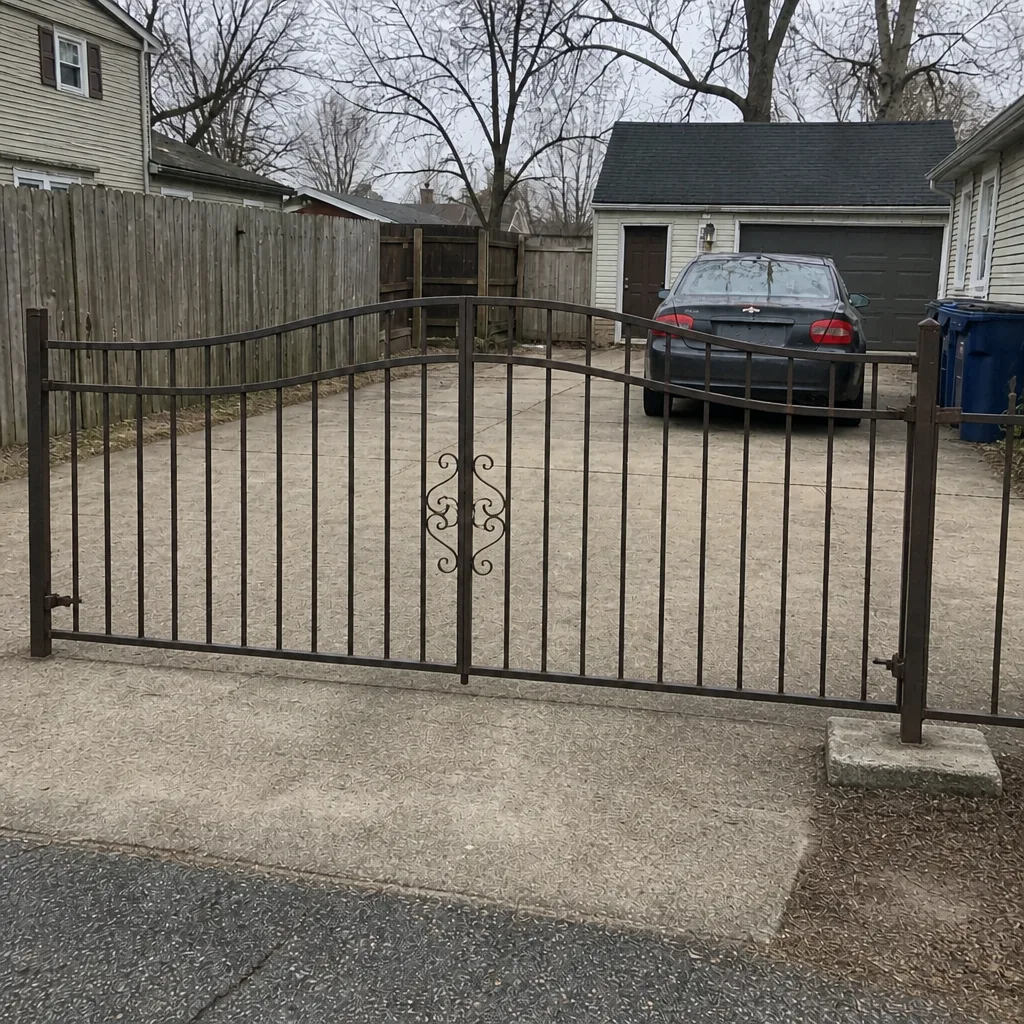
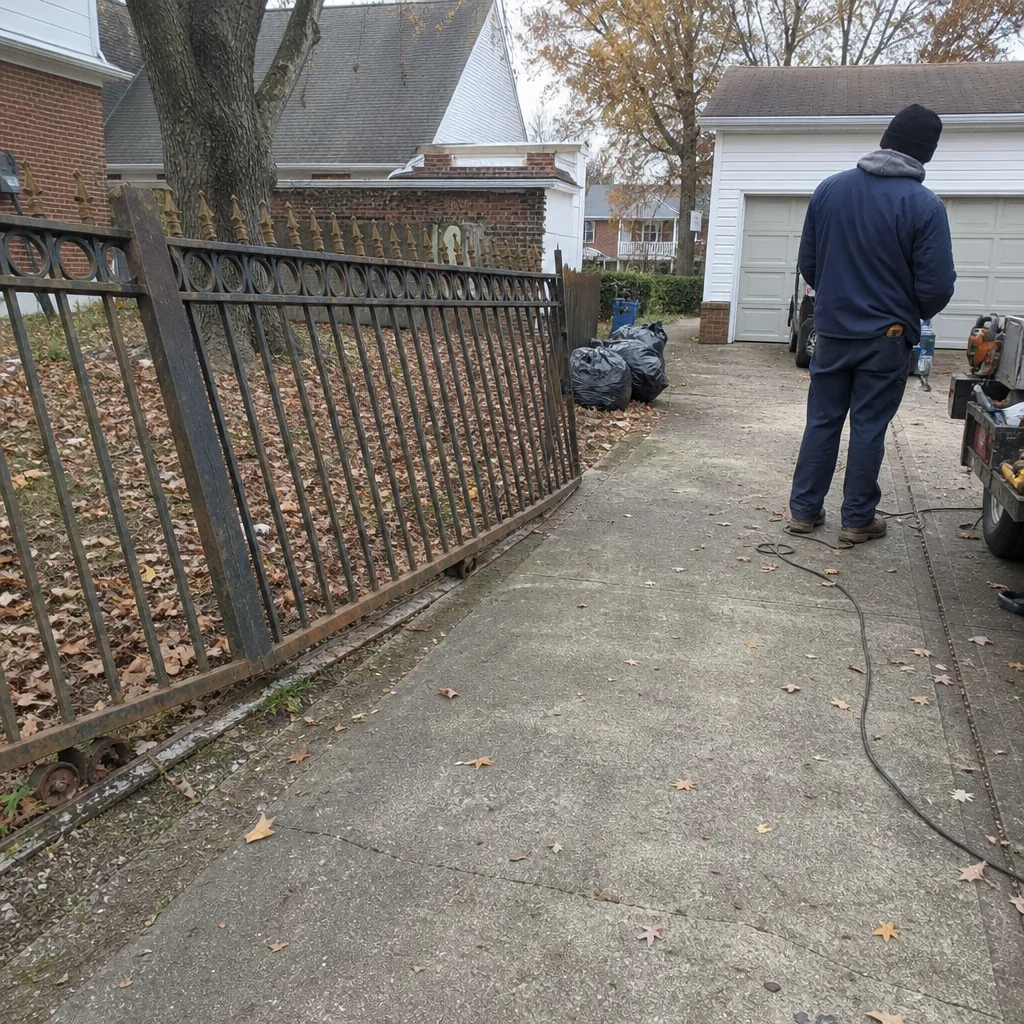
See the difference
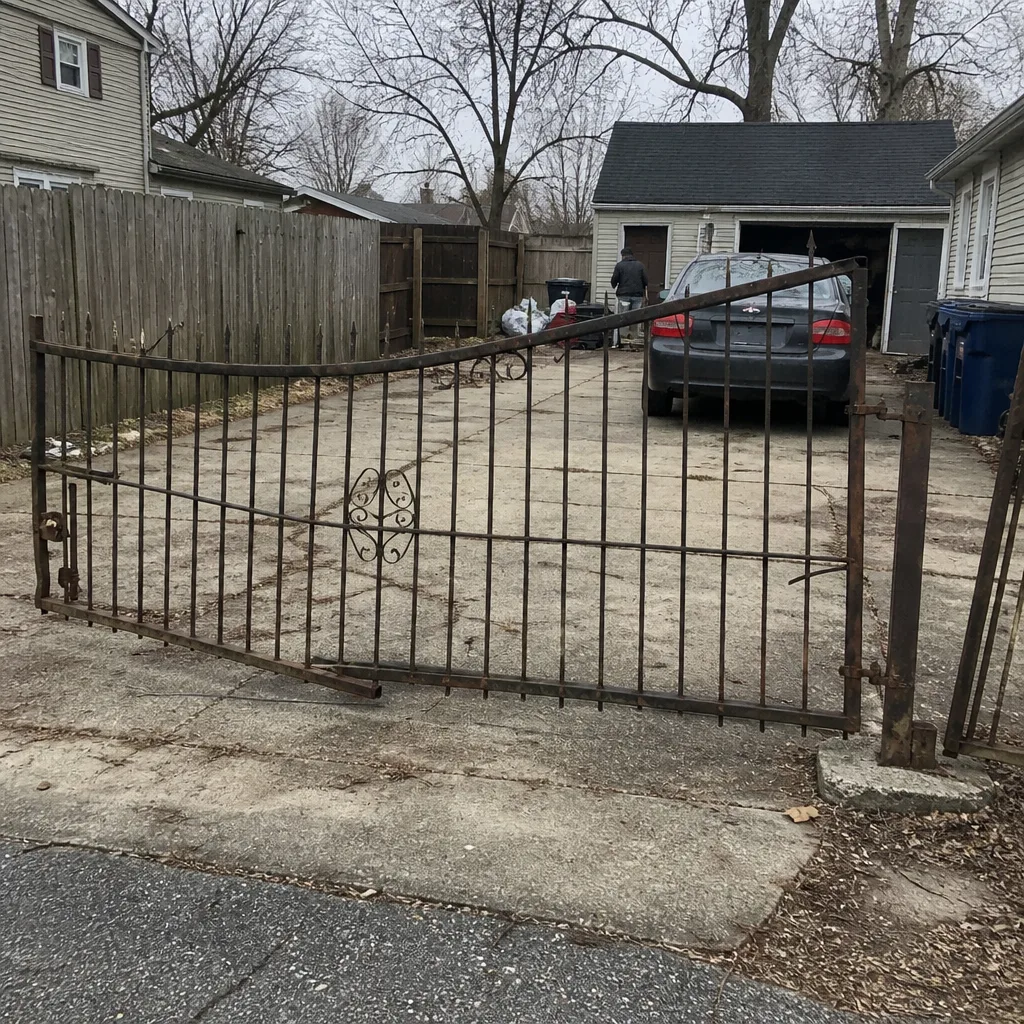 Before
 After
 Before
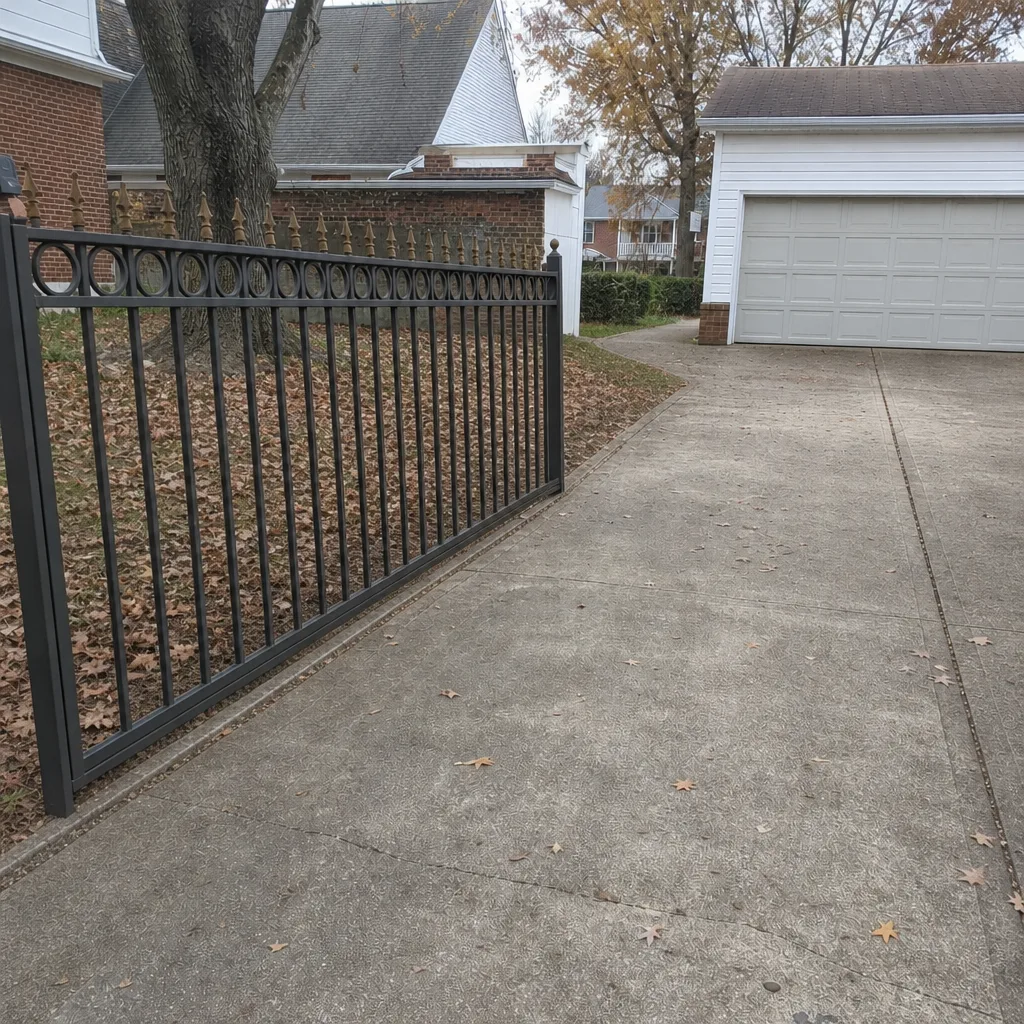 After
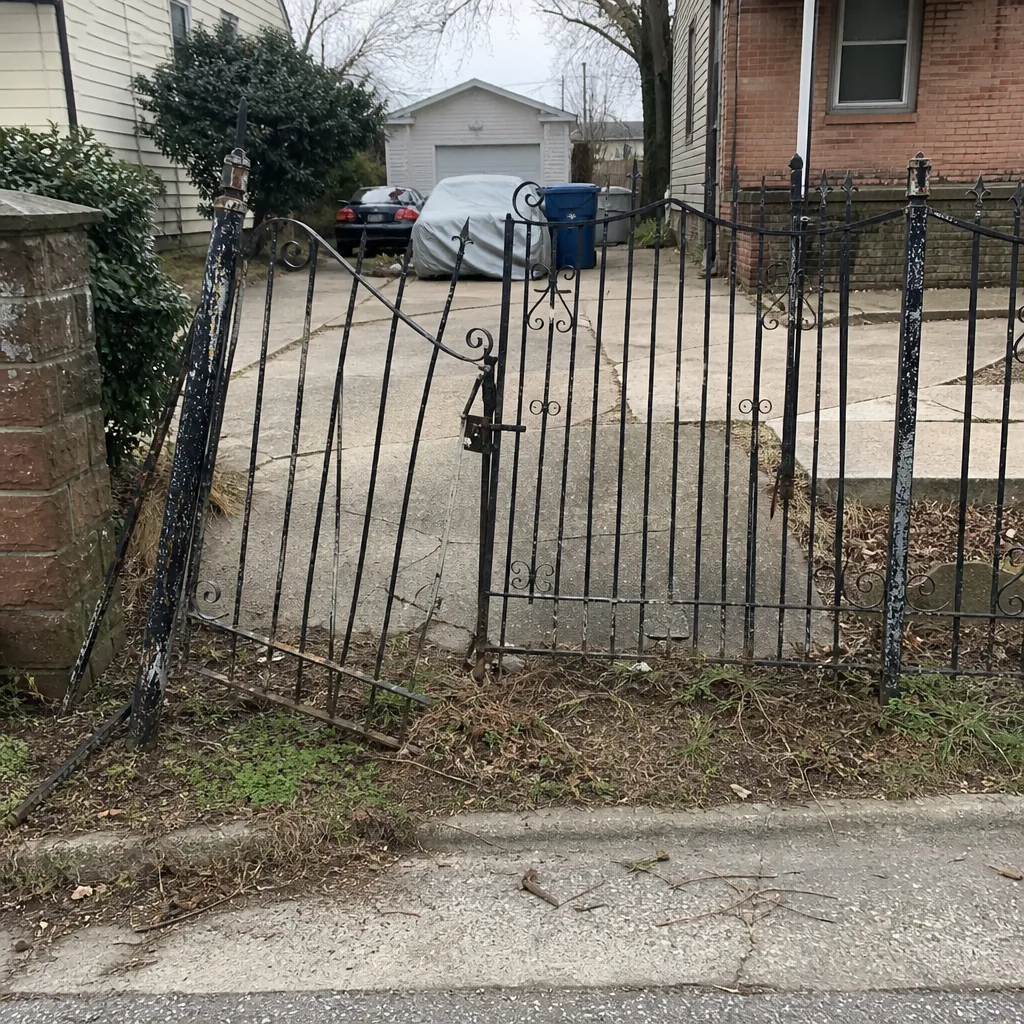 Before
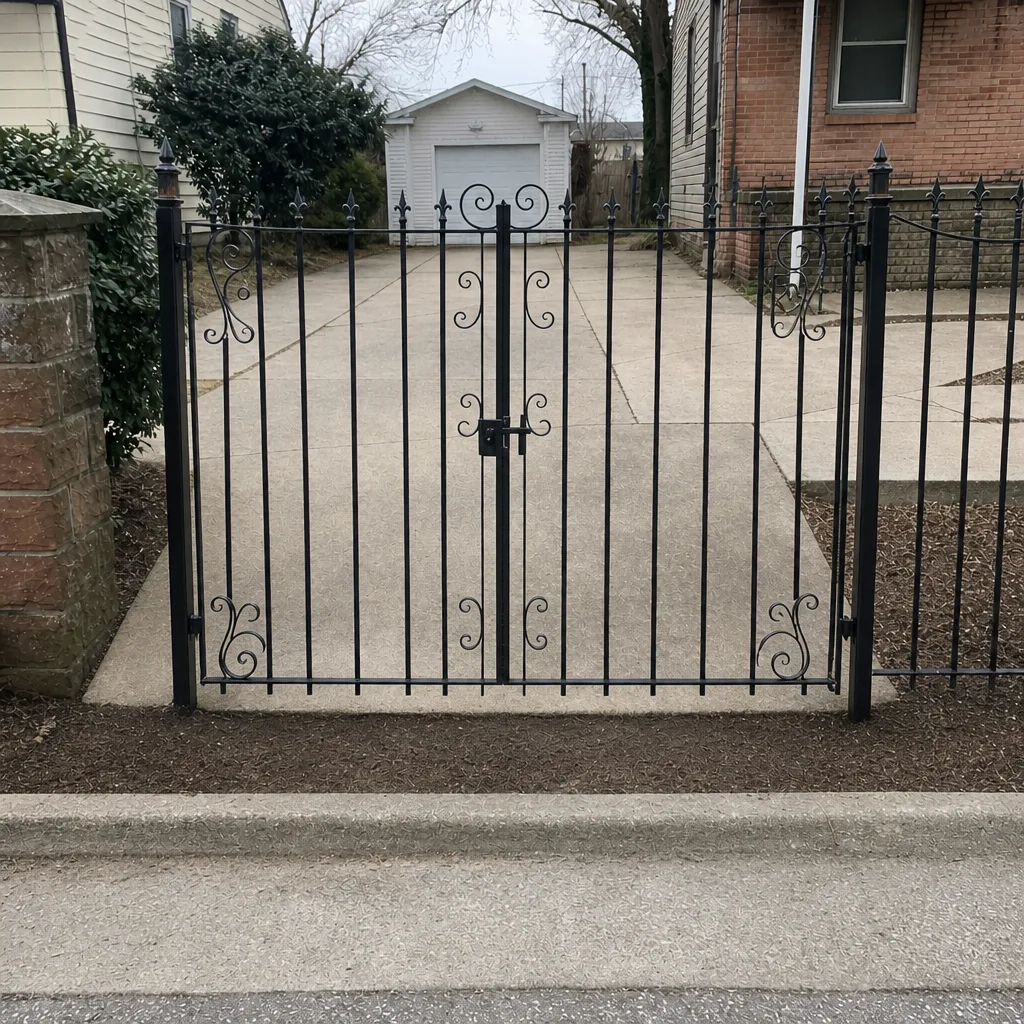 After
When to Call a Professional
Call a professional when the gate stops mid-travel and won’t resume, when the operator clicks or hums without moving, when the gate reverses without any obstruction, or when you see a fault code you can’t clear with a power reset. Call when a heavy gate sags and drags, when the latch no longer catches, or when the gate moves freely by hand even though the operator is engaged. Anything involving the 120-volt power run, the control board, or the obstruction sensors should go to a trained technician, because those components carry real safety consequences and a wrong adjustment can void the operator warranty.
Gate Repair Newport News offers free estimates in Newport News. Call (866) 620-2654. We answer 24/7. Fast dispatch from 7am to 7pm, Sunday through Friday. Bring your fault code and your gate type, and we’ll narrow it down from there.
Frequently Asked Questions
A consistent mid-point stop is almost always limit-switch drift or a logic-board fault, not a failed motor. The operator believes it has reached the end of its travel, so it stops where it was told. Reset the operator at the breaker first; if the stop point returns to the same spot, a technician needs to check the limit circuit. Call (866) 620-2654 for a free estimate on the repair.
Random reversals point to obstruction sensor misalignment, dirty photo-eye lenses, or a loop detector set too sensitive. The operator is obeying a safety input, so the system is working as designed; the sensor is the problem. Clean and realign the lenses before assuming the operator has failed. If reversals persist, a technician should check the sensor circuit and loop detector calibration.
Fault codes vary by brand: LiftMaster operators usually flash in a numbered pattern, Ghost Controls operators use LED states and beep sequences, and a Mighty Mule FM500 has diagnostic LEDs on the control board. Find the model label inside the operator housing and compare the flash pattern or LED state to the code chart printed inside the housing. Write the pattern down, “three flashes, pause, three repeats,” and you’ve given your technician the fastest possible head start.
Yes, indirectly. A sagging hinge or out-of-plumb post makes the operator work against gravity and friction, which drains batteries, overheats the motor, and causes early limit-switch trips. Fixing the hinge often resolves symptoms that looked like an operator failure. On swing gates, check hinge play and post plumb before replacing any operator part.
Humidity collects at weld seams and pivot pins, breaks down hinge grease faster, and can corrode control board connectors over time. The first signs are bubbling paint at welds, a squeaking hinge, or intermittent electrical faults that come and go with the weather. A spring and fall visual inspection catches most of it before it becomes a repair. Wipe down the enclosure seal, check hinge play, and look at the battery terminals.
Yes. We’re trained and experienced on nine operator brands spanning residential to light-commercial, including DoorKing, FAAC, and LiftMaster. If you’re an HOA manager or small commercial property owner with a brand-specific operator, bring us the brand and model and we can usually service it without sending you to a dealer. Call (866) 620-2654 and we’ll narrow it down before the visit.
The Bottom Line
Most gate problems fall into one of three chains: power, logic and safety, or mechanical. Slow movement is usually battery or capacitor; random reversals are sensor alignment; a gate that won’t latch is hinge or strike plate. Read the fault code, note your gate type, and match the symptom to the chain before you call. In Newport News, add a spring and fall hardware inspection to catch the humidity effects early. The right diagnosis the first time is the cheapest repair, and knowing which chain you’re in gets you there faster. Call (866) 620-2654. We answer 24/7. Fast dispatch from 7am to 7pm, Sunday through Friday.
Written by the team at Gate Repair Newport News.