
Last updated November 15, 2026
 Wrought iron
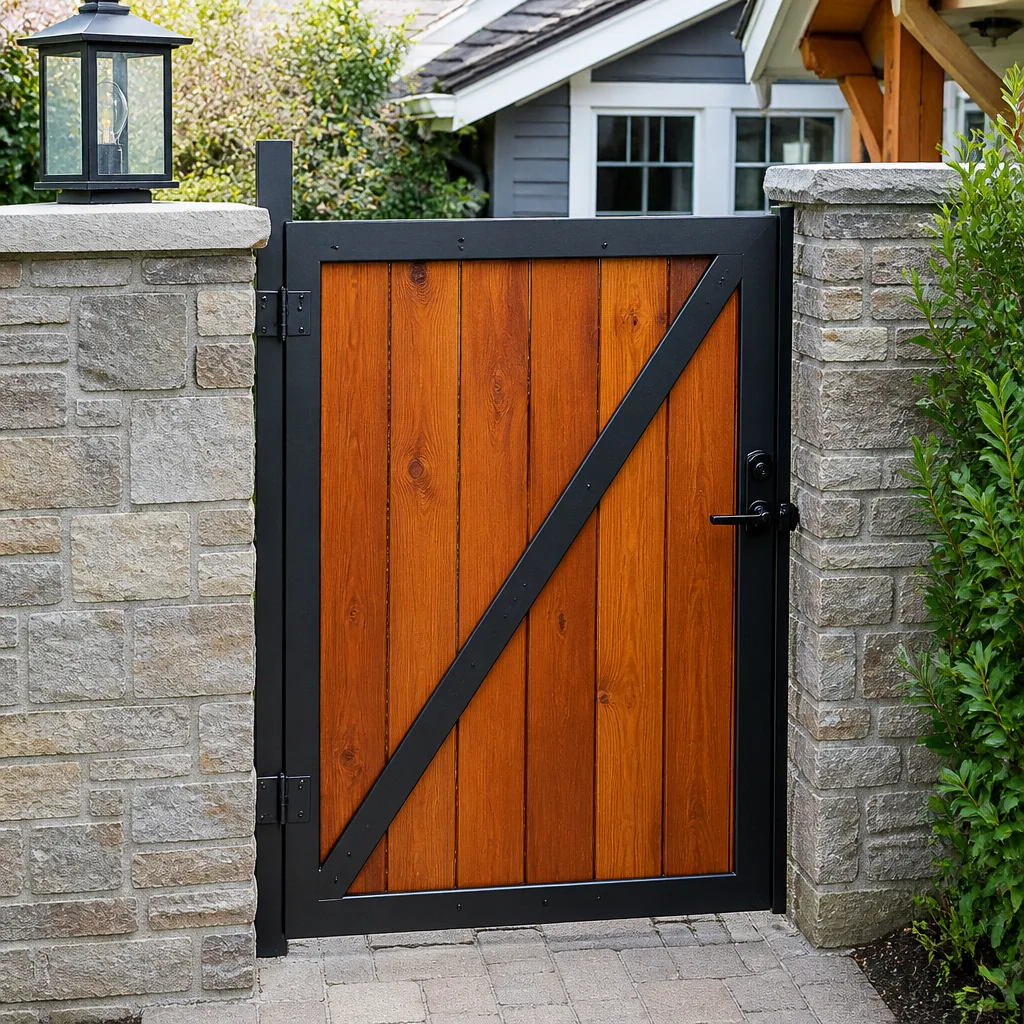 Wood & steel frame
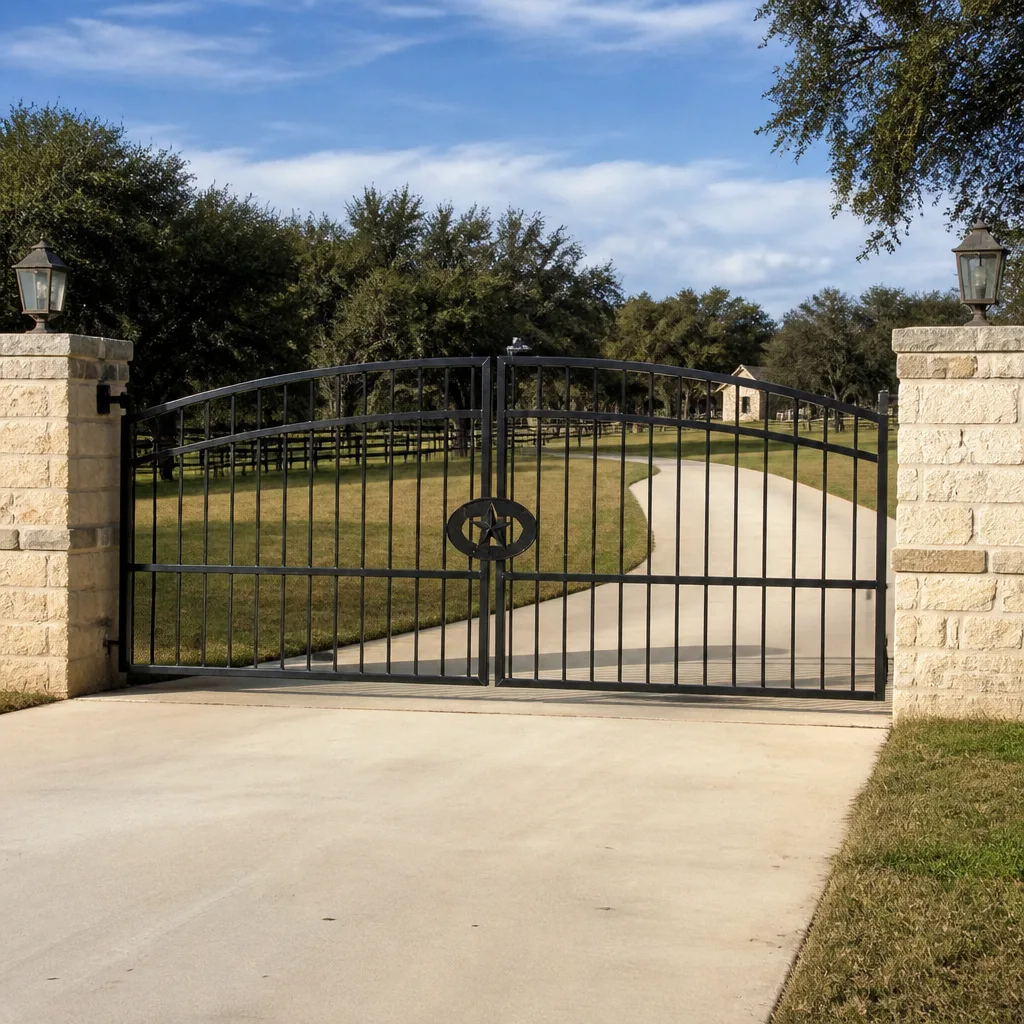 Farm & ranch
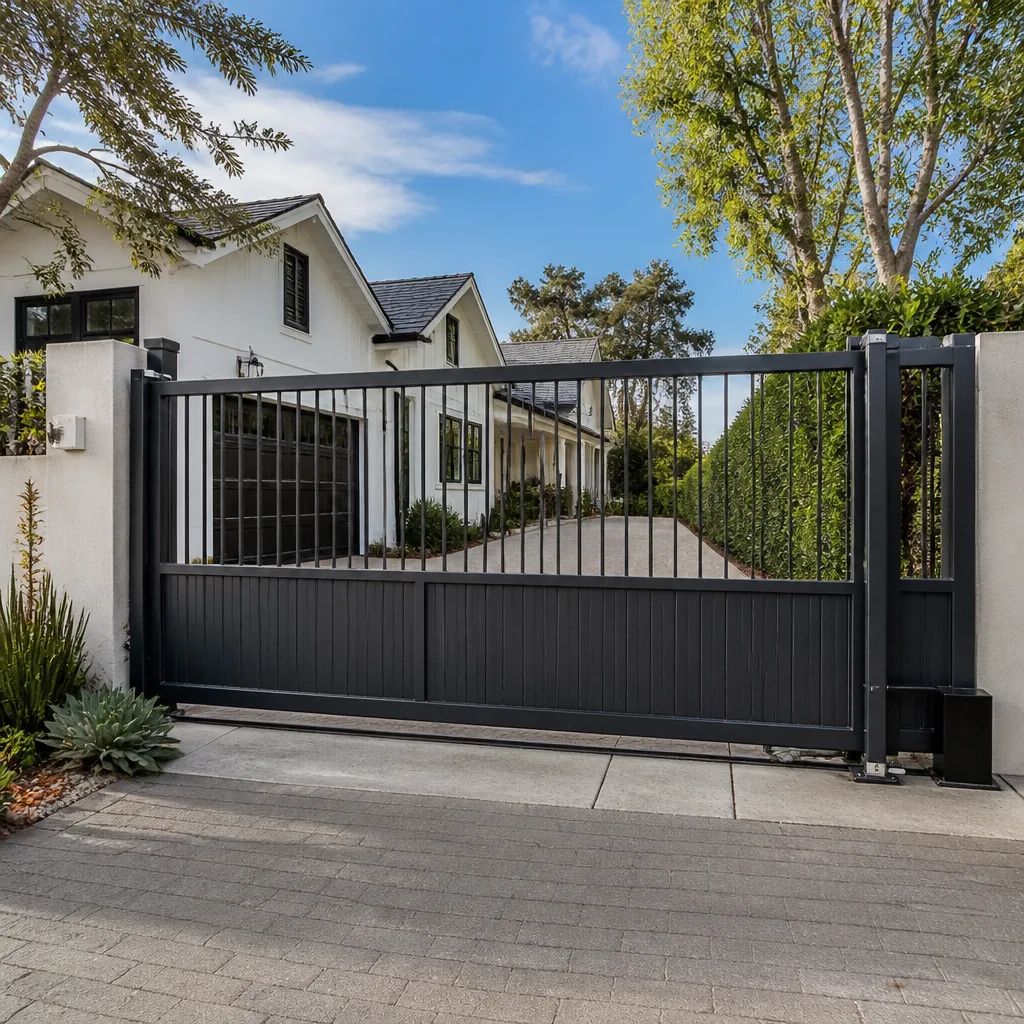 Sliding driveway gates
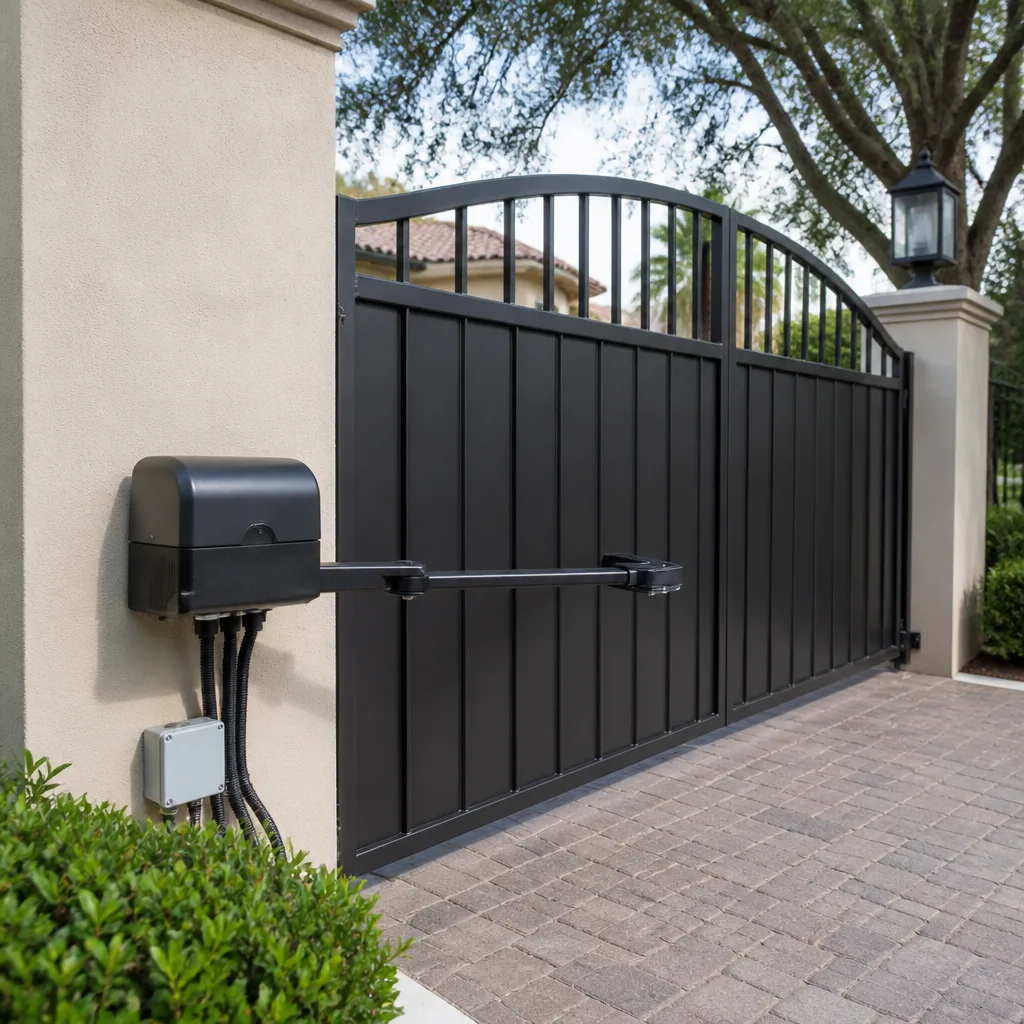 LiftMaster operators
Free on-site gate assessment - hinges, posts, and your LiftMaster or Nice gate operator checked before anything is quoted
The assessment is free and the quote is the invoice.
Get your free estimateGate Repair Permits, Codes & Inspections in Newport News, VA: What You Need to Know
Most people assume the hard part of an automatic gate is picking the operator. It isn’t. The operator can be perfect, UL-listed, and installed by someone who knows the wiring cold, and the job can still leave a homeowner exposed because nobody pulled the permit or checked which Newport News zoning rules apply to the gate itself. That gap between a compliant product and a compliant installation is where liability hides. It surfaces during a property sale, an insurance review, or worse, an injury claim. This guide walks through what actually triggers a permit in Newport News, how UL 325 entrapment protection translates to the sensors bolted to your driveway, what zoning and HOA review cover, and what an inspector looks at during rough-in and final. By the end you’ll know which questions to ask before anyone touches your gate.
Quick Answer
In Newport News, installing a new electric gate operator or changing its power source typically requires an electrical permit and often zoning review for the gate’s height, setback, and driveway sight lines, while a like-for-like replacement of a failed operator usually needs less paperwork but still must meet UL 325 entrapment protection. HOA architectural review in communities like Kiln Creek runs alongside city permitting, not instead of it. Every gate operator sold in the U.S. must meet UL 325, but that listing does not by itself make the installation code-compliant.
Styles & brands we work with
- Wrought iron
- Wood & steel frame
- Farm & ranch
- Sliding driveway gates
- LiftMaster operators
Table of Contents
- Which Newport News Permit Office Handles Gate Work?
- What Triggers a Permit and What Doesn’t
- UL 325 Entrapment Protection in the Field
- Newport News Zoning: Height, Setback, and Visibility
- How HOA Review Interacts With City Permitting
- What an Inspector Checks at Rough-In and Final
- How to Confirm Your Contractor Isn’t Cutting Corners
- Repair, Upgrade, or New Build: Sorting the Paperwork
Which Newport News Permit Office Handles Gate Work?
Gate work in Newport News generally splits across two city functions: the building department for permitting and inspection, and the planning or zoning side for questions about placement and sight lines. The electrical work on an operator runs through the building department’s trade permits, because the low-voltage and line-voltage connections on an automatic gate are electrical work. Anything that changes the footprint, height, or location of the gate structure can pull in zoning review as well.
What that means in practice is that a job can need more than one approval, and they aren’t always handed out by the same counter. A new driveway gate on a property line may need the electrical permit and a zoning check. A gate replacement in the same location with the same height usually stays on the electrical side only.
Ask your contractor which office they’ll be dealing with and what each one is reviewing. A gate specialist who does this regularly will know the difference between the building department’s scope and the planning side’s scope without guessing. If someone tells you “we don’t need any permits for this” before they’ve even seen the site, that’s your cue to get a second opinion.
For homeowners comparing contractors, one hedge is to ask: “Which permits will you pull, and who inspects?” If the answer is vague, the paperwork probably is too.
What Triggers a Permit and What Doesn’t
The line most people want drawn: does a new operator need a permit, and does a repair? The simplest way to think about it is by what changes. If power has to be run, if an operator is being added where there wasn’t one, or if the gate’s size or position changes, expect permits. If you’re swapping a failed part on an existing, already-permitted system, you’re usually in repair territory.
Here’s a working guide, not a substitute for the city’s answer on your specific property:
- New electric operator where none existed: nearly always needs an electrical permit, often a zoning check for gate placement and driveway sight lines.
- Replacing an operator with a different brand or model: may need a permit if the electrical characteristics or mounting change, even if the location is the same. Your contractor should confirm with the building department.
- Like-for-like replacement of a failed operator: often minimal permitting, but still must meet UL 325.
- Manual gate hardware repair (hinges, latches, wheels, rails): typically no permit, though it may need to keep existing setback.
- Changing the power source or adding a solar or battery backup: usually triggers electrical review because the wiring changes.
- Moving or resizing the gate itself: can pull in zoning for height, setback, and sight lines.
We service LiftMaster, FAAC, BFT, and more, and the paperwork path is often dictated by the operator family. A commercial-grade DoorKing slide operator on a small commercial lot may need different electrical review than a residential Mighty Mule swing arm. Guessing here is how unpermitted work starts.
If you’re mid-repair on an existing gate and unsure whether the work needs a permit, check with the building department before the technician starts. It’s a five-minute call that saves a lot of grief down the line.
UL 325 Entrapment Protection in the Field
UL 325 is the safety standard every residential gate operator sold in the U.S. must meet. The label on the box is the starting point, not the finish line. What UL 325 means in practice is that entrapment protection must be installed, tested, and working in the field at the operator, and that includes the sensors and detectors that stop or reverse a moving gate when something is in the way.
Field installation is where the details matter:
- Photoelectric edge sensors on the gate leaf or posts. These detect anything breaking the beam across the travel path. Placement matters. Wrong height, wrong angle, or a sensor mounted where it can be blocked by landscaping defeats the purpose.
- Loop detectors in the driveway. These presence-detecting loops stop or reverse a closing gate when a vehicle is over them. They need to be cut into the driveway at the right depth and distance so the gate doesn’t close on a bumper or a trailer hitch.
- Reversing edges on the moving leaf. Heavy swing and slide panels need an edge that reverses on contact with an obstacle.
- Monitored vs. non-monitored sensors. A monitored sensor communicates its health to the operator and stops the gate if the sensor fails. Non-monitored sensors can be bypassed by a failed sensor without anyone knowing.
A code-compliant installation is one where the sensors are installed, tested, and functioning per the operator’s instructions and UL 325. An operator that’s UL-listed with no sensors connected is not. This is exactly the gap the opening paragraph warned about.
If you have a FAAC or BFT operator and something feels off about how close the gate comes to a car, don’t accept “that’s how it’s always worked.” It should reverse. If it doesn’t, call us.
Newport News Zoning: Height, Setback, and Visibility
Zoning rules on gates are mostly about how the gate interacts with the street. Three things come up again and again in Newport News:
- Height. Very tall gates or piers may be subject to a height review, especially in front yards. Confirm with the city planning office if your gate is unusually tall or visible from the public road.
- Setback from the public right of way. A driveway gate needs to open inward so it is not swinging into the street or blocking the sidewalk or right of way. Placing the gate too close to the road can create a problem at inspection and a bigger problem on a school day.
- Visibility triangles at driveways. Intersections and some driveway entrances have sight line requirements so drivers can see traffic. A solid gate, thick piers, or landscaping right at the corner can obscure sight distance and trigger a zoning review.
Where this gets tricky is when the gate itself is fine, but the piers, fence, or landscaping around it breach a sight line. Zoning looks at the whole picture, not just the moving panel. In older neighborhoods where lots meet the street at an angle, and in newer subdivisions where driveways are closer to intersections, the visibility triangle question comes up more often.
We’ve seen gates installed on properties that were never checked against sight lines, and the problem surfaces years later when the property is sold. Ask before you install: does this placement meet setback and sight line rules for this property?
How HOA Review Interacts With City Permitting
This is where a lot of Newport News homeowners get confused. City permitting and HOA architectural review are separate processes, and neither replaces the other. The city cares about the code and zoning. The HOA cares about its covenants, which are usually stricter and sometimes silent on the topic entirely.
In communities like Kiln Creek or Denbigh, the HOA architectural review committee typically wants to see the gate design, materials, colors, and placement before installation. Some HOAs restrict gate styles, refuse solid panels where visibility is a concern, or require specific setbacks from the sidewalk so the association’s appearance rules are met. There’s often a longer approval timeline than the city permit.
The precedence question comes up a lot: if the HOA approves but the city doesn’t, or vice versa, which wins? Both do. You need both approvals to have a clean installation. A city inspector is not going to consider HOA covenants, and the HOA is not going to waive its rules because the city permit was issued. The permit doesn’t override a covenant, and a covenant doesn’t substitute for a permit.
If you’re not sure what your HOA requires, check the architectural guidelines before ordering an operator. Changing the gate style after a Linear or Viking operator is chosen can force a re-do.
What an Inspector Checks at Rough-In and Final
During rough-in, the electrical inspector is checking that the wiring runs, conduit, box mounting, and connection points meet code. The gate doesn’t need to be moving yet. What they’re looking for is the installation work that will be covered by concrete, drywall, or landscaping once the job is finished, so that if there’s a problem it can be found before it’s encased.
At final, the inspector is looking at the whole system:
- Compliant operator install. The operator is mounted per the manufacturer’s instructions, with proper clearances.
- Entrapment protection present and functional. Sensors, edges, and loop detectors installed and tested. A disconnect between the box and the driveway can fail final inspection.
- Disconnects and labeling. Service disconnects, breaker labeling, and emergency release mechanisms where required. The gate must be openable by hand in a power failure.
- Permit matches installed work. If the permit was pulled for a LiftMaster swing operator and the install is a slide operator, the inspector is going to ask questions.
- Signage. Where the operator manufacturer requires it, warning signage near the gate.
We’ve seen finals fail on exactly these points, most often because the entrapment protection was skipped or installed improperly. Ask your contractor if they’ve scheduled rough-in and final, and what their plan is if something fails. If they can’t answer those two questions, that’s a big flag.
How to Confirm Your Contractor Isn’t Cutting Corners
These are the questions we’d want answered if we were homeowners in Newport News:
- “Will you pull the permit, and under whose name?” The permit should be pulled by the licensed trade doing the work. If the homeowner is asked to pull it, that usually signals a shortcut.
- “What sensors and detectors are included?” If entrapment protection isn’t in the quote, it’s not in the install.
- “Will you schedule rough-in and final inspection?” If your contractor is fine with a permit that never sees an inspector, you should not be.
- “Which operator brand will you install, and why?” Brand fluency matters. We’re experienced with LiftMaster, FAAC, BFT, Linear, Viking, Ghost Controls, DoorKing, Elite, and Mighty Mule, and that range matters when a legacy system needs service or a commercial-grade operator needs replacing.
- “What happens if the final fails?” A contractor with a clean answer will re-schedule the fix as part of the job. A contractor without one is going to leave you holding the correction.
Ask for the contractor’s license information and a certificate of insurance. Both are standard for legitimately operating gate contractors in Virginia, and neither should be a struggle to produce.
We’ve helped homeowners unwind situations where an unpermitted install caused a problem at sale. It’s always cheaper and easier to do the paperwork on the front end.
Repair, Upgrade, or New Build: Sorting the Paperwork
Different jobs, different paperwork:
- Repair of an existing system (control board, motor, limit switch, sensor). Usually no permit, as long as the electrical characteristics and mounting don’t change. Brand fluency matters here more than paperwork – a technician who recognizes the FAAC or Linear board on sight can fix it the same visit. If the system is unfamiliar, downtime stretches.
- Upgrade of an existing operator (same footprint, different model). Sometimes permit, sometimes not, depending on whether the electrical characteristics change. Get the contractor to confirm with the building department.
- New gate and operator install. Electrical permit plus zoning review plus HOA review where applicable. This is the paperwork-heavy path.
- Manual gate repair (hinges, latches, beams, rails). Usually no permits unless the gate’s height, size, or location changes.
If you’re on the fence about what your job counts as, the answer is a quick call to the city. We’d rather customers ask the city first and ask us second. For people in Newport News working through that question, our gate repair page walks through what a typical repair visit covers, including which repairs stay in the no-permit category.
For electric work specifically, electric gate repair covers operator motors, control boards, loop detectors, and limit switches. If your system is electric and the wire count is what’s in question, that’s the more relevant starting point.
Common Mistakes to Avoid
- Assuming the operator’s UL 325 label means the install is compliant. The label covers the product, not the sensors, edges, and loops that make it safe in the field. If those aren’t installed and tested, the system isn’t compliant even though the box was. Ask the contractor what entrapment protection is included.
- Skipping the HOA architectural review because the city permit was pulled. The two are separate processes. In communities like Kiln Creek or Denbigh, an HOA can require changes after installation if the review wasn’t done first, and the city permit won’t change that.
- Installing the gate too close to the public right of way. Setback and sight line rules exist so the gate doesn’t swing into the street or block a driver’s view. If your gate is close to the sidewalk or an intersection, confirm placement with the city planning office before install.
- Choosing an operator brand before checking the sensor and power requirements. A residential Ghost Controls swing arm and a commercial DoorKing slide operator place very different demands on entrapment protection and electrical service. Match the operator to the site, then paperwork the install.
- Using a generalist handyman “for a quick fix.” Gate hardware is easy to bypass and hard to get right. Unpermitted electrical work is the top cause of liability at property sale in Newport News, and a handyman install is not the way around the paperwork.
- Letting a permit sit un-inspected. Pulling a permit and never scheduling rough-in or final is the same as not pulling it, only more expensive. Confirm both inspections are scheduled before the install starts.
- Ignoring the manual release. The gate must be openable by hand in a power failure. If nobody checks it after install, homeowners find out the hard way during a storm-driven outage.
See the difference
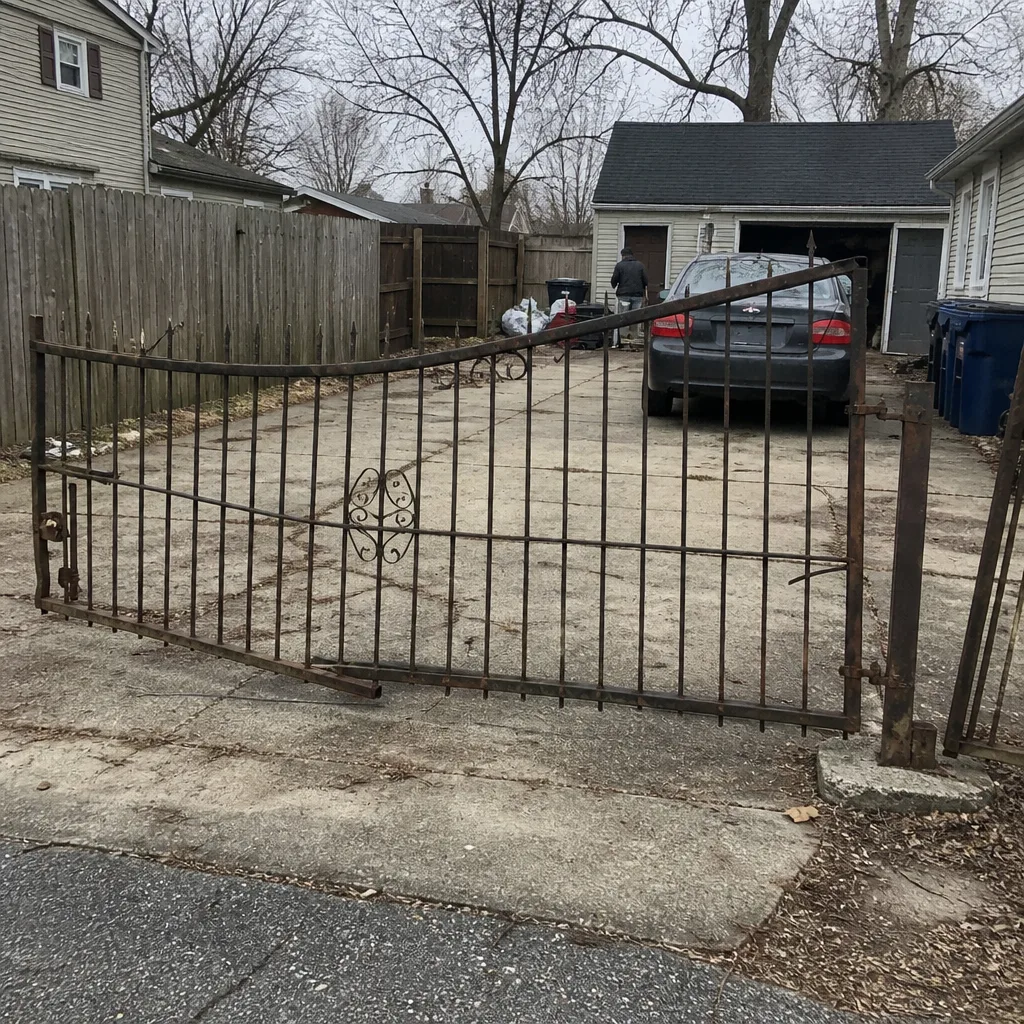 Before
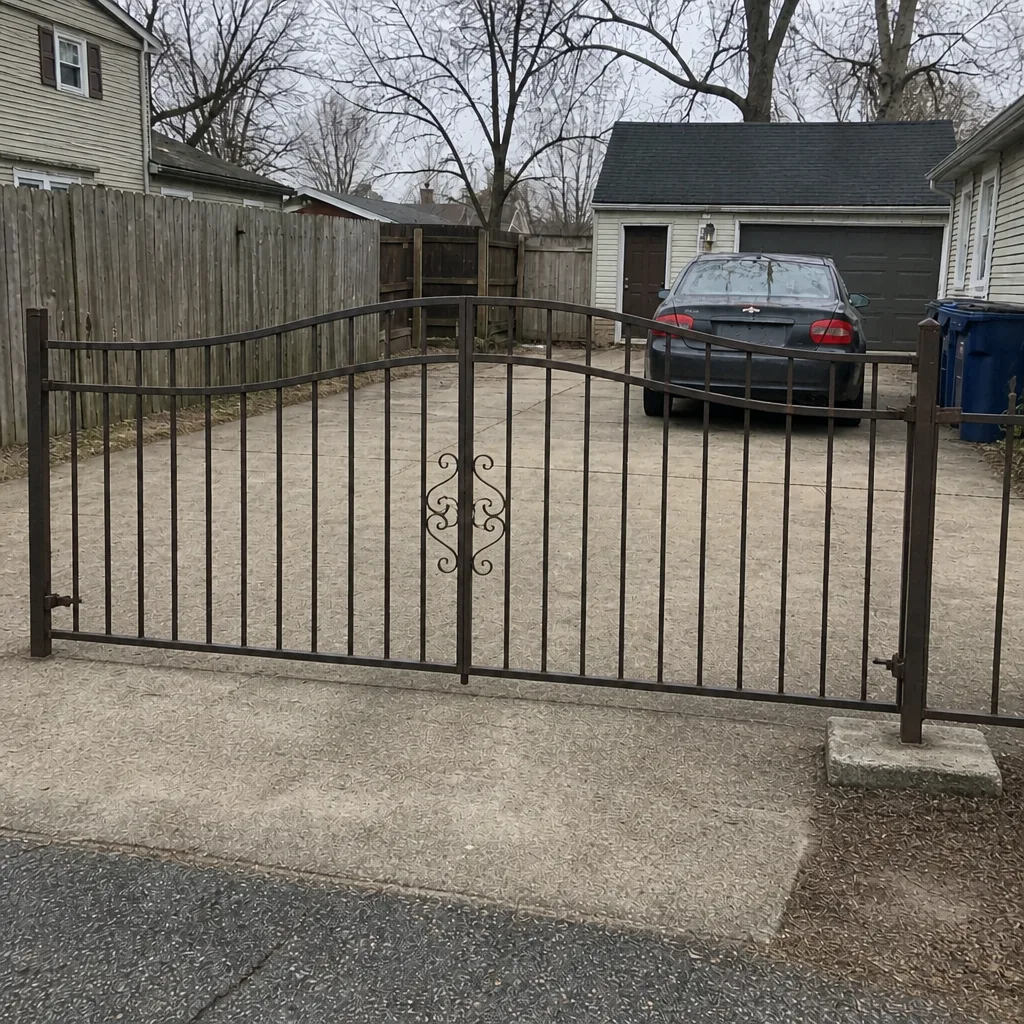 After
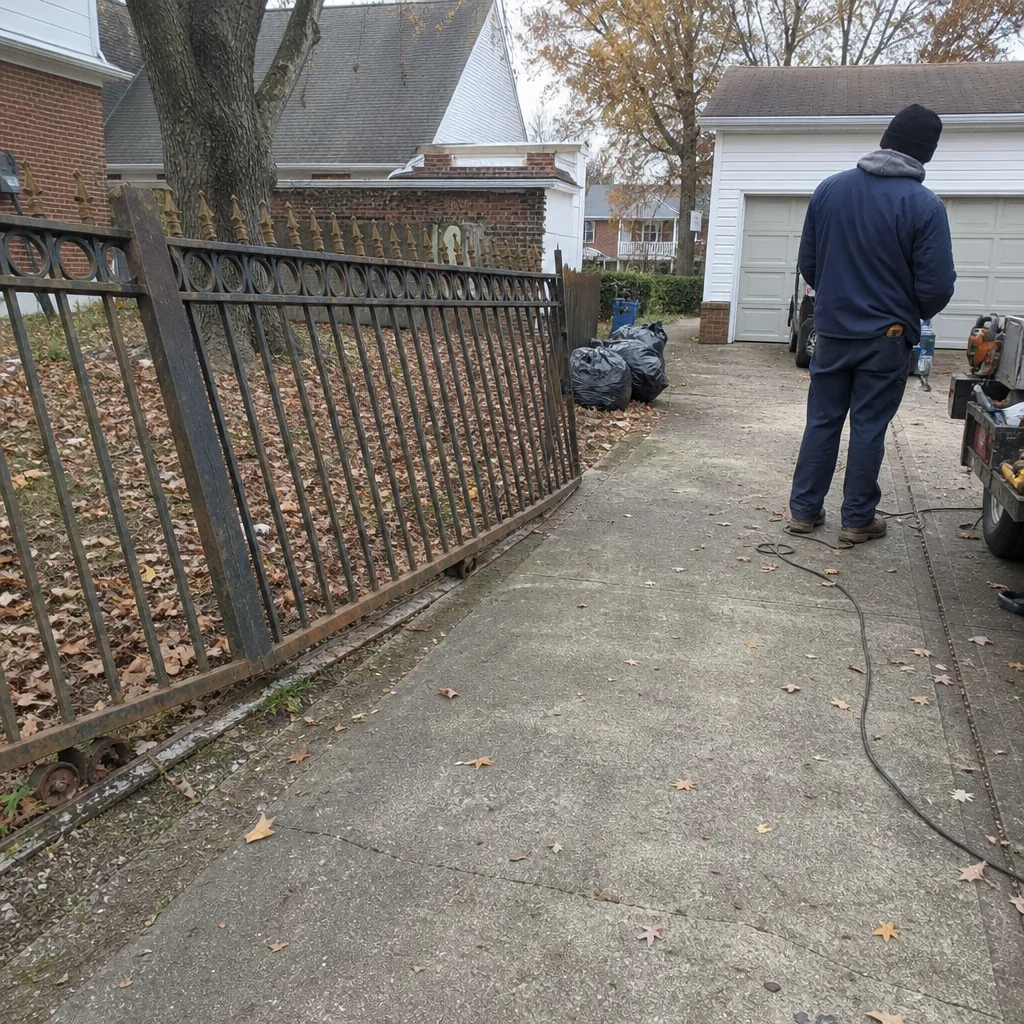 Before
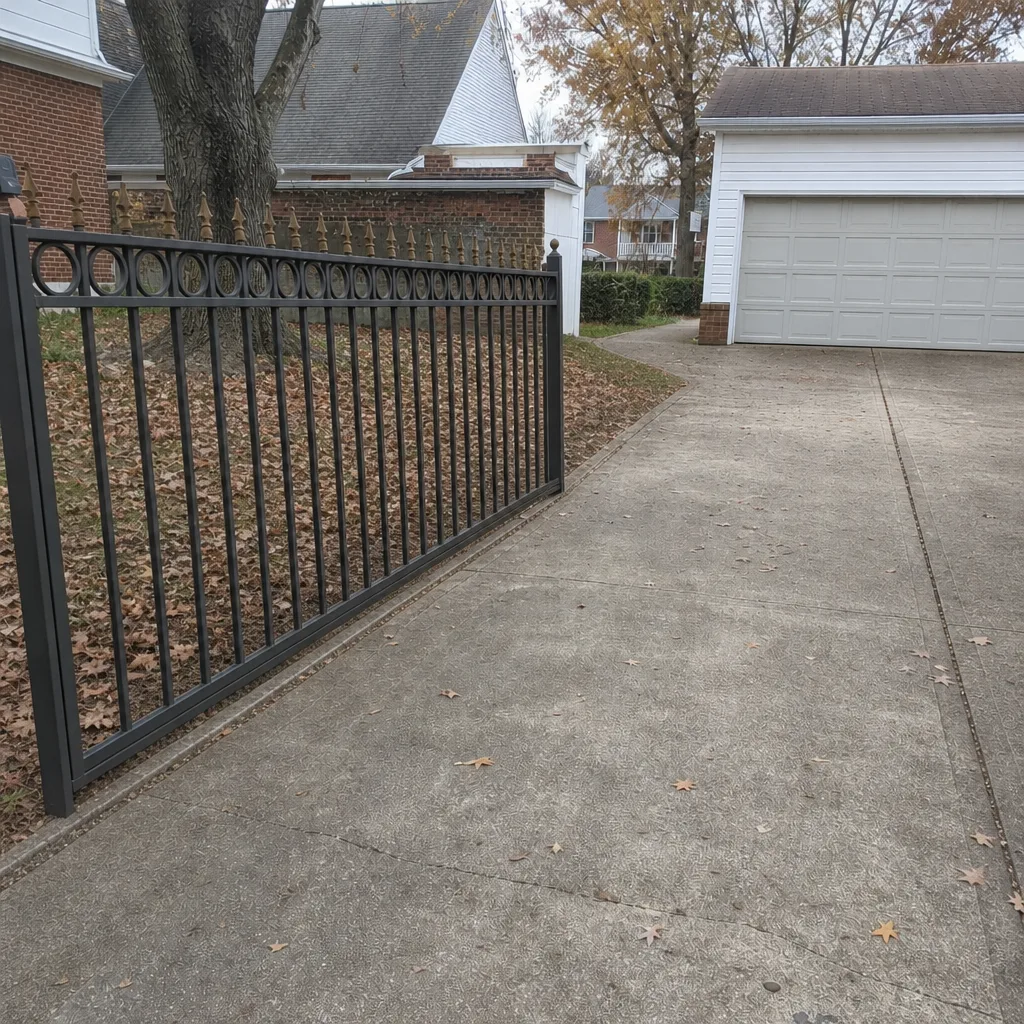 After
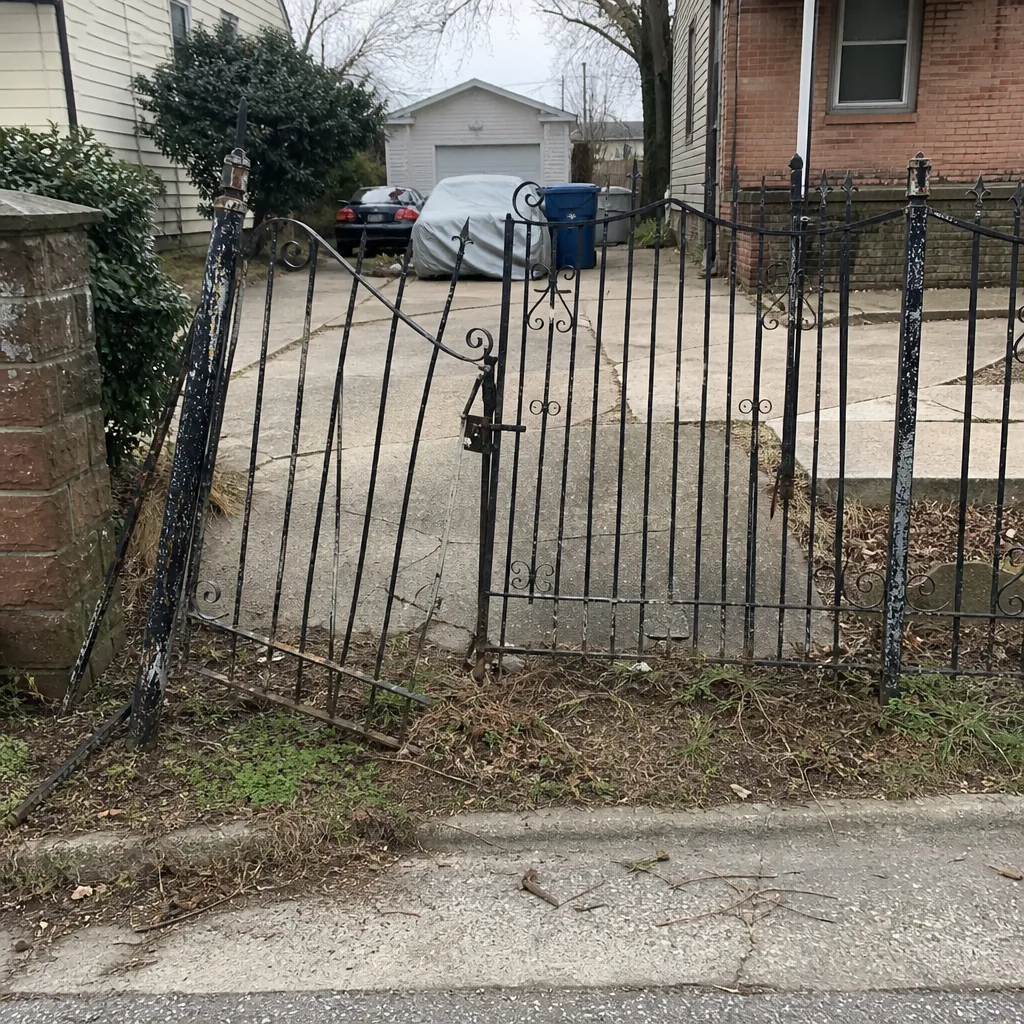 Before
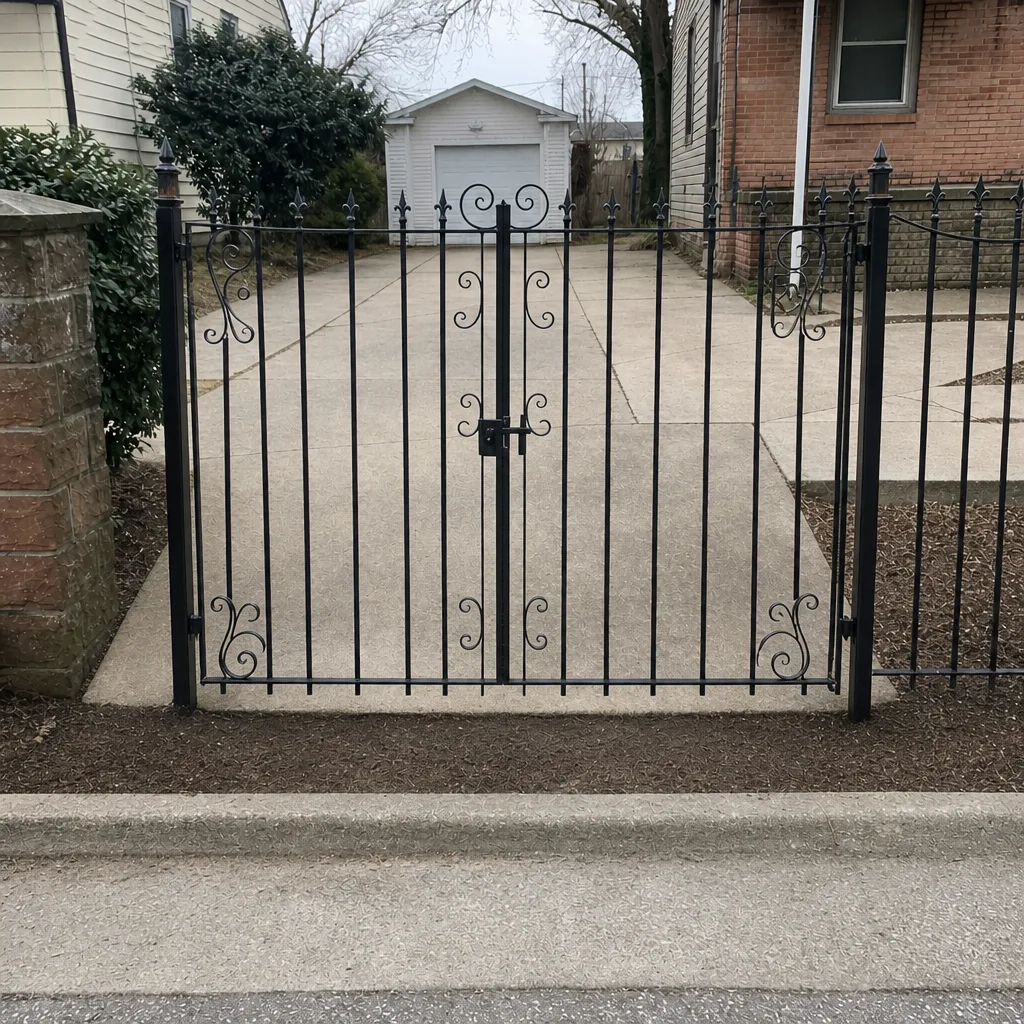 After
When to Call a Professional
Call a gate specialist if any of the following apply: you’re installing a new electric operator and don’t know what permits are triggered; your existing gate has failed and you can’t tell whether it’s a repair or a replacement; your entrapment sensors or loop detectors aren’t stopping the gate when they should; your operator is on a brand you can’t find local service for; you’re ready to schedule rough-in or final and want to make sure the install will pass; or you’ve recently bought a Newport News property with an existing gate and want its paperwork checked. Gate systems that fall over on safety grounds are usually the ones whose paperwork was never done in the first place.
Gate Repair Newport News offers free estimates in Newport News. Call (866) 620-2654. We answer 24/7. Fast dispatch from 7am to 7pm, Sunday through Friday. We’re closed Saturday.
Frequently Asked Questions
It depends on what changes. A like-for-like replacement of a failed operator in the same location usually needs minimal permitting, while a new operator model with different electrical characteristics or mounting can require an electrical permit. Confirm with the building department before the work starts.
No. UL 325 is the standard the operator itself must meet, but the installation is what makes the system safe in the field. That means photoelectric sensors, loop detectors, and reversing edges properly placed, connected, and tested. An operator that’s UL-listed with those missing is not code-compliant. Call us for an evaluation of your existing system.
Neither strictly comes first, but both have to be done. The HOA architectural review typically needs to be started early because its timeline is often longer. The city permit covers code and zoning, and it does not waive HOA covenants. If you’re in Kiln Creek or Denbigh and aren’t sure what your HOA requires, check the architectural guidelines before ordering the operator.
At rough-in, the wiring, conduit, and mounting work that will be covered up. At final, the mounted operator per the manufacturer’s instructions, entrapment protection installed and tested, service disconnects and labeling, permit matching the installed work, and warning signage where required. If you’ve scheduled rough-in and final with your contractor, you’ve covered the checklist.
Get it reviewed. Unpermitted work can surface at a property sale, insurance review, or injury claim, and the correction cost then is usually higher than bringing it up to code now. A gate specialist can look at the operator, sensors, and electrical connections and tell you what’s compliant and what needs bringing up. Call (866) 620-2654 for an estimate.
Yes. We cover the whole install: the operator mount, the low-voltage and line-voltage work, the loop detector placement in the driveway, and the entrapment sensors and reversing edges on the gate. One technician for the whole job, no gap between the electrical subcontractor and the gate contractor. If you have a legacy system on a brand like FAAC, BFT, Linear, or Viking, we’re experienced on the operator family and can tell you if it can be brought up to code or needs replacing.
The Bottom Line
The UL 325 label on the operator and the code-compliance of the install are two different things, and the gap between them is where liability lives. In Newport News, new operator installs and power changes typically trigger an electrical permit and often zoning review for height, setback, and sight lines. HOA review in communities like Kiln Creek and Denbigh runs alongside the city permit, not instead of it. Sensors, loop detectors, and reversing edges have to be installed and tested, and rough-in and final inspections need to be scheduled. If you’re unsure where your job falls, call the city first, then call us for a free estimate.
Call (866) 620-2654. We answer 24/7. Fast dispatch from 7am to 7pm, Sunday through Friday. We’re closed Saturday. We’ll walk you through what your job needs and give you a written estimate before any work starts.
Written by the team at Gate Repair Newport News.