
Last updated November 15, 2026
 Wrought iron
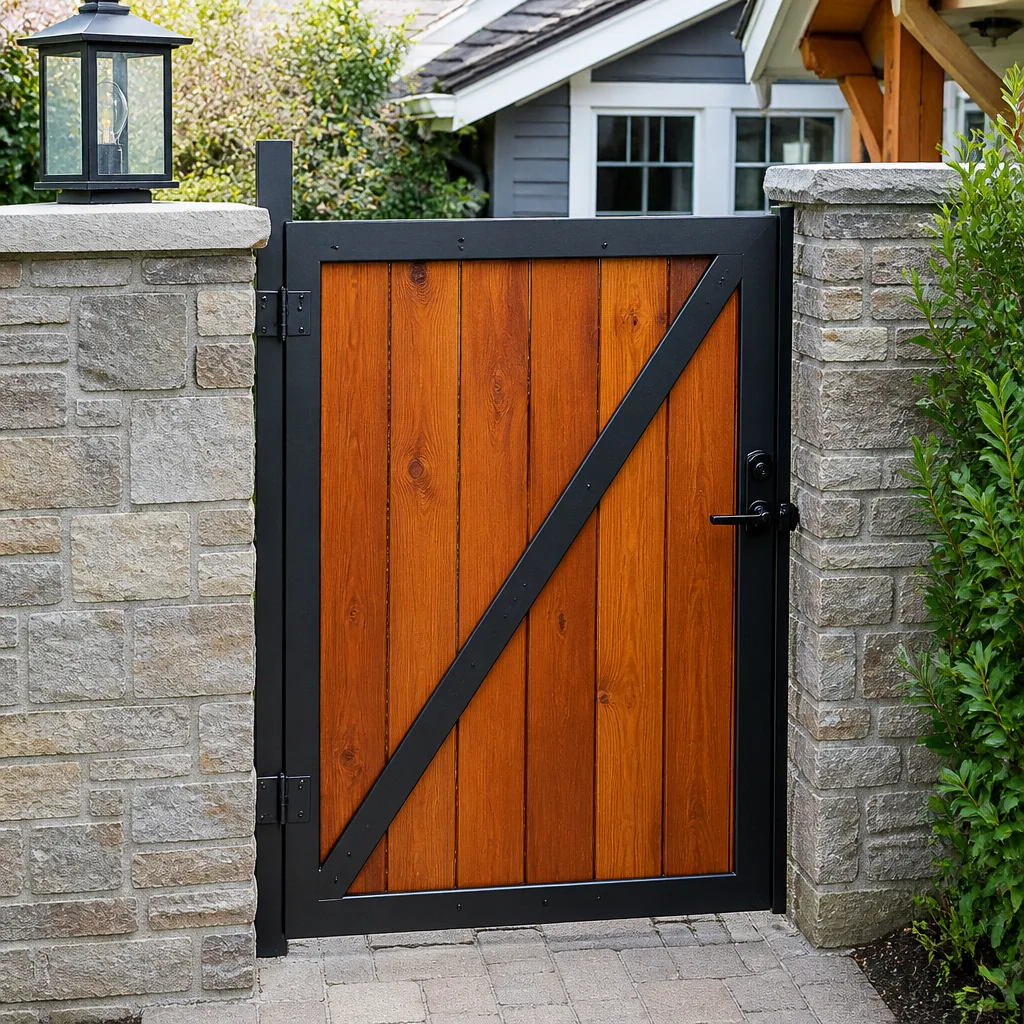 Wood & steel frame
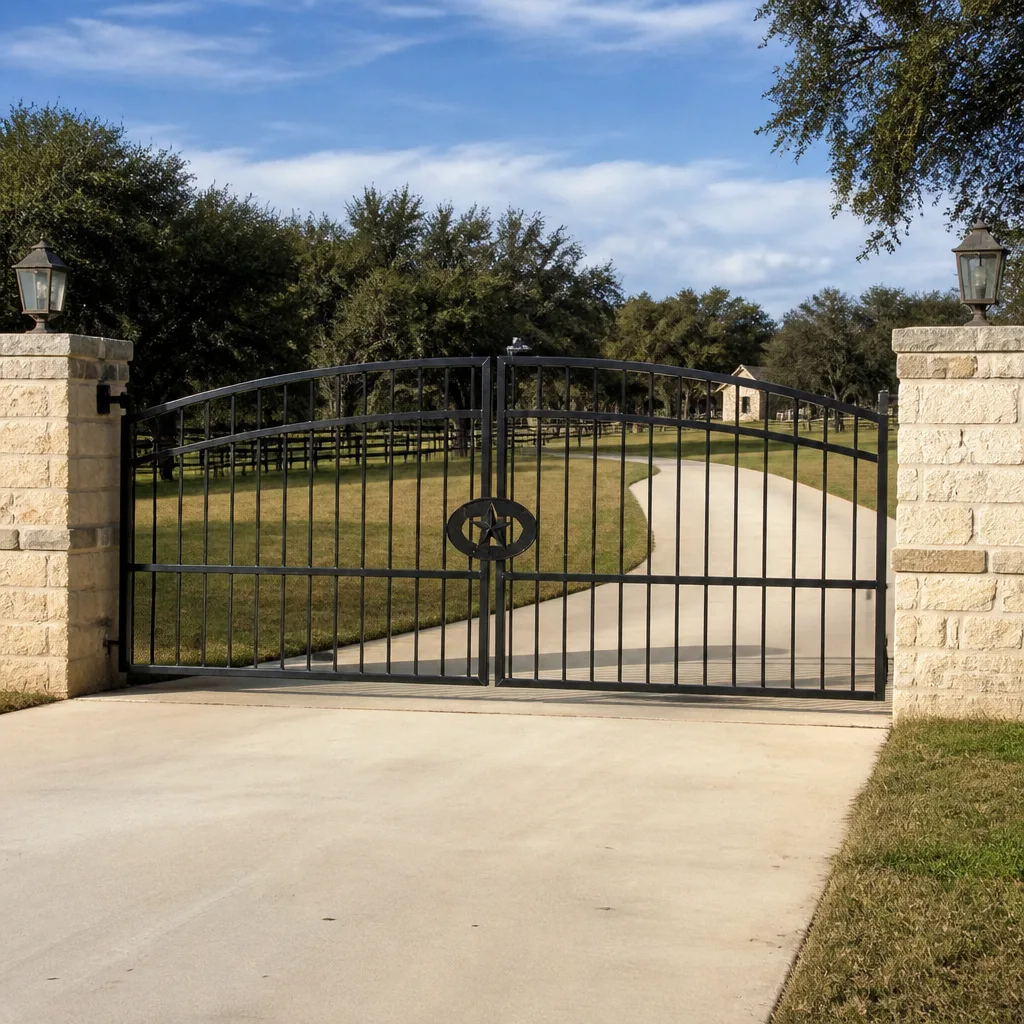 Farm & ranch
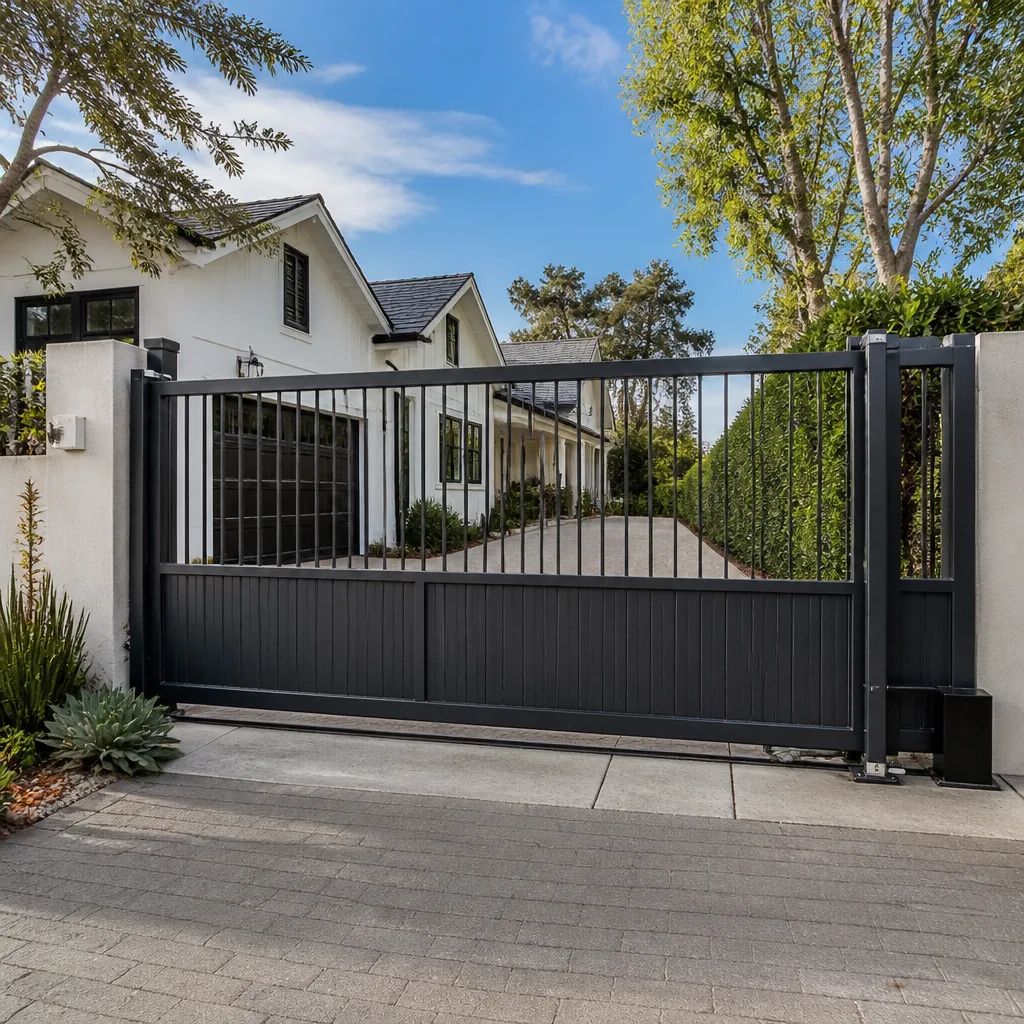 Sliding driveway gates
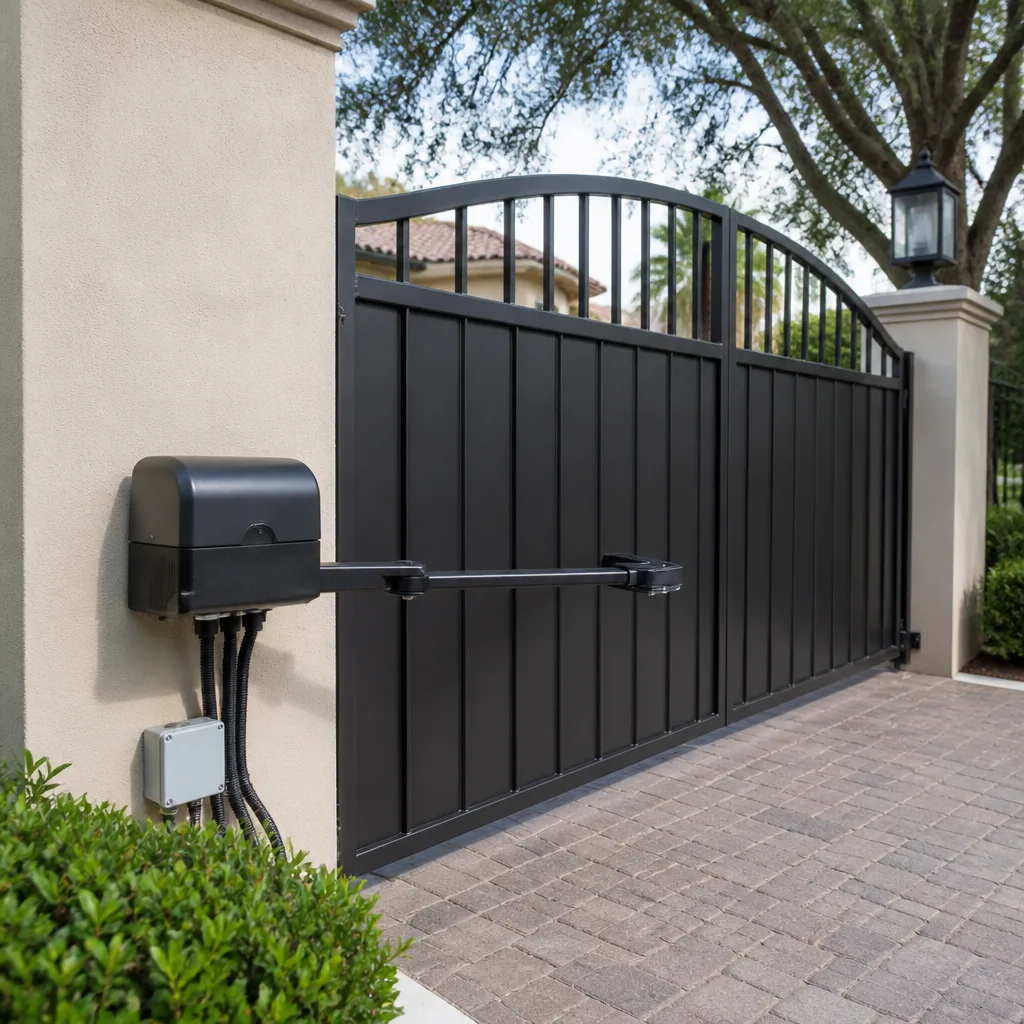 LiftMaster operators
Free on-site gate assessment - hinges, posts, and your LiftMaster or Nice gate operator checked before anything is quoted
The assessment is free and the quote is the invoice.
Get your free estimateGate Repair Warning Signs: A Newport News Homeowner’s Reference Guide
A gate that hesitates for two seconds before it moves is not “warming up.” That pause is usually a failing capacitor in the operator motor, and in our experience it follows a predictable curve: two seconds becomes five, then the gate stops opening altogether, often on the coldest morning or the hottest afternoon of the year. Gates rarely fail without notice. They tell you which component is going bad weeks or even months ahead of time through a specific sound, a slower swing, a spot of rust, or a patch of soil creeping toward the track. This guide translates those signals into plain English so a small adjustment stays a small adjustment.
Quick Answer
Warning signs of gate trouble include grinding or clicking sounds, a gate that moves slower than it used to, a two-to-five second delay before the operator responds, rust along welds rather than on flat surfaces, intermittent keypad failures, and soil or grass buildup at the base of a slide gate. Catching these early usually means a repair on a single component; ignoring them tends to push the job toward a full operator replacement. A technician experienced with brands like Linear, Viking, Ghost Controls and DoorKing can usually read the symptom and identify the part on the first visit.
Styles & brands we work with
- Wrought iron
- Wood & steel frame
- Farm & ranch
- Sliding driveway gates
- LiftMaster operators
Table of Contents
- The Sound-to-Cause Index: What Your Gate Is Telling You
- Why a Slower Gate Is Diagnostic Data, Not Just Age
- The Hesitation Before Movement: Capacitor and Control Board Signals
- Reading Rust on the Gate Leaf: Surface Oxidation vs. Weld Failure
- Access Control Warning Signs: Keypads, Remotes and Wiring
- The Newport News Sign Most Homeowners Miss: Clay Soil at the Base
- A Ten-Minute Visual Walkaround You Can Do Yourself
- Slide Gate Track and Roller Wear
The Sound-to-Cause Index: What Your Gate Is Telling You
Sound is the fastest diagnostic tool a gate gives you, and it’s free. Each noise tends to map to a specific component, so the first step in any gate repair call is often just asking what the customer hears and when they hear it. In our experience, matching the sound to the part narrows the job down before a technician even arrives.
- Grinding usually points to the chain running dry against a worn sprocket, or a chain that’s jumped and is dragging. On slide gates, grit packed into the track produces the same sound.
- Clicking without movement often means the operator is receiving the signal but the motor isn’t turning: a relay, a limit switch that’s stuck, or a control board fault.
- Squealing is typically a dry hinge, a worn roller, or a bearing at the end of its life. It’s usually the cheapest of these to address when caught early.
- Clunking suggests loose hardware: a hinge pulling from the post, a chain with too much slack slapping the housing, or a swing arm that’s come loose at its mount.
The timing matters as much as the noise. A grind that only happens on the first cycle of the day points somewhere different than one that happens every time the gate reverses. On a manual gate, a squeal at the hinge is a lubrication and hardware job. On an electric gate, the same squeal could be the operator’s gearbox, which is a different repair with a different cost. That distinction is why we ask brand and gate type first: a Linear swing operator and a DoorKing slide operator wear in very different ways.
Why a Slower Gate Is Diagnostic Data, Not Just Age
A gate that has gradually slowed down is broadcasting a specific problem, and “it’s just getting old” is almost never the right read. Speed changes usually come from one of three places, and each one behaves a little differently.
- Motor brush wear. As brushes wear down, the motor delivers less torque and the gate moves more slowly under the same load. This is gradual and consistent across every cycle.
- Hydraulic fluid breakdown. Hydraulic swing operators lose speed as the fluid degrades or as seals begin to weep. This often shows up as a gate that’s fine when warm and sluggish when cold.
- Mechanical drag. A dry chain, a bound roller, or a track with debris in it makes the operator work harder. The motor is fine; the gate is fighting it.
Here’s the practical difference: if the gate is slower but the operator sounds normal, suspect drag. If the operator itself sounds strained or runs hot, suspect the motor or fluid. If the slowdown came on suddenly, suspect something has changed mechanically, like a bent track or a loosened mount, rather than normal wear. Any of these is worth a look before the motor burns out trying to push through the resistance, which is the point where a modest repair becomes a full replacement. A trained eye on the first visit usually settles which of the three you’re dealing with.
The Hesitation Before Movement: Capacitor and Control Board Signals
That pause between pressing the remote and the gate actually moving is one of the most reliable early warnings on an electric gate, and it’s frequently a failing start capacitor in the operator motor. A capacitor stores the surge of energy the motor needs to get moving. As it weakens, the delay grows: two seconds, then five, then nothing. The gate usually fails outright on a day of temperature extremes, when the motor needs the most help starting.
The delay can also come from the control board, which is a different repair. A few things help tell them apart:
- If the operator hums but doesn’t move, the capacitor is the more likely suspect.
- If the operator is silent until it eventually catches, look at the control board, the relay, or the limit switch.
- If the delay only happens with the keypad but not the remote, the problem is in the access control wiring, not the motor.
This is core electric gate repair territory: control boards, loop detectors, limit switches and operator motors. It’s also why we work across nine operator brands, from common residential units to commercial-grade systems like DoorKing, so a legacy or less common operator doesn’t stall the job while someone hunts down a brand-specific dealer. Reading the delay correctly the first time is what keeps a capacitor swap from turning into a motor replacement.
Reading Rust on the Gate Leaf: Surface Oxidation vs. Weld Failure
Not all rust means the same thing, and telling the two kinds apart takes no tools. Surface oxidation is the cosmetic kind: a thin, even film on flat panels, often where paint has worn thin. Structural rust is different. It concentrates along seams and welds, where water gets trapped and sits. That’s the rust that matters.
What to look for:
- Surface oxidation: flat, even, scattered across panels. Usually a paint and prep issue, not a structural one.
- Weld-line rust: concentrated at joints, corners, and hinge mounts. This is where a failing weld hides, and it can lead to a panel separating under load.
- Rust with bubbling paint: the metal underneath is already thinning. Bubbling is a stronger signal than a rust stain alone.
- Rust at the bottom rail: on a swing gate, the bottom rail takes the most water. Rust here often pairs with a sagging gate leaf.
Newport News humidity and summer thunderstorms keep water sitting in seams longer than dry climates do, which is one reason weld-line rust shows up sooner here than homeowners expect. A gate that’s rusting at the welds is a safety concern, not a cosmetic one; a heavy panel can fail under its own weight. When we see weld-line rust on a heavy swing or slide gate, we treat it as a structural question first and a paint question second.
Access Control Warning Signs: Keypads, Remotes and Wiring
When a keypad works some days and not others, the culprit is often not the keypad at all. Intermittent keypad and remote failures frequently trace back to corroded wire terminations at the operator control board. Moisture gets into the terminal block, the connection weakens, and the signal becomes unreliable. The keypad gets replaced, the problem stays, because the real fault was at the board the whole time.
Watch for these patterns:
- Works on the remote, fails on the keypad. Points to the keypad wiring or the terminal block, not the operator.
- Works sometimes, fails after rain. Classic moisture-in-the-termination pattern.
- Works for one user, fails for another. Often a code-storage or board memory issue rather than the entry device.
- Remote range shrinking. Could be the receiver, the antenna, or a weak battery, in that order of likelihood.
Brand matters here more than people expect. A Ghost Controls residential operator and a Viking commercial operator store access codes and handle inputs differently, and knowing the specific system is the difference between a repair and a guessing game. If you manage an HOA gate in Newport News with dozens of users, an intermittent keypad is worth diagnosing early, before it becomes a board replacement that takes the whole entry offline.
The Newport News Sign Most Homeowners Miss: Clay Soil at the Base
On a slide gate, the earliest sign of trouble often isn’t the gate at all. It’s what’s happening at the base. Newport News sits on heavy clay soil, and clay migrates. Rain loosens it, and it creeps toward the track, along with grass and debris that build up at the bottom of the gate. Over months, that buildup packs into the track and starts wearing the rollers and the track surface underneath.
Why this matters: by the time the gate is grinding or binding, the track may already be worn, and a track replacement is a bigger job than clearing soil would have been. A few minutes with a shovel and a look at the base can save that. What to check:
- Look at the ground where the gate meets the track. Is soil or grass piled up against the rail?
- Run the gate by hand (on a manual gate) or watch a full cycle and listen for grit in the track.
- Check that the track sits clear of the soil line, not buried in it.
- After a heavy rain, look for fresh clay washed toward the gate.
This is the single sign we see most often overlooked on Newport News properties, and it’s almost always cheaper to fix before the track takes the damage. Clearing the base isn’t a substitute for a real inspection if the gate is already binding, but it’s the one maintenance task most homeowners can do without touching the operator or the wiring.
A Ten-Minute Visual Walkaround You Can Do Yourself
You don’t need tools to catch most of these signs, and you don’t need to touch anything dangerous. A short walkaround every few months, or after a storm, will surface the early warnings. None of this involves opening the operator housing or adjusting anything mechanical. Leave that to a technician.
- Listen to a full cycle. Note any grind, click, squeal or clunk, and when in the cycle it happens.
- Time the movement. Is it slower than you remember? Note whether it varies with temperature.
- Watch the delay. Count the seconds between pressing the remote and movement starting.
- Look at the base. Any soil, grass or debris against the track or under the gate leaf.
- Scan for rust. Check welds, seams, the bottom rail and hinge mounts, not just the flat panels.
- Test the access points. Try the keypad and a remote. Note any difference between them.
- Look at the leave-clear area. Make sure a safety edge or loop isn’t obstructed by debris.
Anything you find on this list is worth writing down and mentioning when you call. Specific symptoms lead to faster diagnoses, and faster diagnoses tend to mean smaller repairs. For anything involving the operator’s wiring or power, or a heavy panel that looks like it might be failing, stop and call a professional rather than investigating further.
Slide Gate Track and Roller Wear
On a slide gate, the track and rollers carry the entire weight of the gate, and they wear in predictable ways. Flat spots on rollers, a track that’s bent or misaligned, or rollers that have worn down and let the gate sit lower than it should: all of these show up as the gate dragging, binding, or coming off the track. A slide gate that wobbles or leans is a real safety concern, because a heavy panel that comes off the track can crush whatever’s in its path.
What to watch for on a slide gate:
- Rollers with visible flat spots or cracks. The gate will start to drag at the same point every cycle.
- A track that’s bent or shifted. Often happens after the gate hits an obstruction or the ground under it settles.
- A gate that sits lower on one end. Roller wear or a post that’s moved.
- Grinding that only happens partway through the cycle. Points to a localized track or roller problem.
If the gate has come off the track, don’t try to lift it back on yourself. A heavy panel is a genuine injury risk. Call a professional, who can assess whether the track, the rollers, or the posts need attention, and can get the gate back on safely. Catching roller wear before the gate binds is the difference between replacing rollers and replacing a track.
Common Mistakes to Avoid
- Replacing the keypad when the problem is at the board. Intermittent keypad failures often trace to corroded terminations at the operator, not the keypad itself. Swapping the keypad leaves the real fault in place.
- Writing off a slowdown as “age.” A slower gate is usually telling you about motor brush wear, hydraulic fluid breakdown, or mechanical drag. Diagnosing it early usually means a smaller repair.
- Ignoring soil and grass at the base. On Newport News clay soil, buildup against the track wears it down. Clearing it is the cheapest preventive work there is.
- Treating weld-line rust as cosmetic. Surface rust and weld rust look similar but mean very different things. Weld rust on a heavy panel is a structural concern.
- Opening the operator housing to “have a look.” The wiring and power inside an electric operator are a real hazard. Leave that to a trained technician.
- Trying to lift a slide gate back onto its track. A heavy panel that’s come off the track is an injury risk. Stop and call a professional.
- Calling a generalist for a brand-specific fault. A technician who recognizes your operator, whether it’s a Linear, a Viking or a DoorKing, gets to the right part faster than one who has to guess.
See the difference
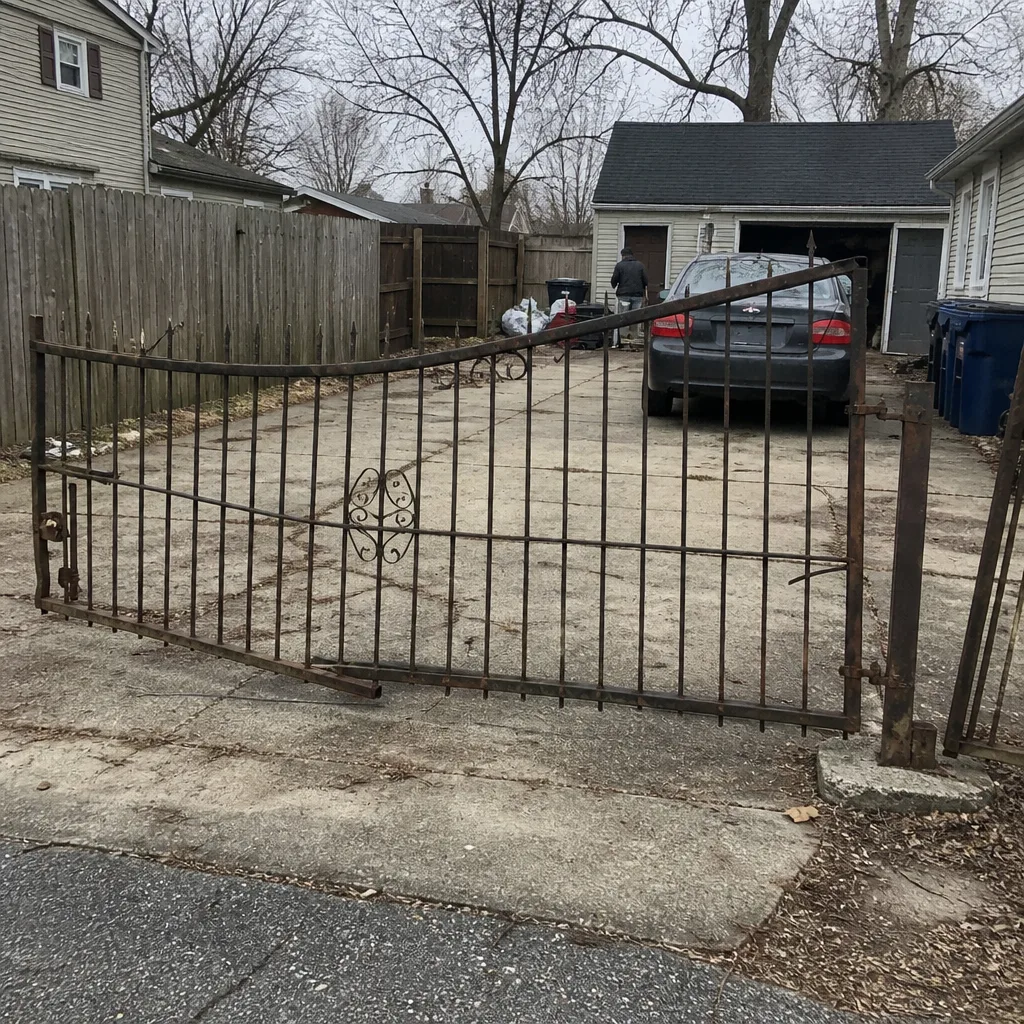 Before
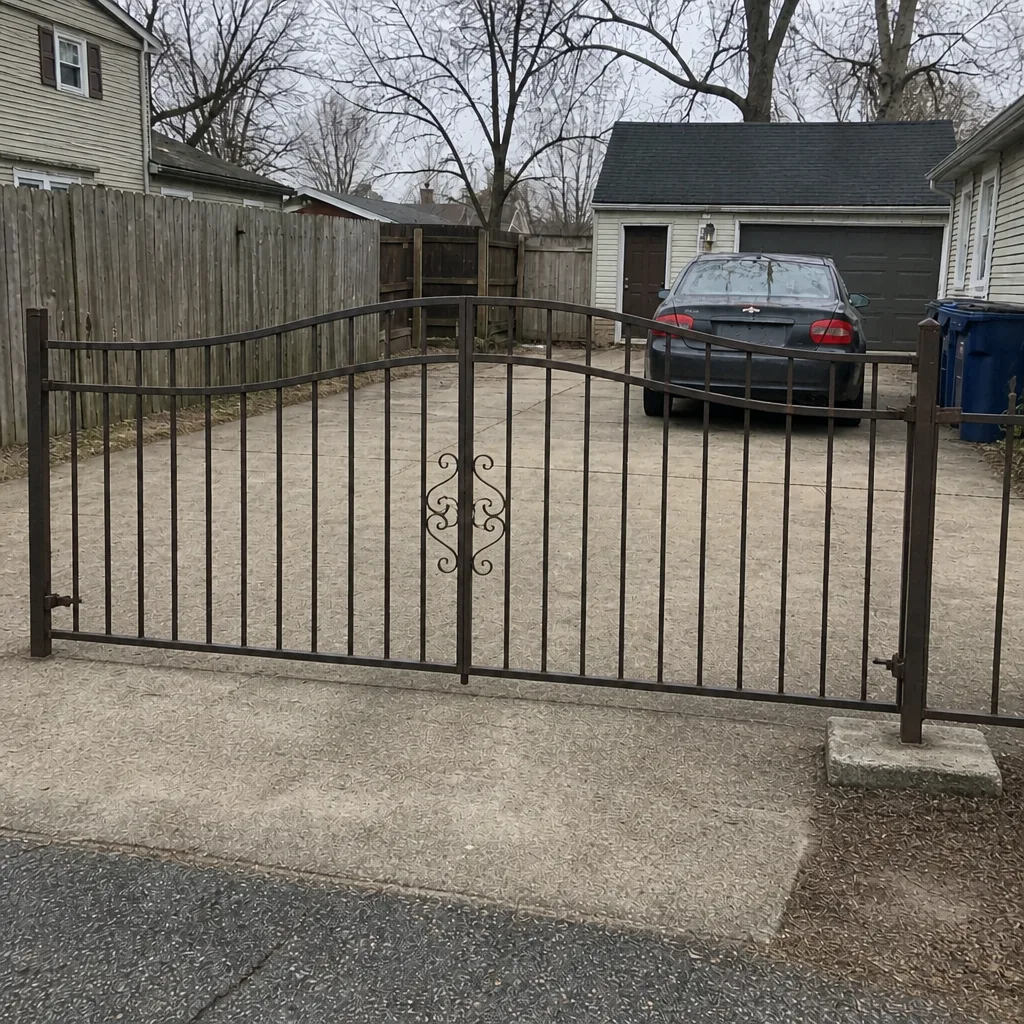 After
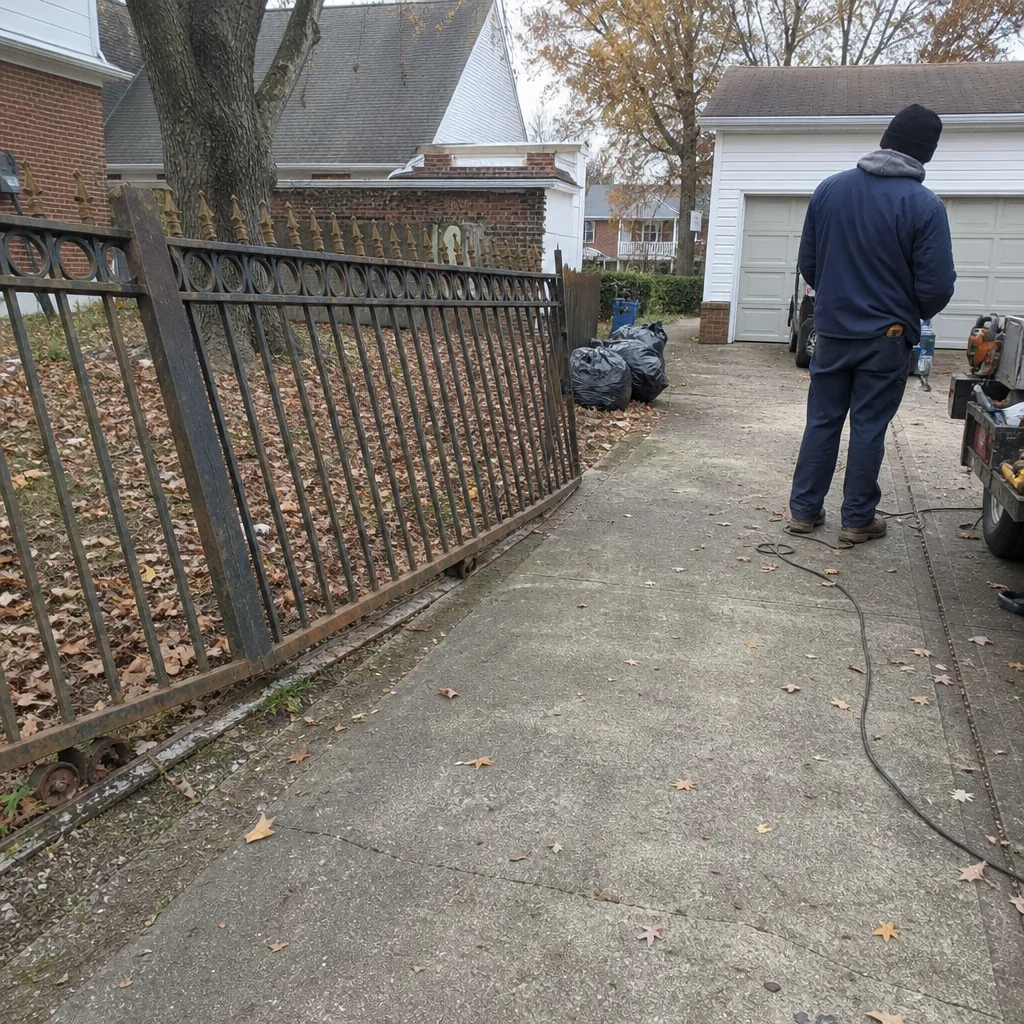 Before
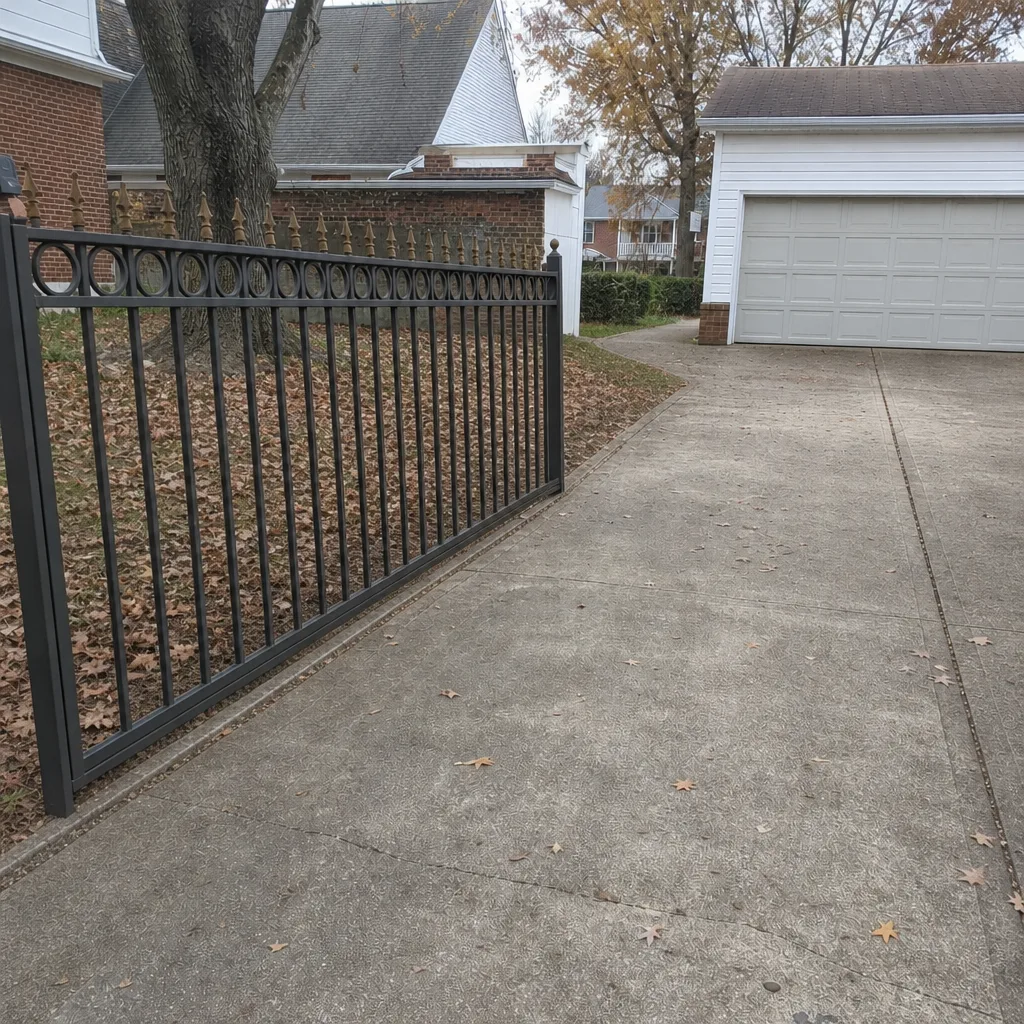 After
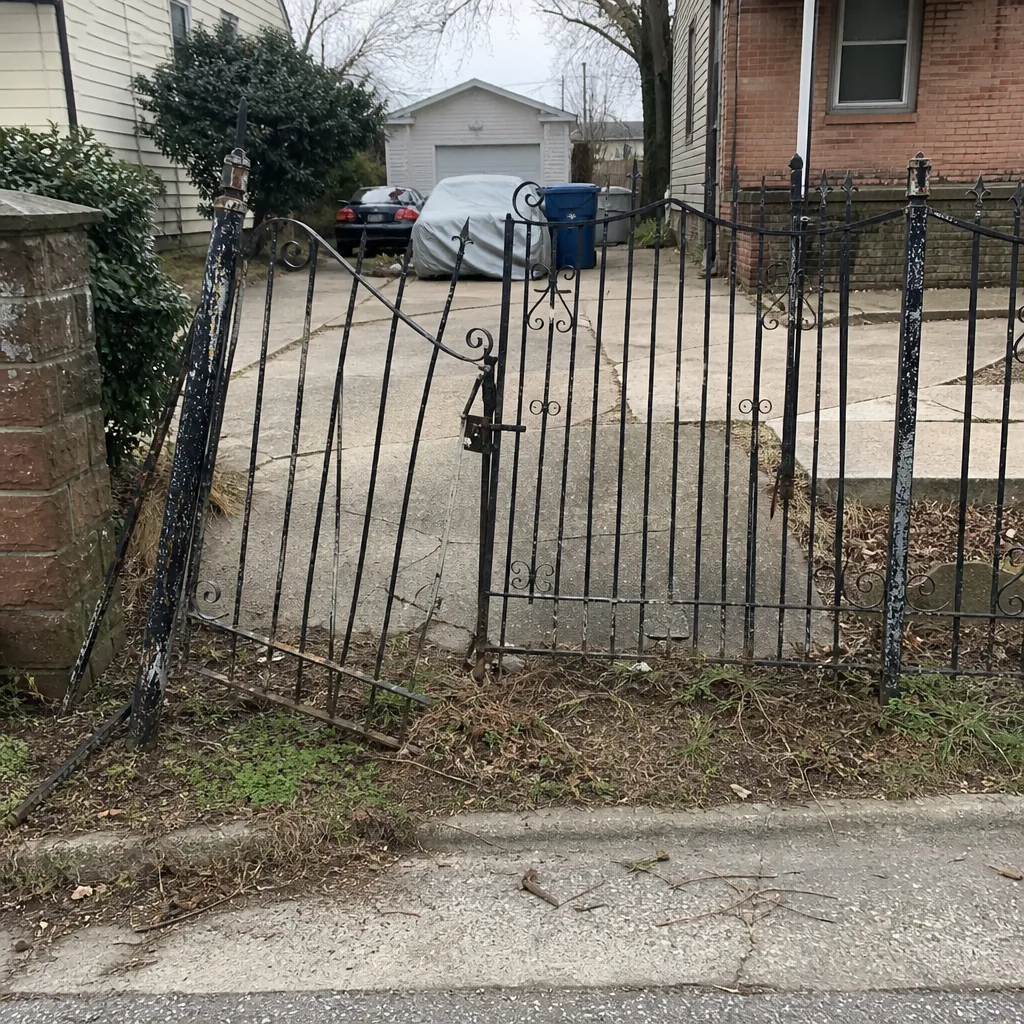 Before
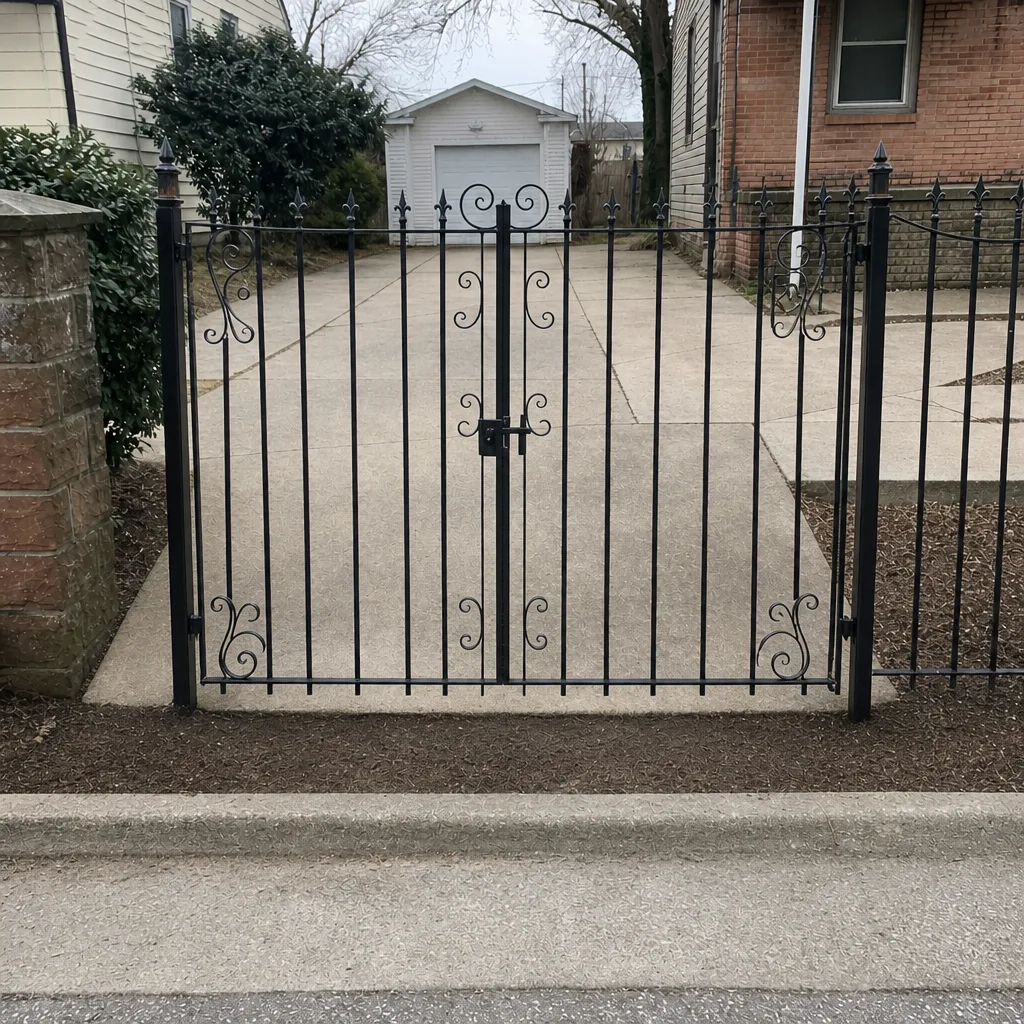 After
When to Call a Professional
Some signs are safe to watch for a while; others mean calling right away. Call a professional if the gate has come off its track, a heavy panel looks like it might be failing at the welds, the operator hums but doesn’t move, the delay before movement has grown noticeably, or the keypad is failing intermittently and you manage an HOA or a small commercial property. If the gate is binding, grinding, or slowing down, it’s worth a look before the motor takes the strain. Anything involving the operator’s wiring or power is not a DIY job. Gate Repair Newport News offers free estimates in Newport News – call (866) 620-2654. We answer 24/7. Fast dispatch from 7am to 7pm, Sunday through Friday.
Frequently Asked Questions
The most common warning signs are grinding or clicking sounds, a gate that moves slower than it used to, a delay before the operator responds, rust along welds, intermittent keypad failures, and soil or grass buildup at the base of a slide gate. Catching any of these early usually means a smaller repair. Call (866) 620-2654 for an exact quote; estimates are free.
Yes, it’s worth investigating. A two-to-five second delay before movement often points to a failing start capacitor in the operator motor, though it can also be a control board or limit switch fault. Left alone, the delay usually grows until the gate stops opening entirely, often on a day of temperature extremes. Call (866) 620-2654 for an on-site diagnosis; estimates are free.
Grinding usually means a dry chain running against a worn sprocket, a chain that’s jumped, or grit packed into the track on a slide gate. It’s rarely the motor itself. A technician can tell which of these it is by watching a full cycle. Call (866) 620-2654 to book a look; estimates are free.
Surface rust is flat and even, scattered across the panels. Structural rust concentrates along welds, seams and hinge mounts, and often comes with bubbling paint. Weld-line rust on a heavy gate is a safety concern, not a cosmetic one. Call (866) 620-2654 if you’re unsure which kind you’re seeing; estimates are free.
Intermittent keypad failures often trace to corroded wire terminations at the operator control board, not the keypad itself. If the remote works but the keypad doesn’t, that pattern points to the keypad wiring or terminal block. A technician can confirm on the first visit. Call (866) 620-2654 for an exact quote; estimates are free.
Yes, and it’s the sign most homeowners overlook. Newport News clay soil migrates toward the track after rain, and grass and debris build up against the rail. That buildup wears the rollers and the track, and a track replacement is a bigger job than clearing soil. Check the base after heavy rain. Call (866) 620-2654 if the gate is already binding; estimates are free.
The Bottom Line
Gates telegraph their failures. A grind points to the chain or sprocket, a click to the control board or limit switch, a slowdown to the motor, a delay to the capacitor, weld-line rust to a structural problem, and soil at the base to track wear. Read those signals early and you’re usually looking at a single-component repair. Ignore them and the same fault tends to grow into an operator or track replacement. In Newport News, the clay soil at the base of a slide gate is the sign most people miss. Whether you’re in gate repair Newport News or just watching your gate for the first time, a technician who recognizes your operator brand gets to the right part faster. Gate Repair Newport News covers manual and electric gates, plus new installation, and works across LiftMaster, FAAC, BFT, Linear, Viking, Ghost Controls, DoorKing, Elite and Mighty Mule. Our technicians have up to 14 years of experience.
Call (866) 620-2654 for a free estimate. We answer 24/7. Fast dispatch from 7am to 7pm, Sunday through Friday. We quote and agree the price with you before any work starts, so the number you hear is the number you pay. To learn more about what we do, see our main gate repair Newport News page.
Written by the team at Gate Repair Newport News.