
Last updated November 15, 2026
 Wrought iron
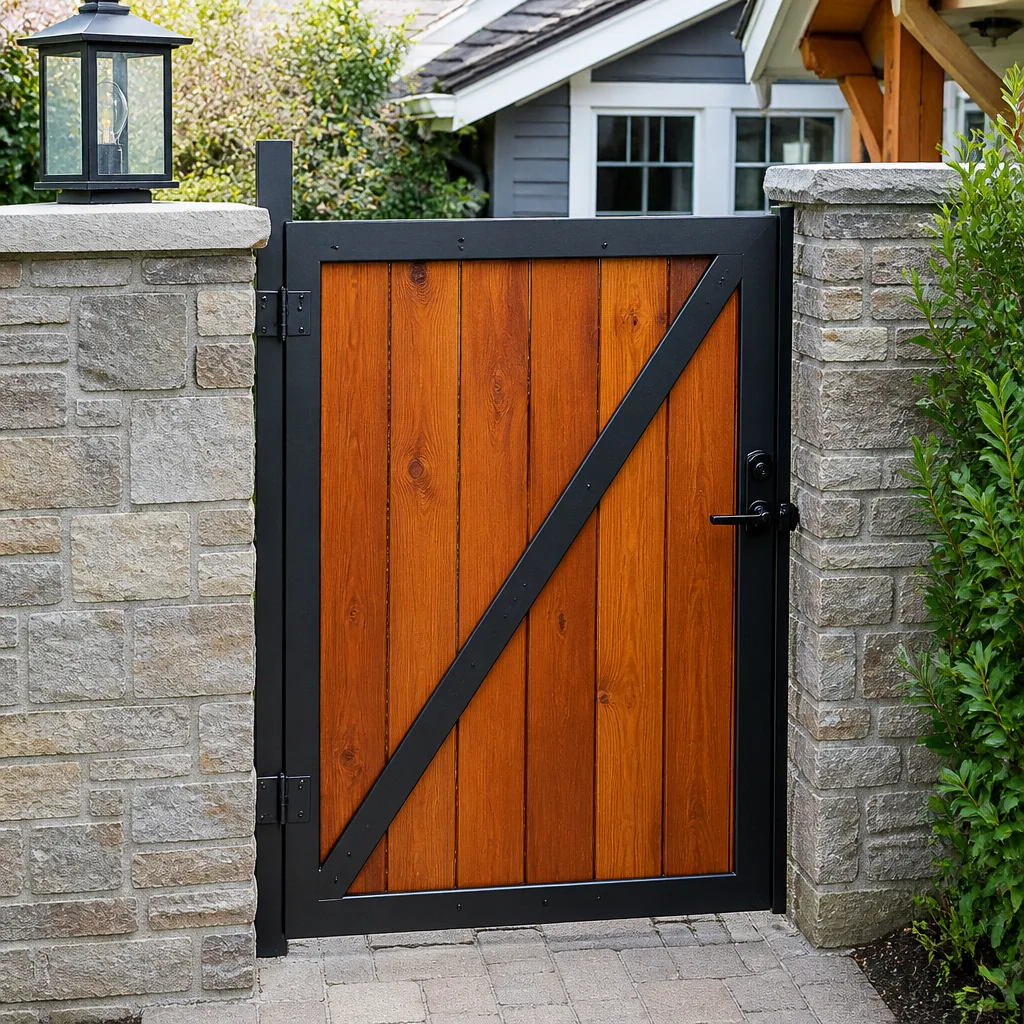 Wood & steel frame
 Farm & ranch
 Sliding driveway gates
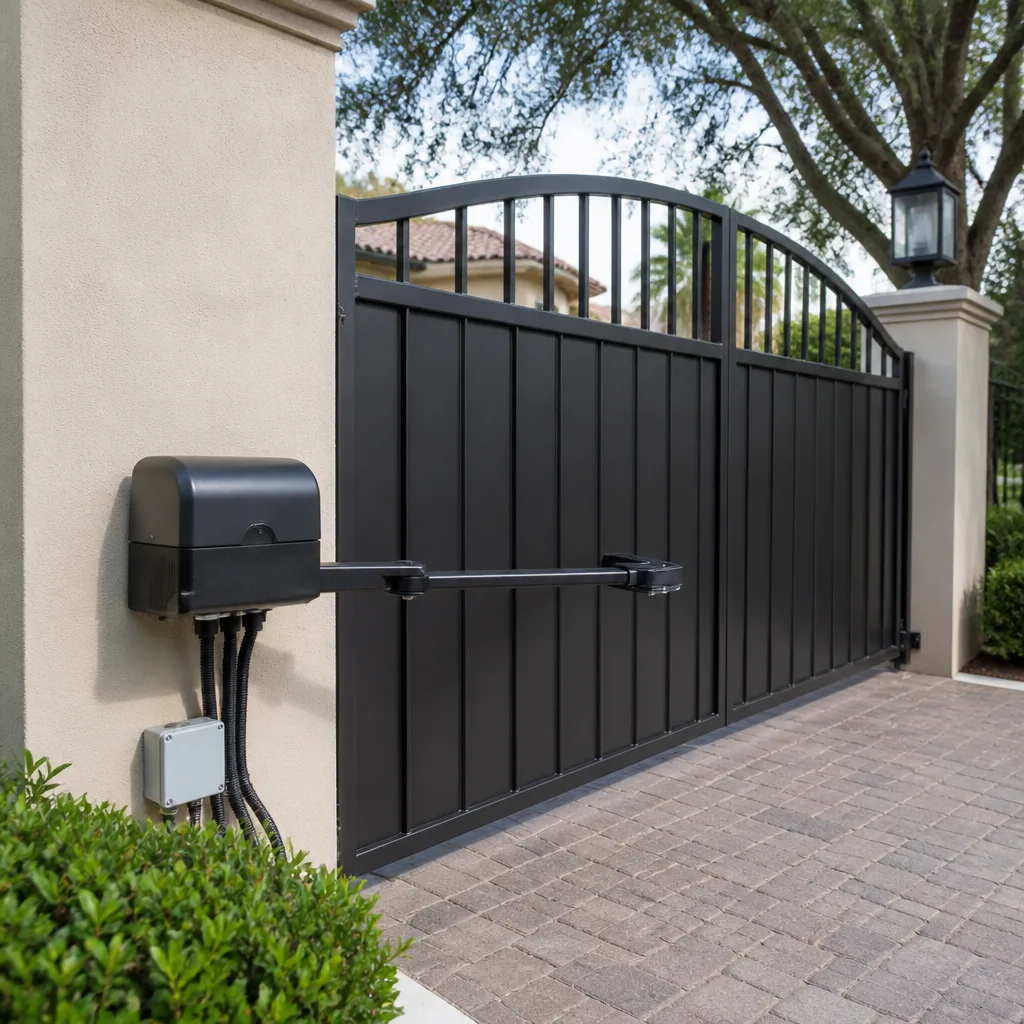 LiftMaster operators
Free on-site gate assessment - hinges, posts, and your LiftMaster or Nice gate operator checked before anything is quoted
The assessment is free and the quote is the invoice.
Get your free estimateGate Repair Maintenance Schedule: What to Do and When
Most gate maintenance guides tell you to lubricate hinges twice a year. That’s the right task on the wrong calendar. In Hampton Roads, skipping a post-hurricane inspection in September and a freeze-prep check in December is where real damage starts. A gate in Newport News lives through four very different stress seasons: humid summers that push corrosion into every fastener, hurricane season that turns a loose bracket into a bent post, and winter freeze-thaw cycles that work on batteries and hydraulic fluid before they work on anything else. This guide replaces the generic advice with a climate-calibrated timeline, component-level product picks, and a clear split between what you can safely check yourself and what needs a trained technician.
Quick Answer
A gate maintenance schedule in Newport News runs on a seasonal cycle, not a calendar year: pre-storm hardware checks in June, a post-humidity corrosion inspection in August, freeze-prep battery and fluid checks in November, and a full mechanical review in early spring. Lubrication, spring tension, track alignment, and operator batteries are the four things that fail first, and each has a specific product and inspection interval. Anything involving springs, gate operators wired to power, or a slide gate off its track belongs with a professional.
Styles & brands we work with
- Wrought iron
- Wood & steel frame
- Farm & ranch
- Sliding driveway gates
- LiftMaster operators
Table of Contents
- Why a Calendar-Based Schedule Fails a Newport News Gate
- The Month-by-Month Gate Maintenance Calendar for Newport News
- Which Lubricant Goes on Which Gate Component
- Spring Tension and V-Track Alignment Before Summer Heat
- Battery Health for Solar and AC-Powered Gate Operators
- Which Maintenance Tasks Preserve Your Warranty and Which Void It
- The DIY vs. Professional Split
- Common Mistakes to Avoid
Why a Calendar-Based Schedule Fails a Newport News Gate
Generic maintenance charts are written for a temperate, steady climate that doesn’t exist here. A gate on a residential street in Newport News spends June through September in heat and humidity that expand steel, soften rubber seals, and accelerate oxidation on every unpainted bolt. Then it hits winter, where the freeze-thaw cycle pivots between wet and solid, working moisture into joints and stressing operator batteries that sat warm all summer. The tasks don’t change much from one climate to another. The timing does, and so does the sequence.
Here’s what that means in practice. A hinge lubricated in April has lost most of that film by the August humidity peak, when oxidation is at its worst. A battery tested in spring looks healthy; the same battery in late November may not hold a charge through a cold snap. A slide gate tracked and aligned in March can drift out of true by July, when the steel track and the gate frame expand at slightly different rates. If you run the same checklist on the same dates every year, you’re servicing the gate for a season that already passed.
Newport News also sits in a hurricane-exposure zone where summer storms are a genuine hardware test. That doesn’t mean every gate needs a storm engineer. It means June is the month to walk the posts, brackets, and hinges with a wrench in hand, before wind load does the checking for you. When we service gates across Newport News, the damage we find most often traces to a loose anchor bolt that went unchecked through one storm season.
The Month-by-Month Gate Maintenance Calendar for Newport News
This is the calendar we’d hand a homeowner, HOA manager, or small commercial property owner in Newport News who wants to stay ahead of failures instead of reacting to them. It’s built around the region’s actual environmental markers: the start of hurricane season, the summer humidity peak, and the first hard freezes.
- March – full mechanical review. After winter, inspect hinges, rollers, latches, and the operator for any freeze damage. Check post footings for frost heave or settling. This is the month to reset track alignment before heat expansion begins.
- April – lubrication baseline. Apply the correct lubricant to each component type (see the lubrication section below). Clear debris from the V-track or swing arc. Test the operator’s manual release.
- May – electrical and safety check. Test safety edges, photo eyes, and loop detectors. Verify the operator’s control board has no fault codes. Confirm the battery backup holds a charge.
- June – pre-storm hardware check. Torque every anchor bolt and bracket. Check post stability by hand. Inspect the gate frame for rust at weld points and fastener holes. This is the most important pre-hurricane step of the year.
- July – mid-season function test. Run the gate through several full open-close cycles and listen for grinding, hesitation, or limit-switch drift. Check the operator housing for heat buildup.
- August – post-humidity corrosion inspection. This is the peak oxidation month. Inspect all fasteners, hinges, and rollers for surface rust. Touch up paint on any bare metal. Re-lubricate components that have dried out.
- September – post-storm inspection. After any named storm or heavy wind event, walk the entire gate line: posts, frame, hinges, operator, and wiring. Look for shifted posts, bent brackets, and moisture in electrical enclosures.
- October – pre-winter battery and fluid check. Test operator battery voltage under load. Inspect hydraulic fluid level and color on hydraulic operators. Clear any debris from the gate path that could freeze in place.
- November – freeze-prep. Confirm the operator is rated for the cold and that its battery is healthy. Lubricate with a cold-stable product, not a summer-weight grease that thickens below freezing.
- December through February – monthly visual checks. After hard freezes, check for cracked seals, stiff hinges, and slow operator response. Clear snow and ice from the gate path without forcing the gate.
Two things make this calendar local. First, hurricane season runs June through November, so the pre-storm check (June) and post-storm check (September) bracket the danger window. Second, the freeze-prep tasks in October and November matter more here than in a milder climate because a single hard freeze can kill a marginal battery and stiffen a grease that was fine in July. In our experience, most winter gate failures in Newport News are battery failures that a November test would have caught.
Which Lubricant Goes on Which Gate Component
“Use lubricant” is not a maintenance instruction. Different gate components need different products, and using the wrong one causes as many problems as skipping the task. Here’s the component-by-component breakdown we use on every gate we service.
- Roller bearings and rollers: Tri-Flow or an equivalent PTFE-based lubricant. It penetrates the bearing, dries to a thin film, and doesn’t collect grit the way heavier grease does. Apply every three to four months, more often in the humid summer months.
- Rack-and-pinion drives on slide gates: White lithium grease. It clings to the rack teeth and stays put under load without thinning out in summer heat. Wipe the rack clean before applying; grease over grit just grinds the teeth.
- Rubber seals and weather stripping: Silicone spray. It keeps rubber pliable and resists the drying and cracking that summer humidity and winter cold both cause. Never use petroleum-based products on rubber; they break it down.
- Hinges and pivot points on swing gates: A lithium or silicone-based lubricant, depending on whether the hinge is exposed to grit. On a rural or sandy lot, silicone is the better call; on a clean driveway, lithium holds longer.
- Operator chain and drive components: Chain-and-cable lubricant or a dry-film spray, applied sparingly. Over-lubricating a chain attracts dust that accelerates wear.
One more rule: never mix products on the same component without cleaning first. A silicone film under a layer of lithium grease does neither job well. In Newport News, the summer humidity means you’ll re-apply more often than a dry-climate guide suggests, especially on anything outdoors and unpainted. We keep the coverage even and the layers thin, and we clean before we re-lubricate, every time.
Spring Tension and V-Track Alignment Before Summer Heat
Summer heat does two things to a gate’s mechanical system: it expands steel, and it softens the tolerance in every moving joint. That’s why spring inspection and V-track alignment belong on the calendar in late spring, before the expansion begins, not after the gate starts dragging.
First, a hard safety note. Gate springs, like the springs on any heavy suspended or counterbalanced panel, are under significant stored tension. They can release suddenly and cause serious injury, and adjusting them without the right tools and training is genuinely dangerous. Do not attempt to adjust or replace gate springs yourself. What you can do is inspect them for the obvious warning signs and call a technician if you see any.
What to check on springs (visually, no tools):
- Visible gaps or separations in the spring coil
- Rust or corrosion on the spring surface, common after a humid Newport News summer
- A gate that no longer holds its open position or drops faster than it used to
- Uneven or jerky travel when the gate moves
For V-track alignment on slide gates, the check is simpler and safe to do yourself. Open the gate fully and look down the track line: the V-groove should be straight and clear, with no debris, no bent sections, and no gap between the track and the gate’s guide rollers. Run the gate slowly and watch for any wobble or binding. If the gate drifts sideways or the rollers ride up on the track edge, the alignment has shifted and needs a professional reset. On a residential driveway in Newport News, summer expansion can push a track out of true by a few millimeters, which is enough to cause drag and premature roller wear. Catching it in May or June saves the roller set.
Battery Health for Solar and AC-Powered Gate Operators
Battery failure is the single most common reason an electric gate stops working without warning. The operator’s control board may be fine, the motor may be fine, but if the battery can’t hold a charge, the gate won’t cycle reliably, especially in cold weather. The fix is a test schedule, not a guess.
Solar-charged operators and AC-powered operators fail differently. A solar operator’s battery carries the full load through cloudy stretches and short winter days, so its charge health degrades faster and needs more frequent testing. An AC-powered operator uses its battery mainly as backup during outages and for the control board, so it lasts longer but still needs an annual load test. In either case, a battery that reads a healthy resting voltage can still fail under load.
How to test charge health with a multimeter:
- Disconnect the battery from the operator (with the power off, following the operator manual).
- Let it rest for a few minutes.
- Measure the resting voltage with a multimeter and compare it to the battery’s rated voltage.
- Reconnect and run the gate through several cycles while watching for a voltage drop below the operator’s low-battery threshold.
- If the voltage sags under load or recovers slowly, replace the battery before winter.
Replacement intervals depend on the operator and the battery type, so check your operator manual and the battery’s own service life. As a rule of thumb: solar-charged operators in Newport News tend to need battery attention sooner than AC-powered ones because of the shorter winter daylight and the load the battery carries year-round. Test in October and November, before the first hard freeze, so a failing battery gets replaced on a mild day instead of in a cold snap. Our technicians have up to 14 years of experience diagnosing operator battery and control-board faults, and we test on the same principle: resting voltage first, then a load test.
Which Maintenance Tasks Preserve Your Warranty and Which Void It
Most gate-operator warranties, including those on Ghost Controls, Linear, and similar residential-grade brands, require that the equipment be installed and maintained to the manufacturer’s specifications. That means documented, correct maintenance protects your coverage; skipped or incorrect maintenance can void it. The line between the two is more specific than most homeowners expect.
Tasks that generally preserve warranty coverage:
- Following the manufacturer’s lubrication schedule with the products specified for each component
- Testing and replacing batteries at the intervals the operator manual recommends
- Keeping the gate path clear of debris and the track aligned
- Recording service dates and keeping receipts for any parts replaced
- Having electrical work and operator repairs done by a qualified technician
Tasks that can inadvertently void coverage:
- Using the wrong lubricant on a component, especially petroleum products on rubber seals or heavy grease on components that call for dry film
- Adjusting spring tension or limit switches beyond the manual’s range without documentation
- Modifying the operator’s wiring or control board to bypass a safety feature
- Skipping the safety-edge and photo-eye checks, then running the gate unattended
- Tampering with a solar charging system or swapping in a battery the manual doesn’t specify
If you’re not sure whether a task is covered, the operator manual is the authority, and a technician familiar with your brand can tell you in minutes. We service Ghost Controls, Linear, BFT, and Viking operators regularly and know which maintenance routines those brands expect. Keeping a simple log of what was done and when is the single easiest way to protect a warranty claim in Newport News if something fails.
The DIY vs. Professional Split
Some gate maintenance is safe and sensible for a homeowner. Some of it is dangerous, and some of it requires equipment and training you don’t have. Here’s where we draw the line.
Safe for you to do:
- Visual inspection of hinges, rollers, posts, and fasteners
- Clearing debris from the track and gate path
- Applying lubricant to hinges, rollers, and rack-and-pinion drives (with the right product)
- Testing the manual release on the operator
- Testing battery voltage with a multimeter
- Checking that safety edges and photo eyes respond
Leave to a professional:
- Any work on gate springs, which are under high tension and can cause serious injury
- Any work inside the operator’s electrical enclosure, control board, or wiring
- Adjusting limit switches or safety-loop detectors if you’re not trained on the system
- Realigning a slide gate’s V-track after it has shifted
- Diagnosing an operator that won’t power on or cycles erratically
- Any repair involving the power run to the operator or a gate that has come off its track and could crush someone
The split matters because the failure modes overlap. A gate that won’t close could be a dead battery (your test), a misaligned track (safe to inspect, not to fix), a faulty limit switch (professional), or a control-board fault (professional). Our electric gate repair work covers the control board, loop detector, limit switches, and operator motor as one discipline, so the diagnosis gets to the actual cause instead of swapping parts. If a repair turns out to be beyond a safe DIY check, that’s exactly the call a gate specialist should take.
Common Mistakes to Avoid
- Running the same checklist on the same dates every year. A schedule written for a mild climate misses the June pre-storm and November freeze-prep windows that matter most in Newport News. Build the calendar around the region’s seasons, not the calendar year.
- Lubricating everything with the same product. White lithium grease on a roller bearing collects grit; silicone spray on a rack-and-pinion drive washes off. Match the product to the component or skip the task entirely.
- Skipping the post-storm walk after a named storm. Wind and rain shift posts and loosen brackets in ways that aren’t visible from the driver’s seat. A September inspection catches what the storm did before the next one adds to it.
- Testing a battery at rest only. A battery can read a healthy resting voltage and still fail under load. Test it while the gate cycles, and test it in the fall before the first freeze.
- Adjusting springs or limit switches without documentation. A single unrecorded spring adjustment or limit-switch tweak can void a warranty on a Ghost Controls or Linear operator. If a task needs adjusting, have a technician do it and log it.
- Forcing a stiff gate in cold weather. A gate that barely moves in a freeze is usually a cold-thickened lubricant or a tired battery. Forcing it strains the operator and the hinges. Fix the cause instead.
- Ignoring the safety edges. A gate that closes with a photo eye or safety edge out of adjustment is a hazard, not a minor inconvenience. Test these every month, not just at the annual service.
See the difference
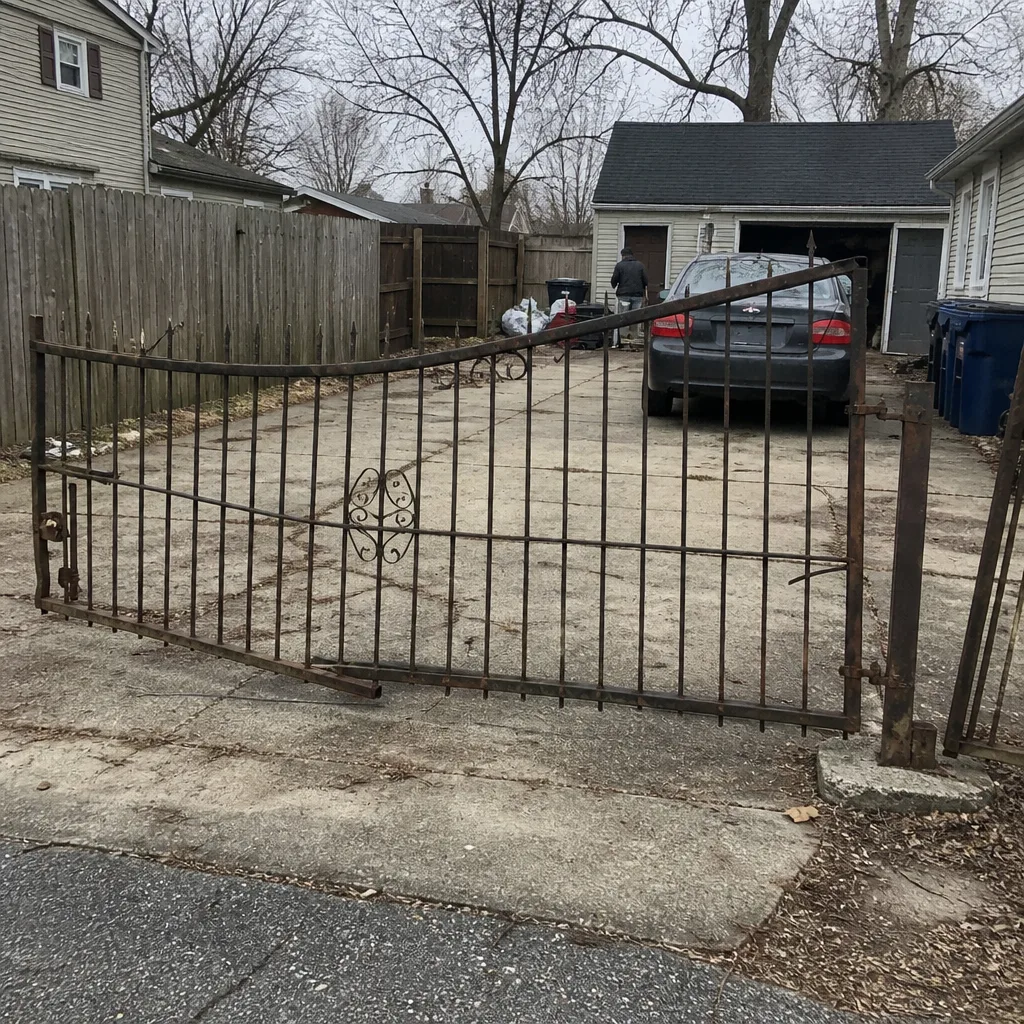 Before
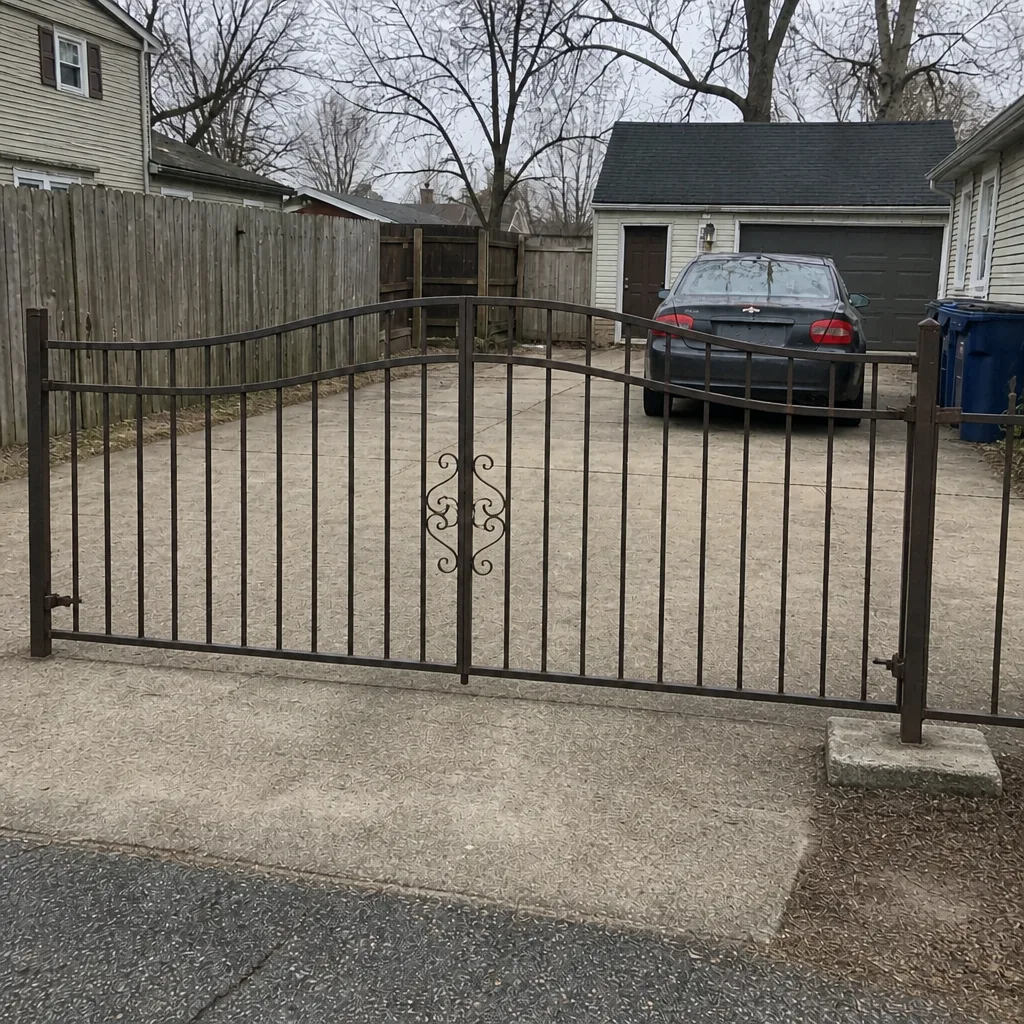 After
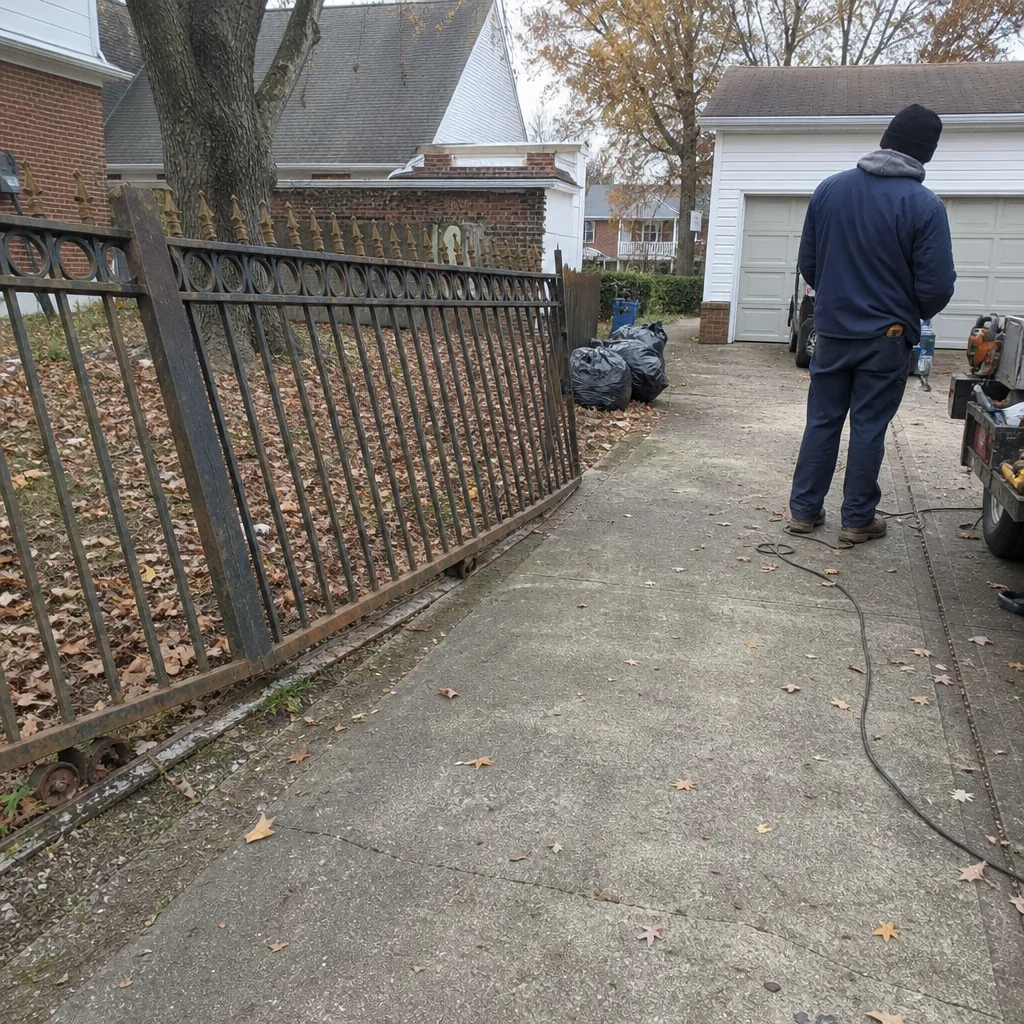 Before
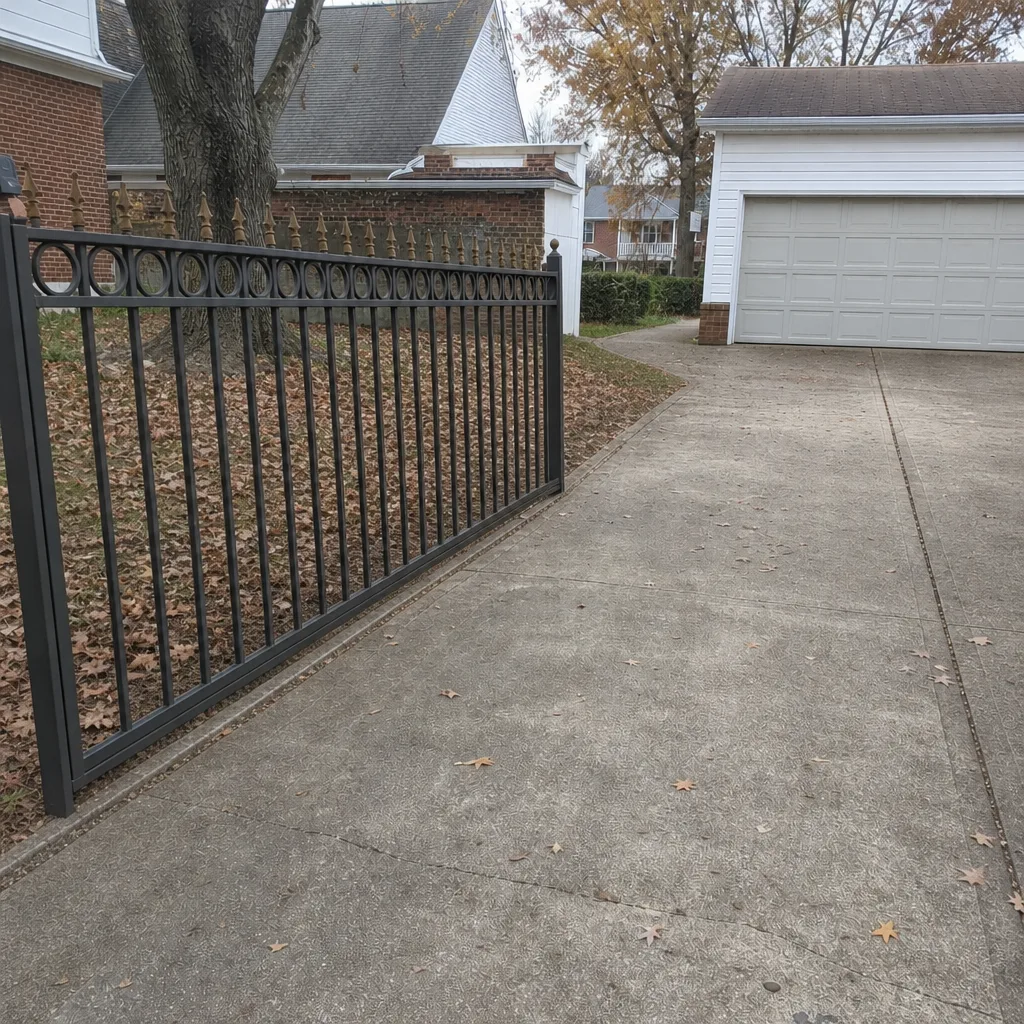 After
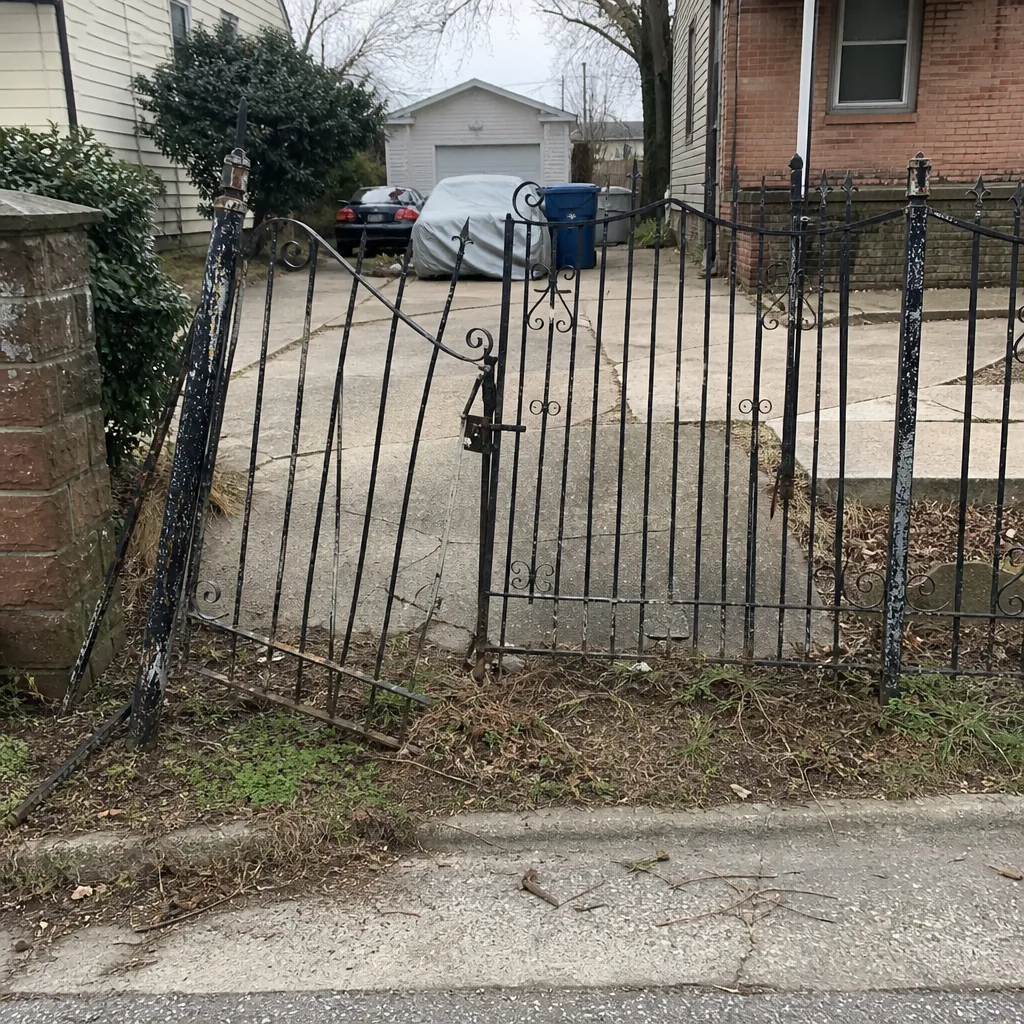 Before
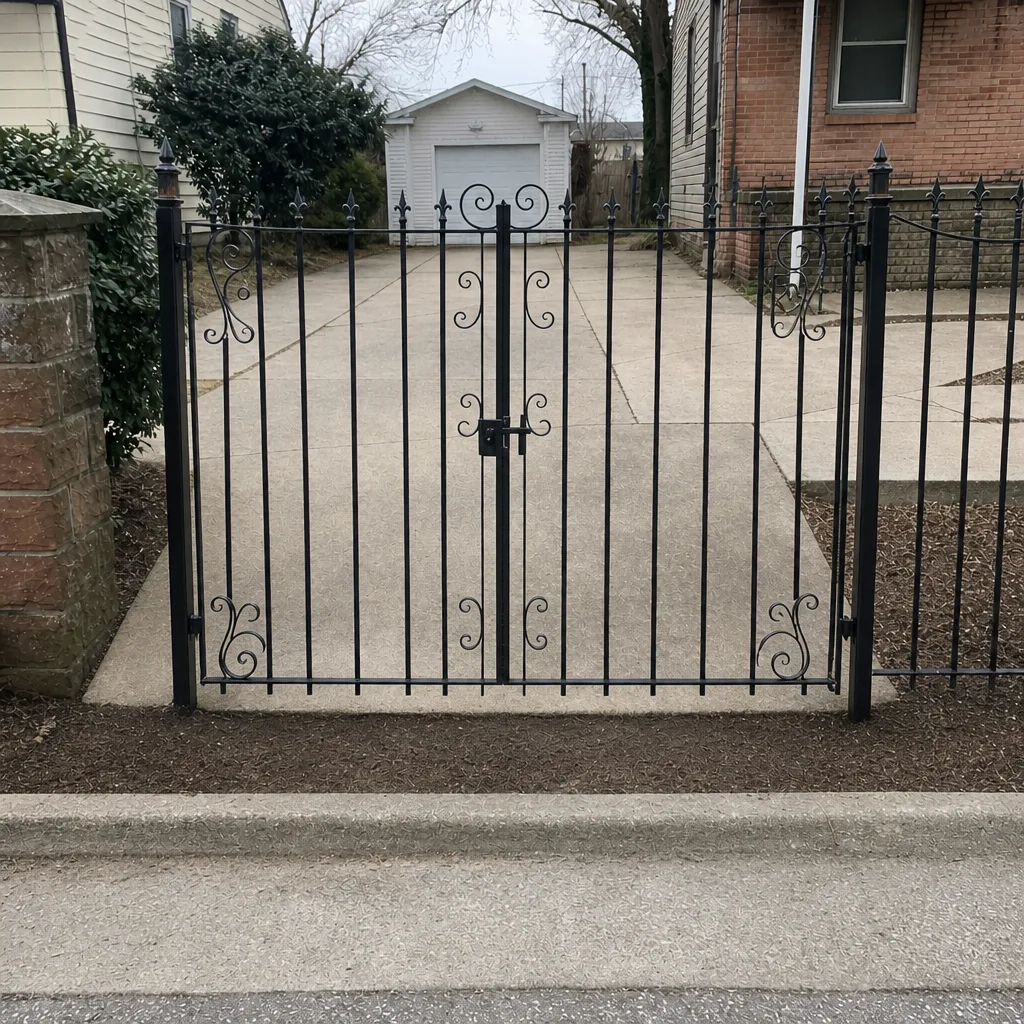 After
When to Call a Professional
Call a professional when the problem involves stored energy or live power: any work on gate springs, anything inside the operator’s electrical enclosure, or any repair on a gate that has come off its track. Call when the gate won’t cycle reliably even after a battery test and a track clean. Call when you see a post that has shifted, a bracket that has bent, or rust that has gone deeper than the paint. Call when a safety edge or photo eye fails its monthly test, because a gate that doesn’t stop on obstruction is a hazard to anyone on the property. And call if you own a legacy operator from a brand you can’t find local service for. We work on LiftMaster, FAAC, BFT, Linear, Viking, Ghost Controls, DoorKing, Elite, and Mighty Mule systems, so a legacy or commercial-grade operator isn’t a dead end. For gate repair in Newport News, we offer free estimates. Call (866) 620-2654 to book a visit.
Frequently Asked Questions
Twice a year for a full professional service, with monthly visual checks in between. The two key service points here are late spring, before hurricane season and summer humidity, and late fall, before the first freeze. A gate that sits on an exposed lot or carries heavy daily use may need more frequent attention.
You can lubricate hinges, rollers, and rack-and-pinion drives yourself if you use the right product for each component: Tri-Flow for roller bearings, white lithium grease for rack-and-pinion, silicone spray for rubber seals. Anything inside the operator housing should be left to a technician. Call (866) 620-2654 if you’re unsure which product goes where.
Cold weather reduces a battery’s capacity, and a battery that’s already marginal can’t carry the load once temperatures drop. That’s why the November battery test matters: it catches a failing battery before the first hard freeze. Test resting voltage with a multimeter, then load-test it by running the gate and watching for a voltage sag.
Look for visible gaps in the coil, rust on the spring, a gate that drops faster than it used to, or uneven travel. Don’t try to adjust or replace springs yourself; they’re under high tension and can cause serious injury. Call a technician to inspect and service them. Call (866) 620-2654 for a free estimate.
Follow the manufacturer’s lubrication and battery schedule, keep the gate path clear, test safety edges monthly, and have any electrical work or spring adjustment done by a qualified technician. Using the wrong lubricant, bypassing safety features, or making undocumented adjustments can void coverage. Keep a dated service log.
No. A gate that has left its track is a heavy falling hazard, and getting it back on safely requires the right equipment and a trained technician. Don’t force it or try to lift it by hand. Call for professional service. We answer 24/7, and dispatch runs from 7am to 7pm, Sunday through Friday.
The Bottom Line
A gate maintenance schedule for Newport News should be built around the region’s seasons, not a generic calendar. The short version: full mechanical review in March, lubrication in April, pre-storm hardware check in June, post-humidity corrosion inspection in August, post-storm walk in September, battery and fluid check in October, and freeze-prep in November. Match the lubricant to the component, test the battery under load before winter, and leave springs, wiring, and track realignment to a technician. Monthly safety-edge and photo-eye tests round out the year. Do that, and your gate spends the year being serviced ahead of the season that would have broken it.
If you’d rather have a specialist walk the gate and set the schedule for you, our team is here. From motor to control board, swing arm to slide gate or barrier arm, we install it and we service it. One call, the right tech.
Call (866) 620-2654 for a free estimate. We answer 24/7. Fast dispatch from 7am to 7pm, Sunday through Friday.
Written by the team at Gate Repair Newport News.